Ceiling panel system · PowerBoard

Heat from above,nothing on the floor.

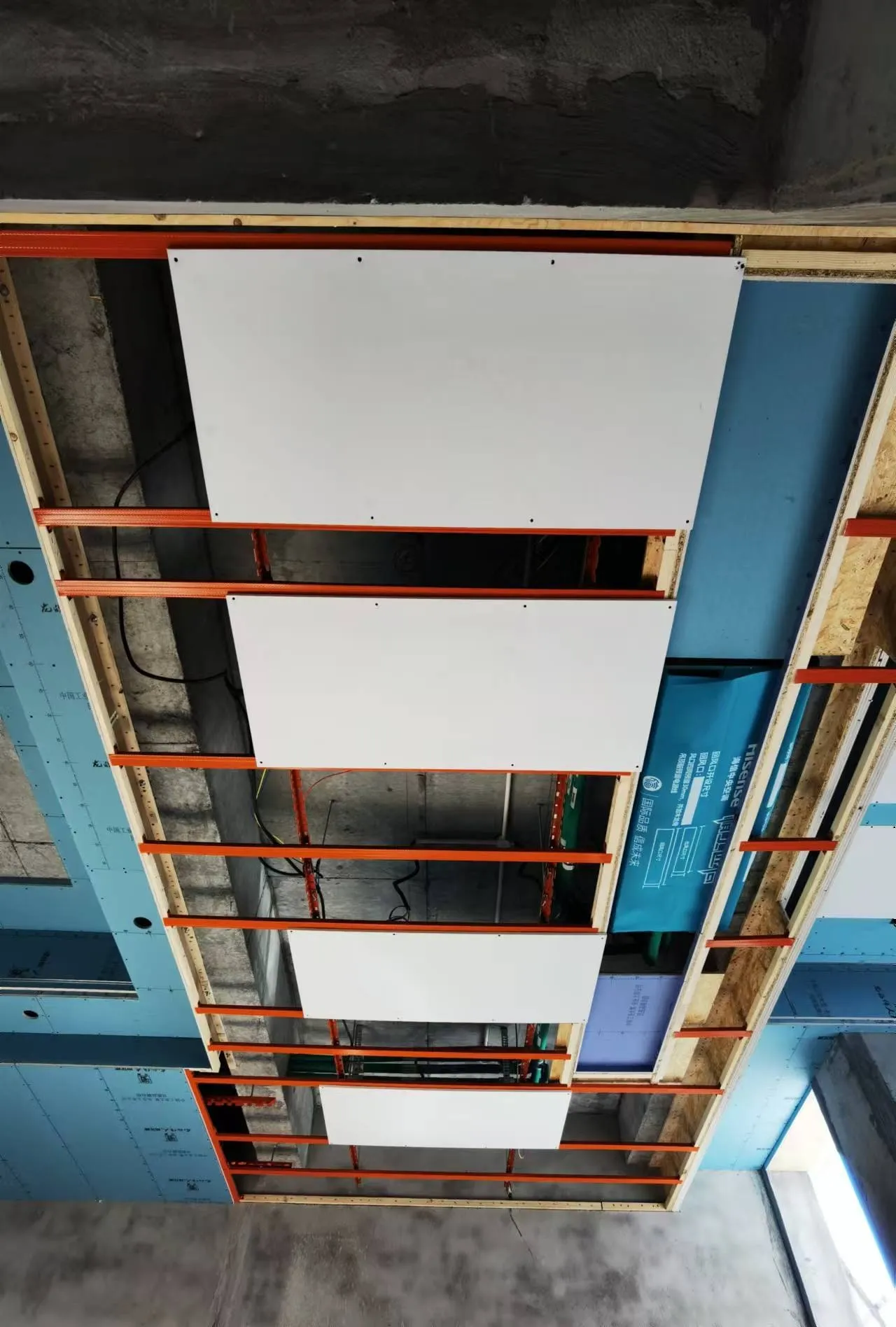
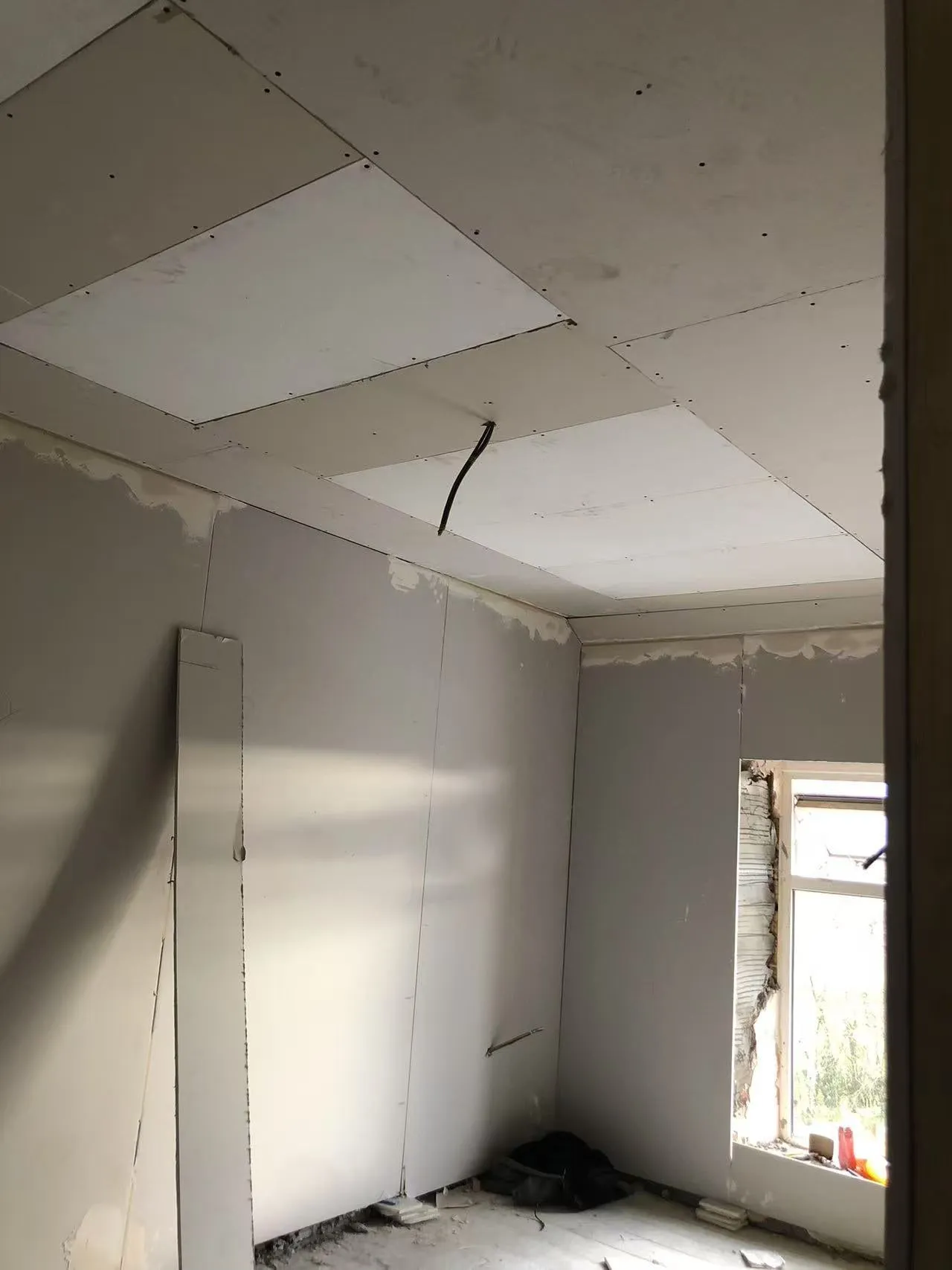
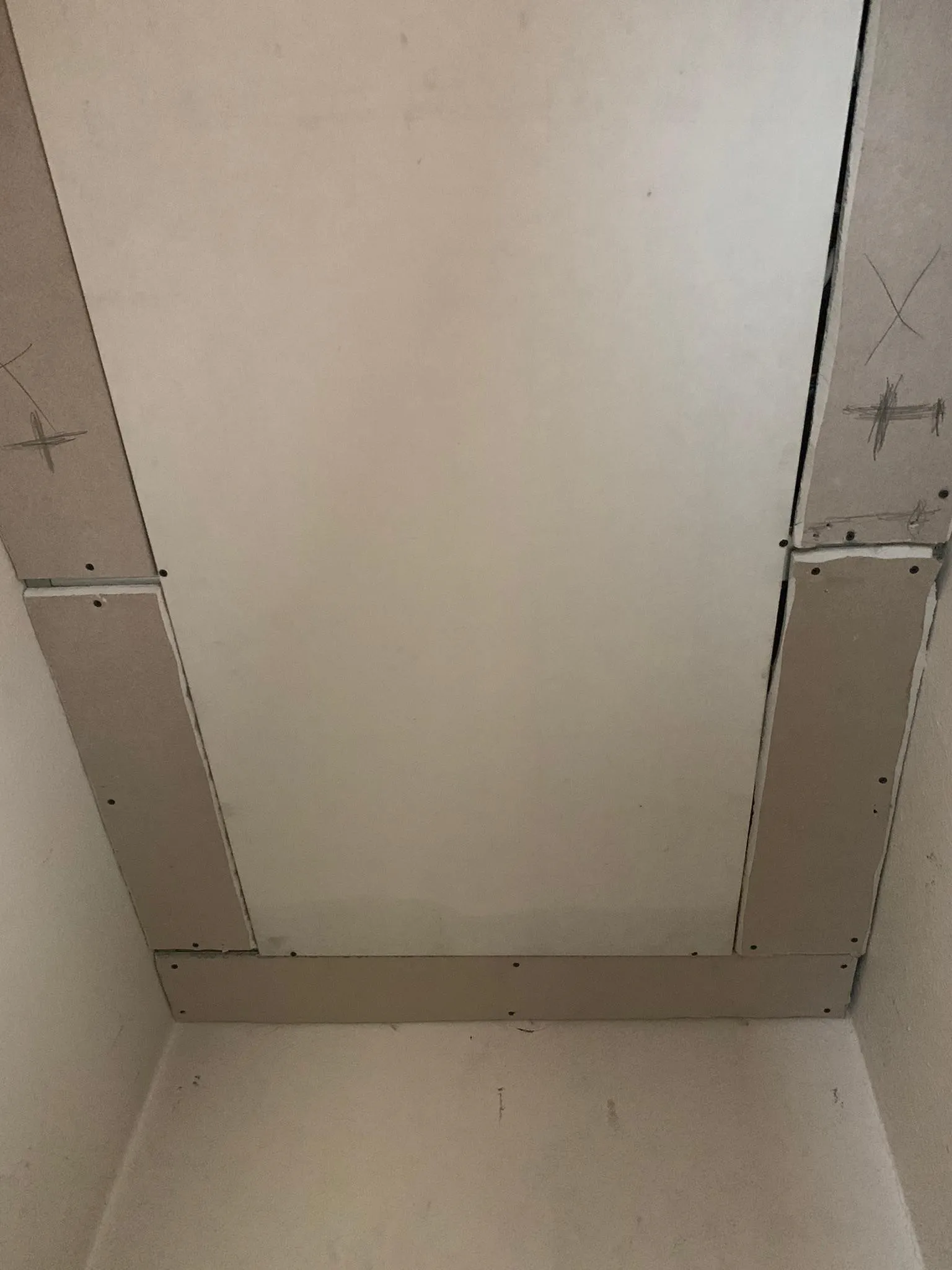
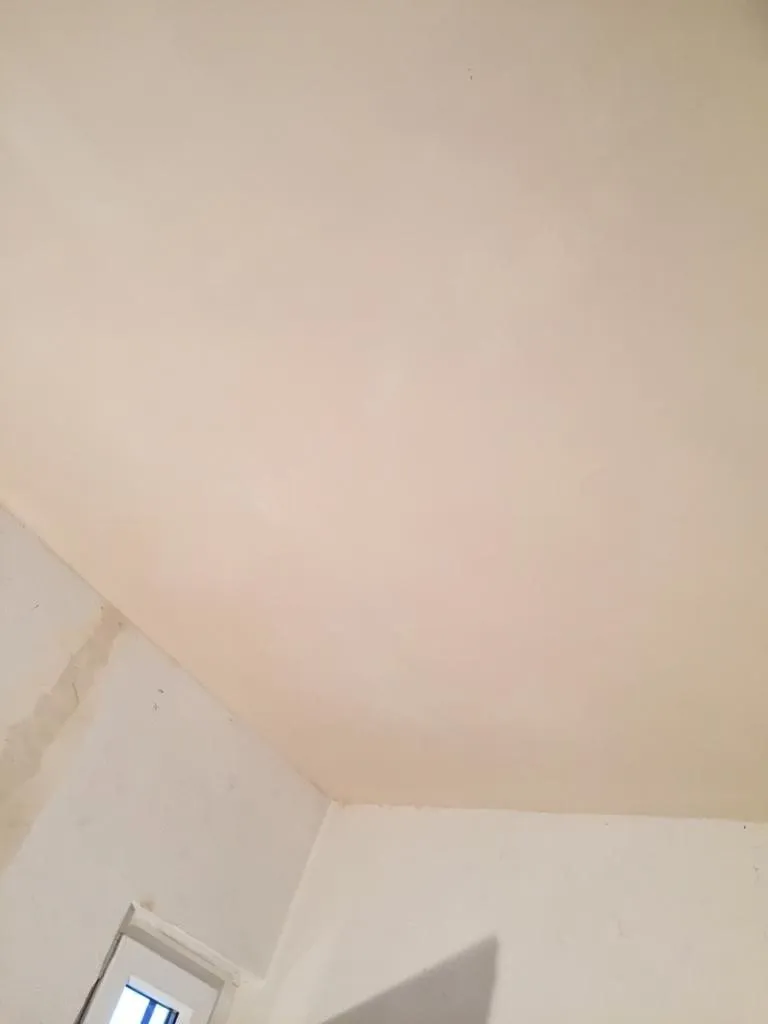
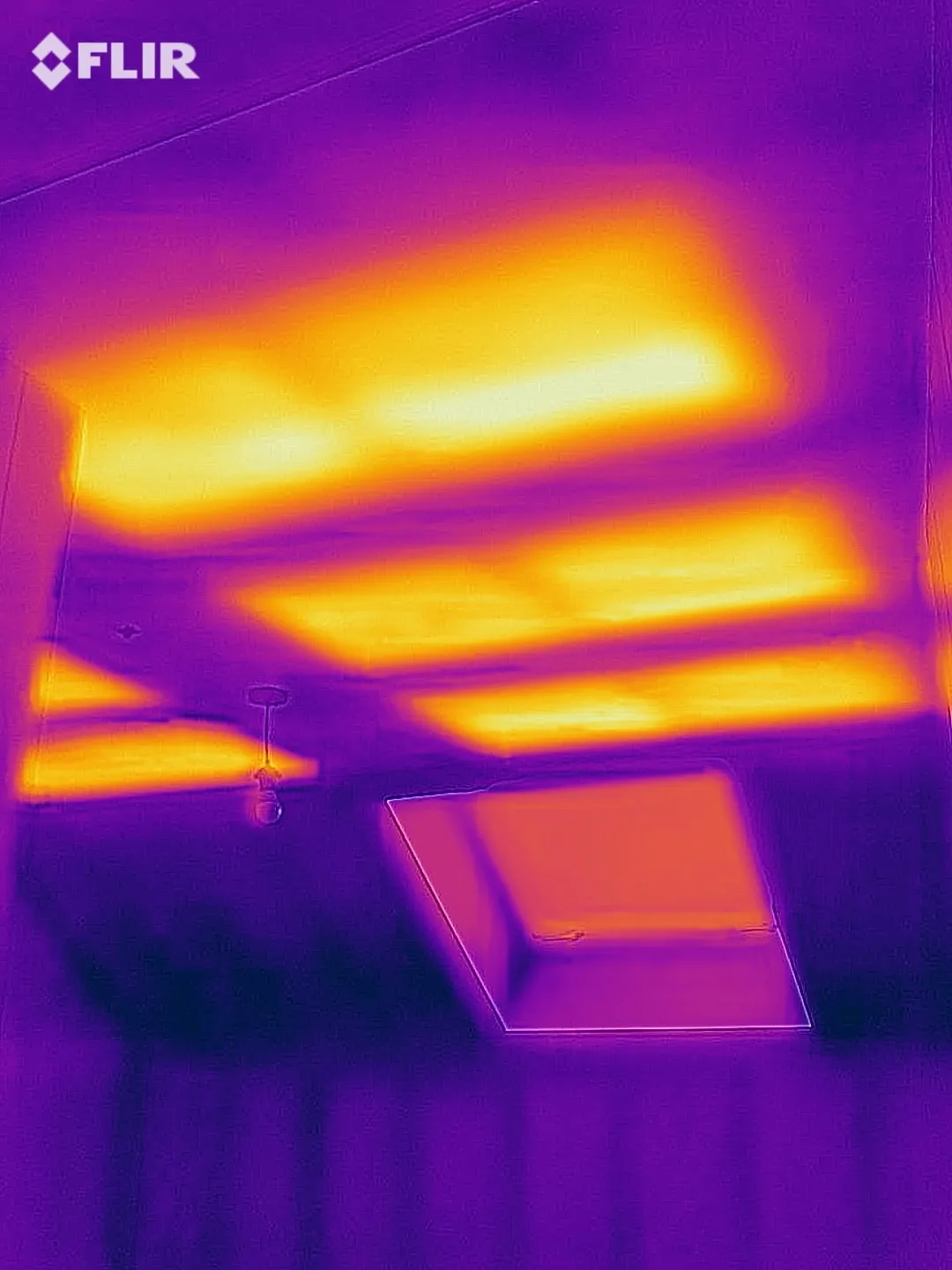
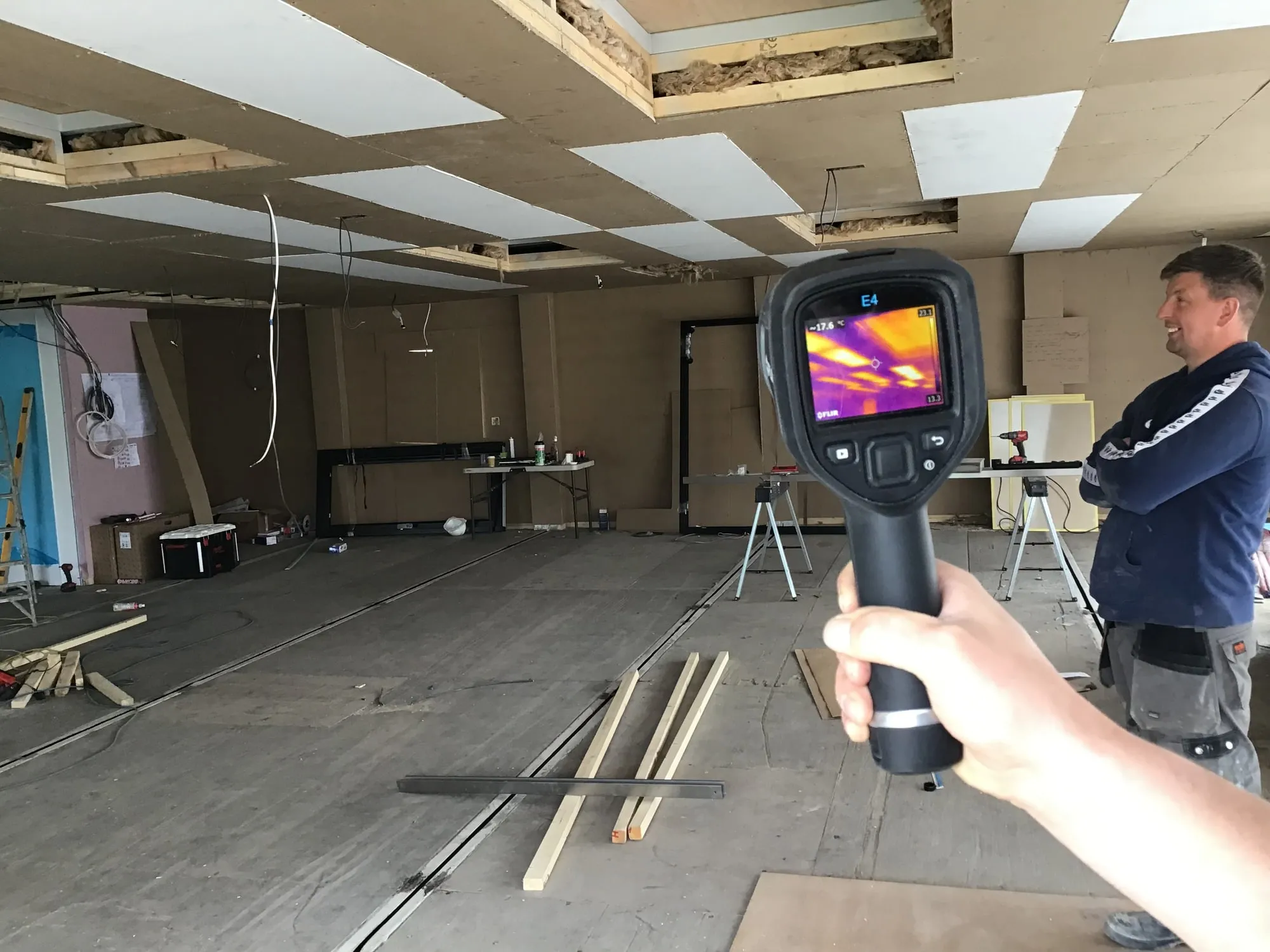
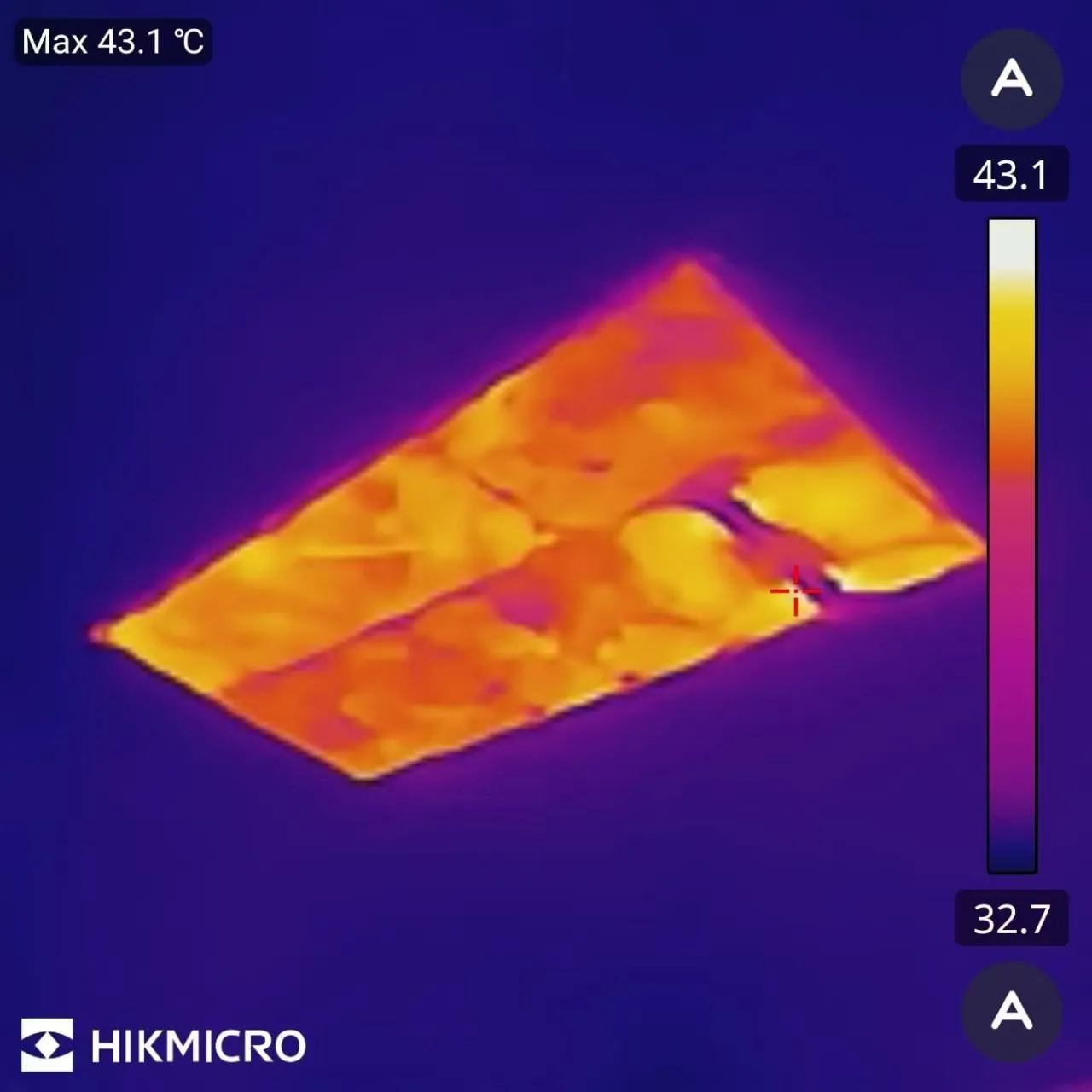
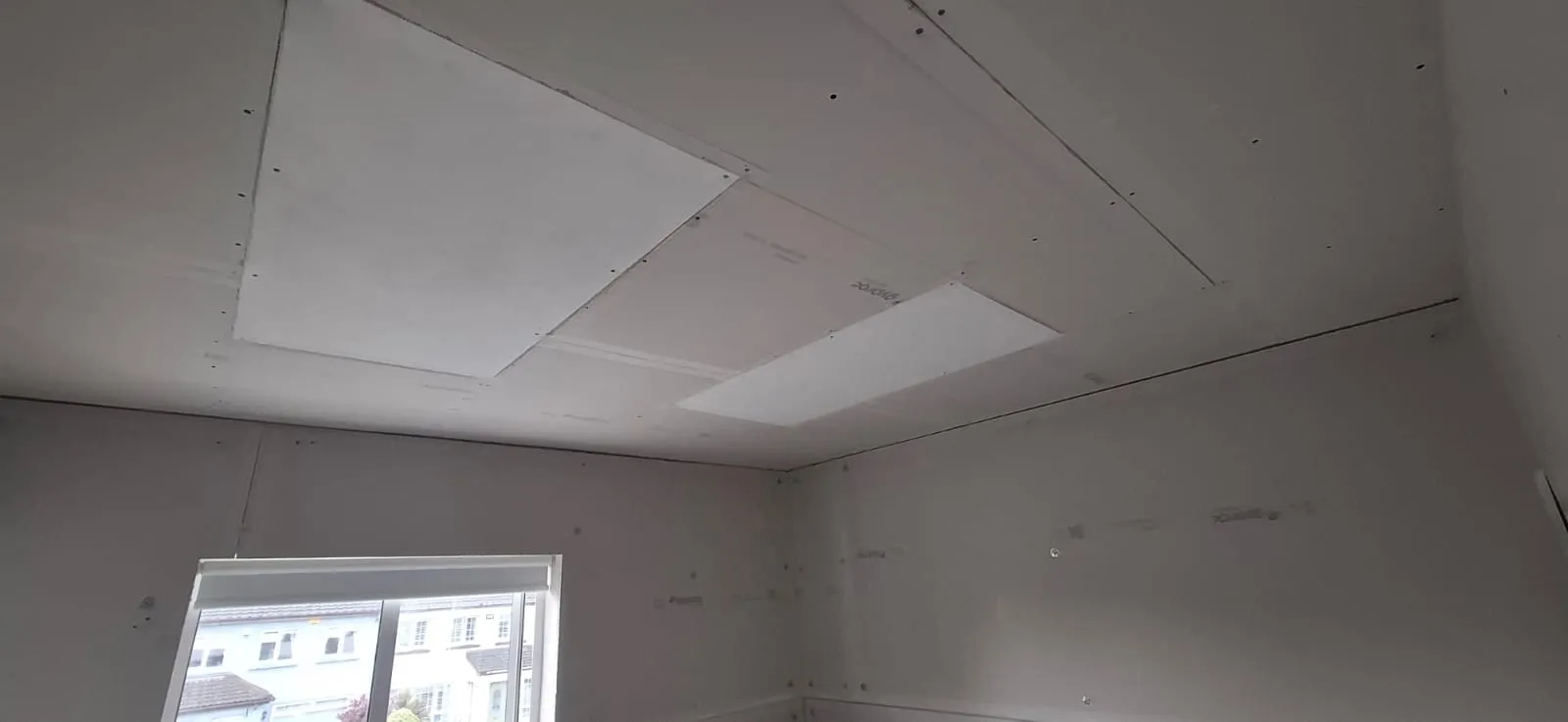
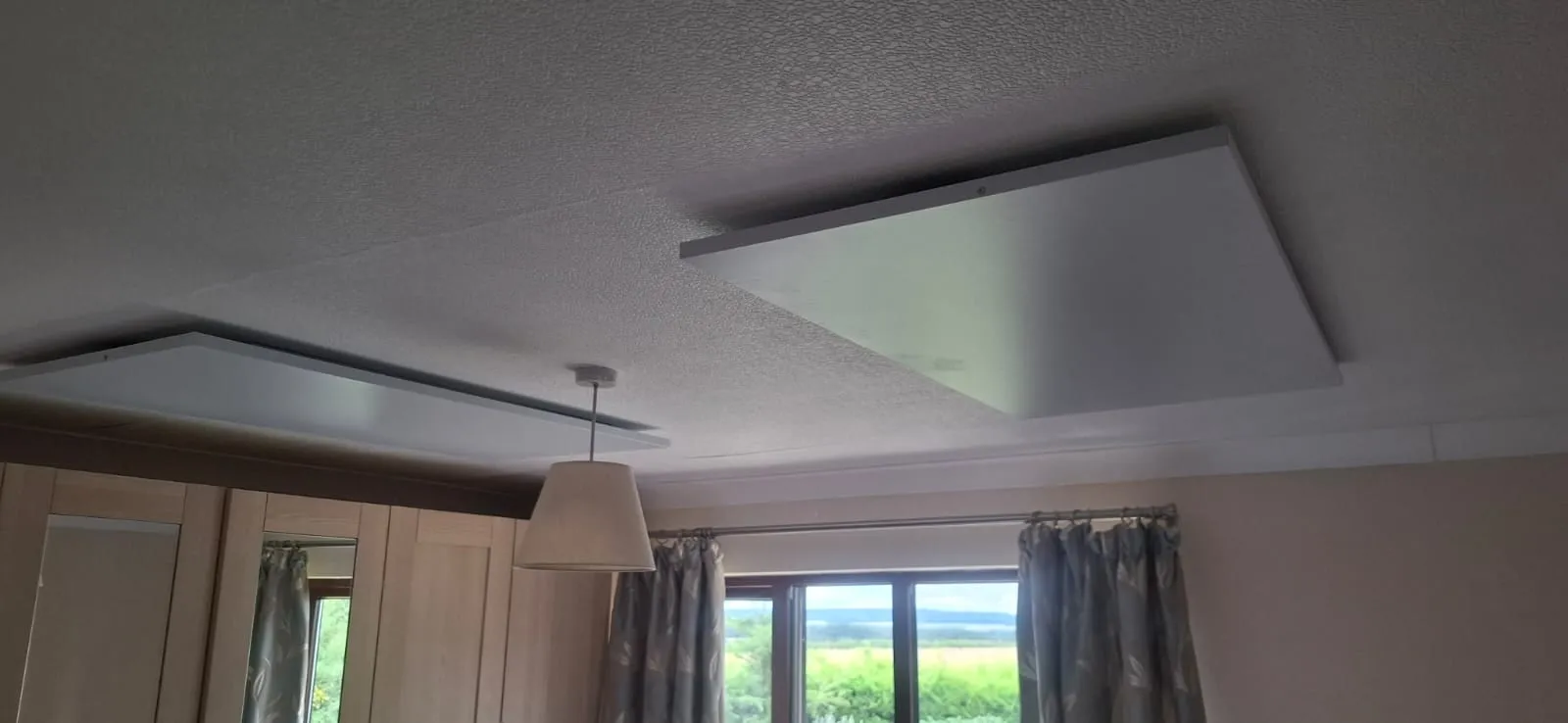
PowerBoard 250 is embedded into a standard gypsum ceiling and skimmed over, leaving nothing to see. PowerBoard 500 and 750 run at higher surface temperatures and are mounted onto the ceiling instead. Either way, 60–80% of the output arrives as infrared, straight down onto the people below.

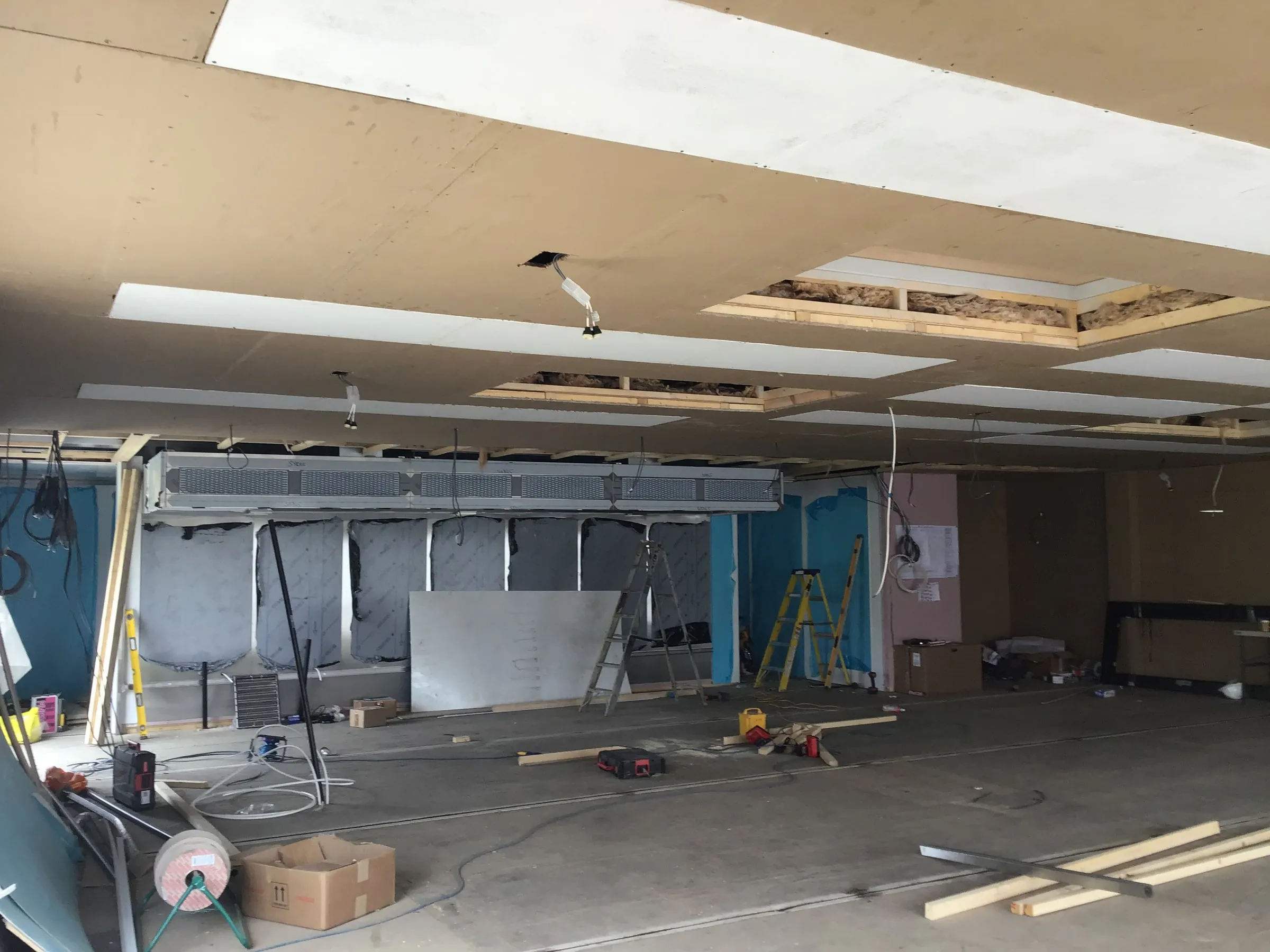
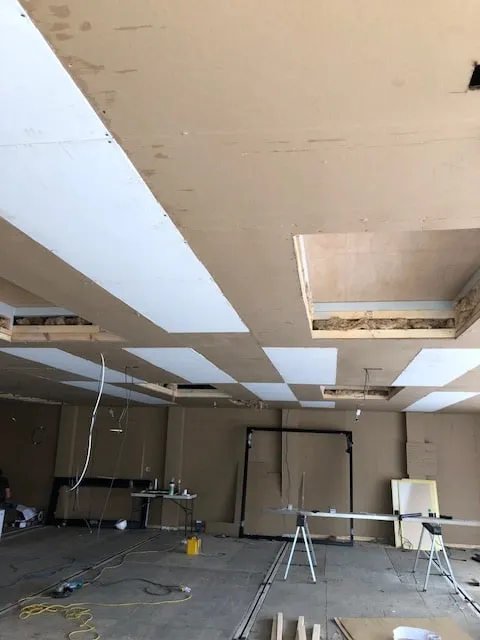
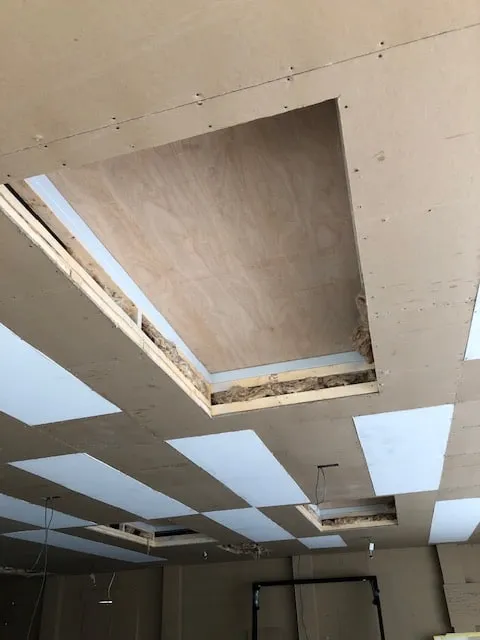
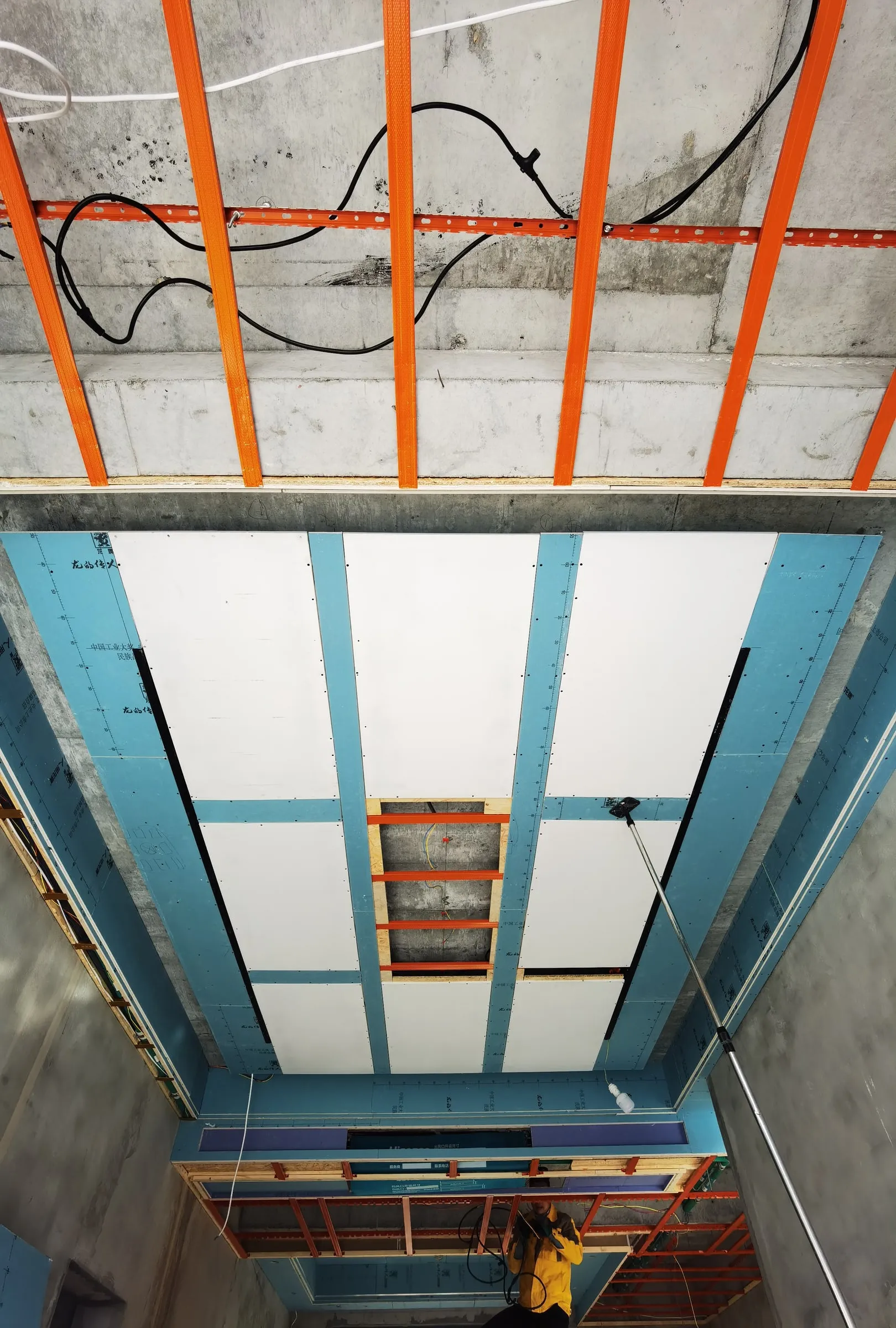
PowerBoard 250 panels set into a plasterboard ceiling before skimming
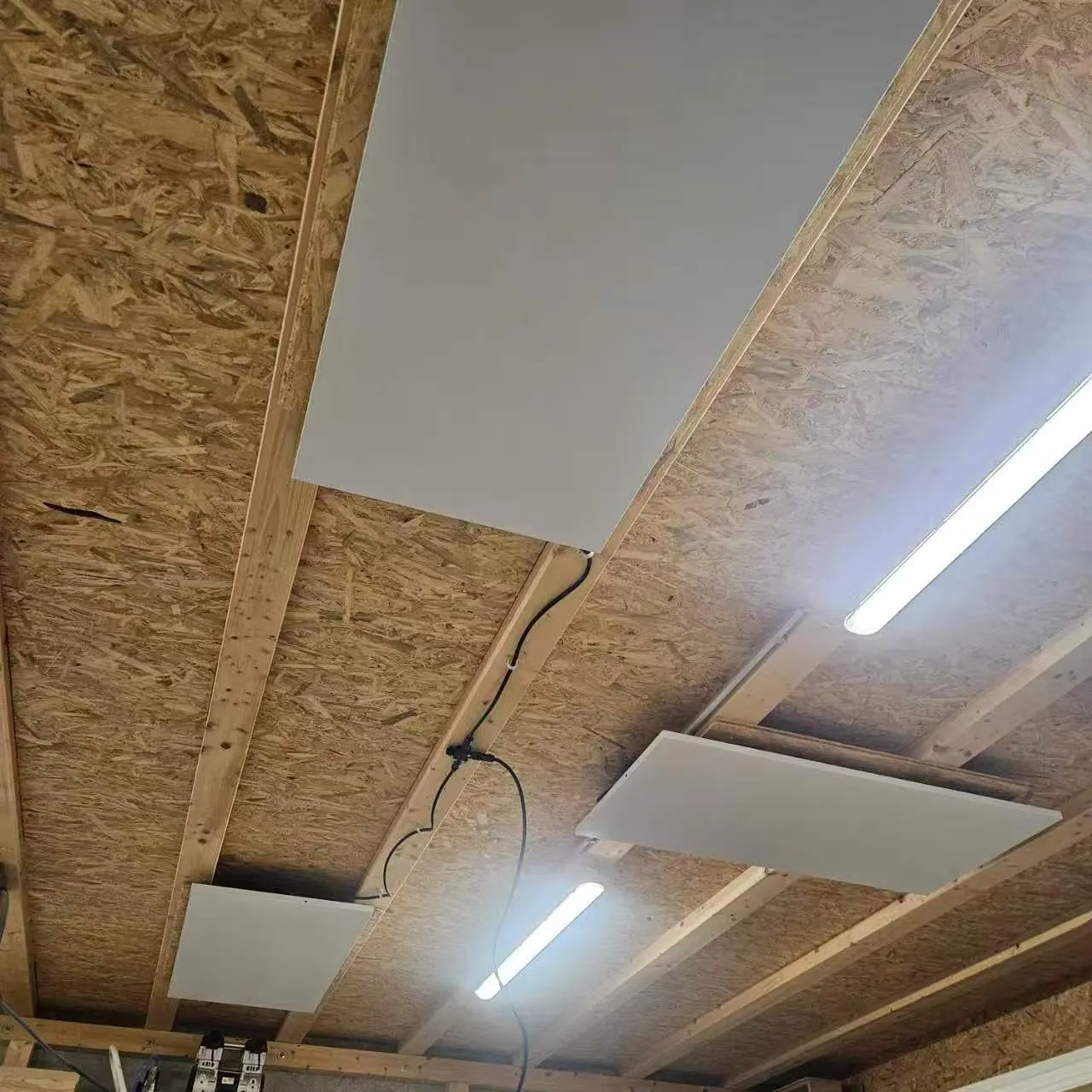
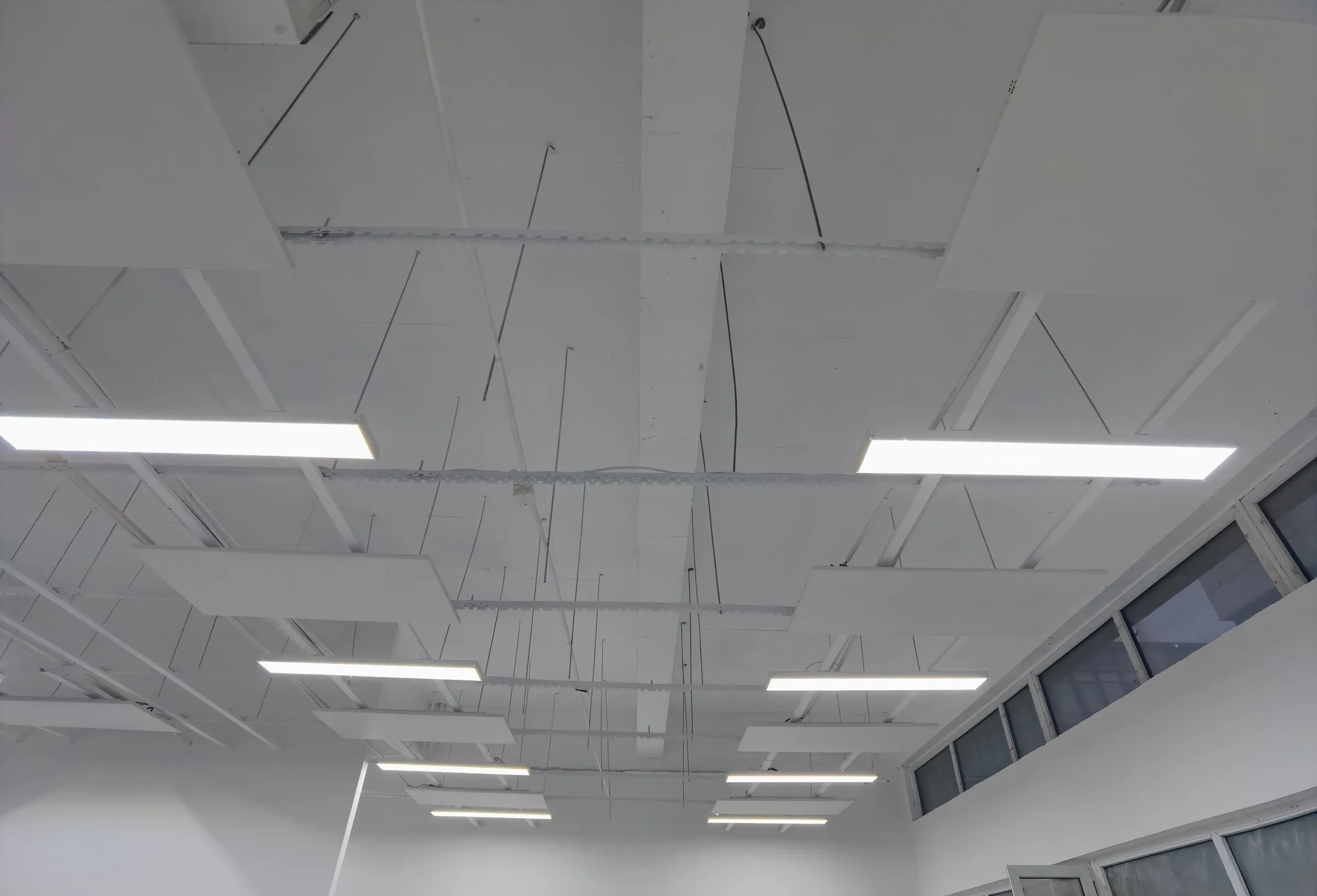
PowerBoard 750 panels surface-mounted to a finished ceiling
Element
PowerBoard 250 · 500 / 750
Installed output
500–1500 W/m²
Surface temperature
50–105 °C
Build-up
2–3 mm skimmed · none when mounted
Infrared proportion
60–80% of output
Time to felt warmth
10–20 min

How the system works

A heated ceiling in a standard plasterboard module.

PowerBoard is a carbon-fibre element built into a panel of our own design. The 250 is a heating-optimised sandwich panel sized to a standard 12.5 mm gypsum board, so it goes into the ceiling grid like any other board and is skimmed over, leaving nothing to see. The 500 and 750 are 25 mm ceiling-mounted elements that run at far higher surface temperatures, so they go onto the ceiling rather than into it.

Because the emitting plane is overhead, nothing in the room stands in its way: not furniture, not rugs, not cabinets. That clear line of sight, together with the highest infrared share of the three systems, is why ceiling panels are the system we specify when a space needs heat quickly, or when floors and walls cannot be touched.

Ceiling height changes the required output, not the suitability. Send us the section and we size the boards against it. Compare the two panel lines.

  1. Step 01

    Set out the grid

    Boards are positioned on the layout drawing against the ceiling grid or joists, with sensor and cable routes marked.

  2. Step 02

    Fix the boards

    PowerBoard 250 fixes like plasterboard. PowerBoard 500 and 750 mount to the finished ceiling on brackets.

  3. Step 03

    Connect and test

    The 250 daisy-chains on plug-and-play connectors; the 500 and 750 are wired back to connection boxes. Resistance and insulation tests are recorded either way.

  4. Step 04

    Skim or switch on

    PowerBoard 250 is skimmed over and painted like any ceiling. Mounted panels are ready as soon as they are connected.


Why specify it

  • Highest radiant share

    60–80% of output arrives as infrared, straight down onto the people below.

  • 12 minutes a board

    Plug-and-play cable system on a standard 1200 × 600 mm module.

  • Occupied buildings

    Nothing on the floor or the walls is disturbed. The usual route into a building in use.

  • Concealed or mounted

    PowerBoard 250 skims into the ceiling. 500 and 750 mount to it, on brackets or suspended.

  • No cracking risk by design

    The 250 is dimensionally analogous to a plasterboard sheet and skimmed the same way, so it moves with the ceiling.

  • Fire resistant

    Tested as part of SafeTech. CE and UKCA marked, BEAB tested to IEC 60335-1.

  • High-potential tested

    Every board is HIPOT tested before it leaves the factory.

  • 10-year warranty

    Ten years on the product and a tested twenty-year service life, with no water, manifolds or plant room.

Two panel lines

Buried in the ceiling, or mounted on it. The building decides which you can have.

Both are the same carbon-fibre element bonded into a rigid board. They differ in output, in how they are fixed and in how they are wired. Where a new plasterboard ceiling is going in, PowerBoard 250 disappears into it. Where nothing may be opened up, the 500 and 750 go onto the ceiling you already have.

Concealed · 250 W per board

PowerBoard 250
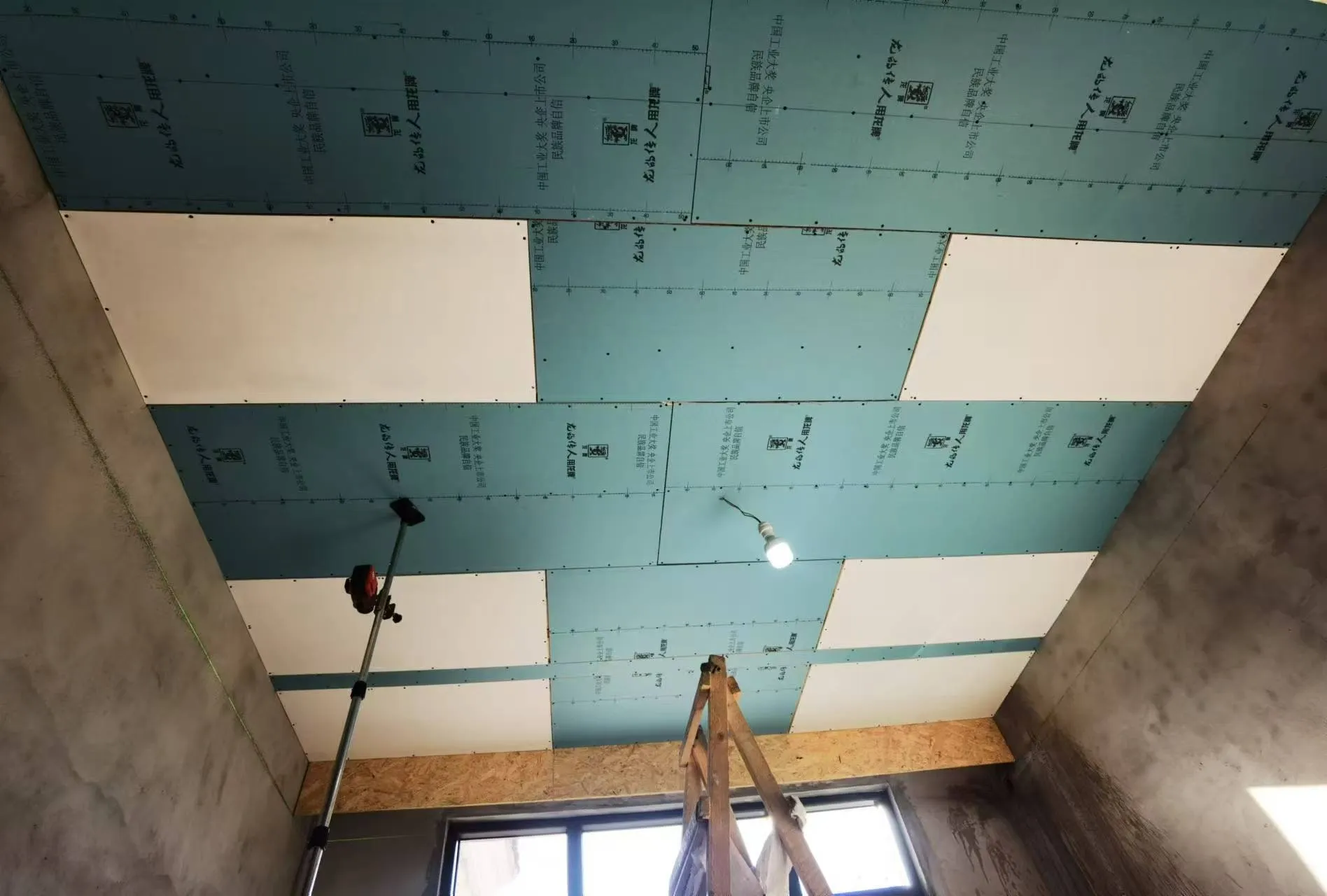
PowerBoard 250 panels set among plasterboard sheets in a ceiling grid
PowerBoard 250 boards set into the ceiling among the plasterboard, on the same grid and the same module.

Built to the dimensions of a standard 12.5 mm gypsum board so it drops straight into the ceiling grid, but it is not a gypsum board with a heater stuck on. It is a heating-optimised sandwich panel we designed and manufacture ourselves, engineered around the element so the heat goes down into the room rather than up into the void. It is then taped, jointed and skimmed exactly like the boards around it.

  • A proprietary panel, not a converted board. Our own sandwich construction, built around the carbon-fibre element and sized to 12.5 mm gypsum dimensions so your ceiling contractor treats it as a normal board.
  • No cracking risk by design. Because it matches a plasterboard sheet dimensionally and is faced to be taped, jointed and skimmed the same way, it moves with the ceiling instead of sitting in it as a foreign panel.
  • Plug-and-play wiring. Boards connect through the PowerBoard cable system: pre-made looms and push-fit connectors that daisy-chain one board to the next. No junction boxes above the ceiling and no wiring decisions on site.
  • About 12 minutes a board. Fix, plug in, move on. Up to twelve boards on a single circuit.
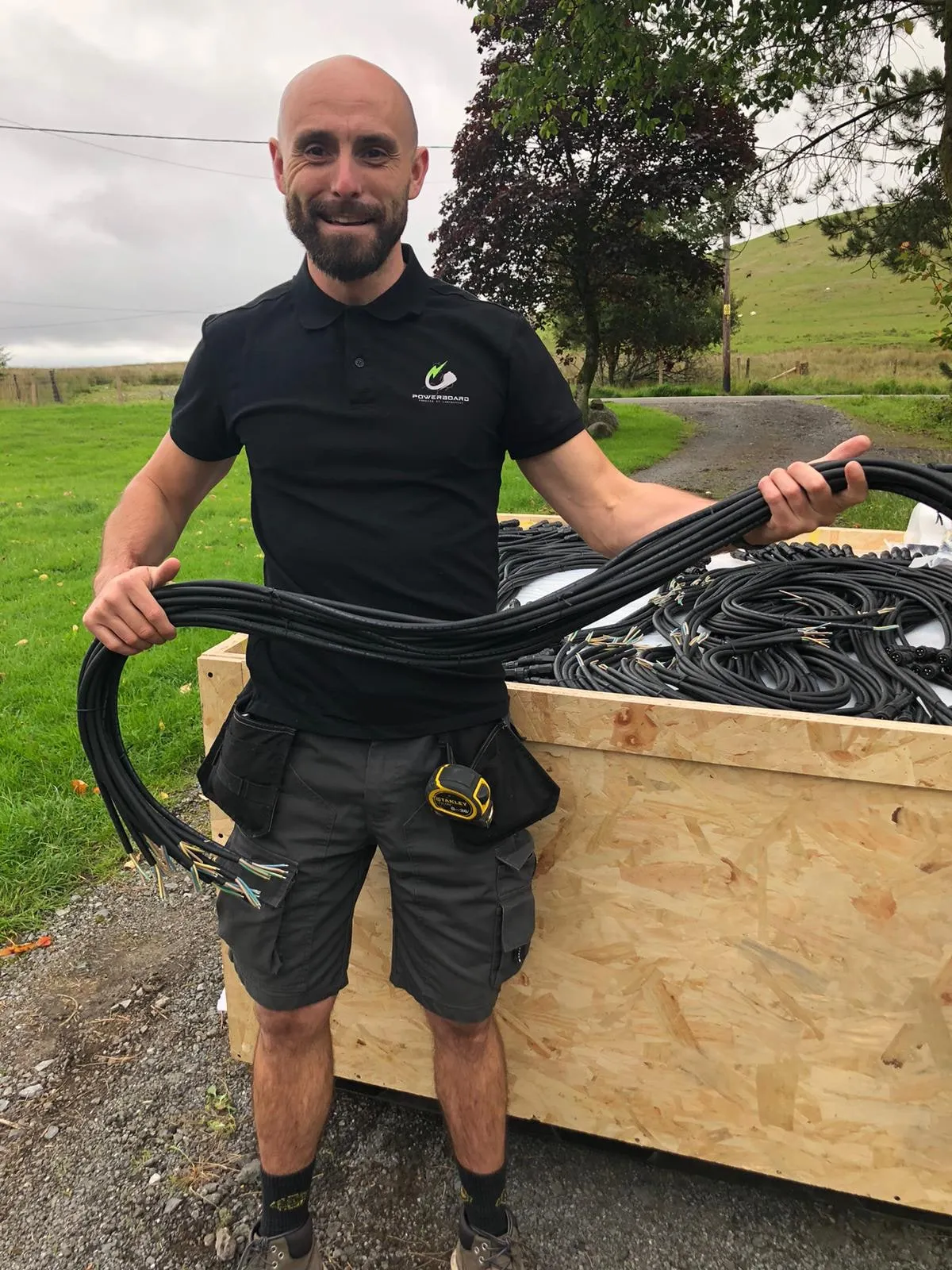
A pre-made PowerBoard cable loom being carried on site
Pre-made looms, cut to the layout
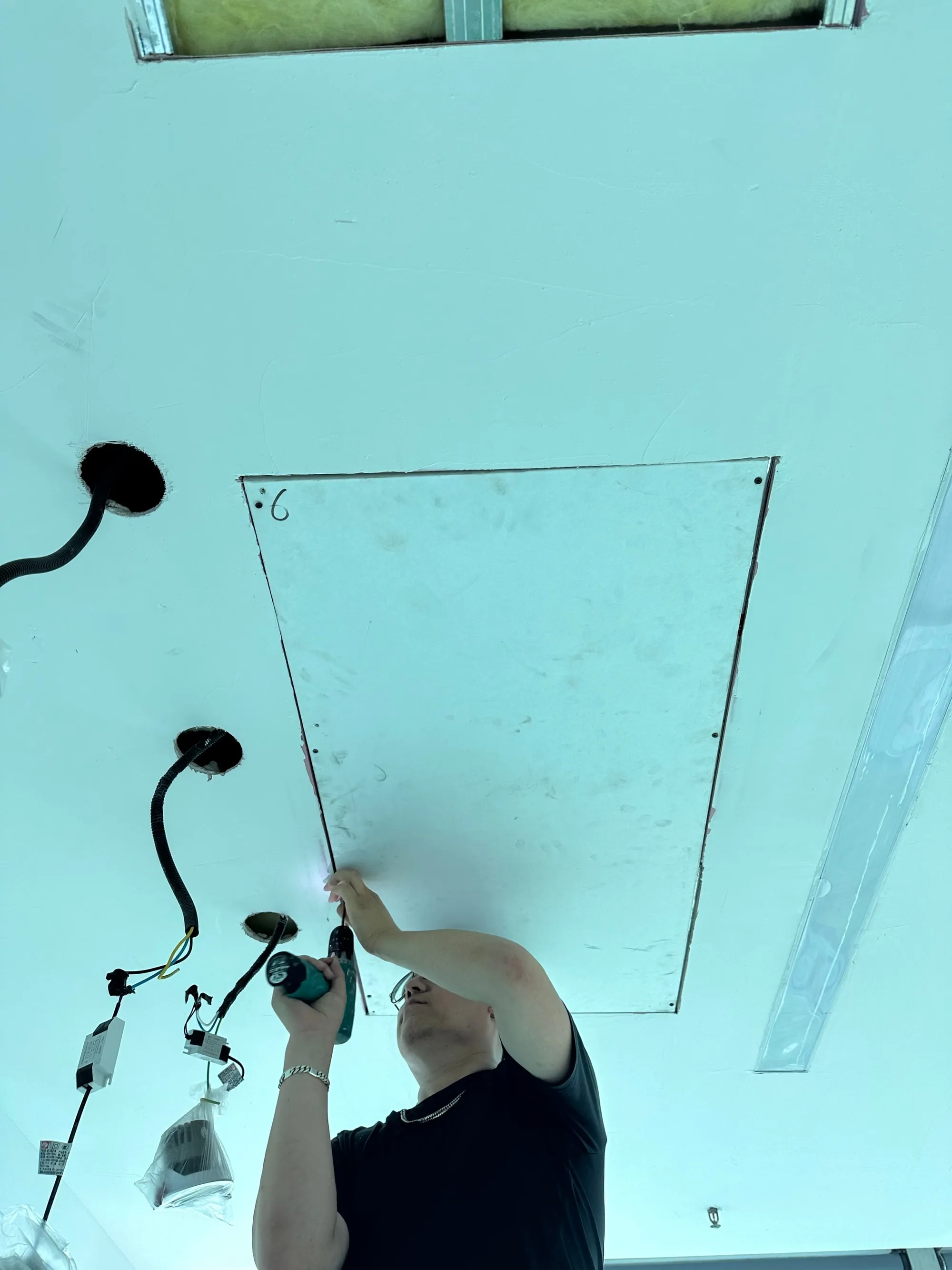
An installer screwing a PowerBoard 250 into the ceiling
Fixed like any other board
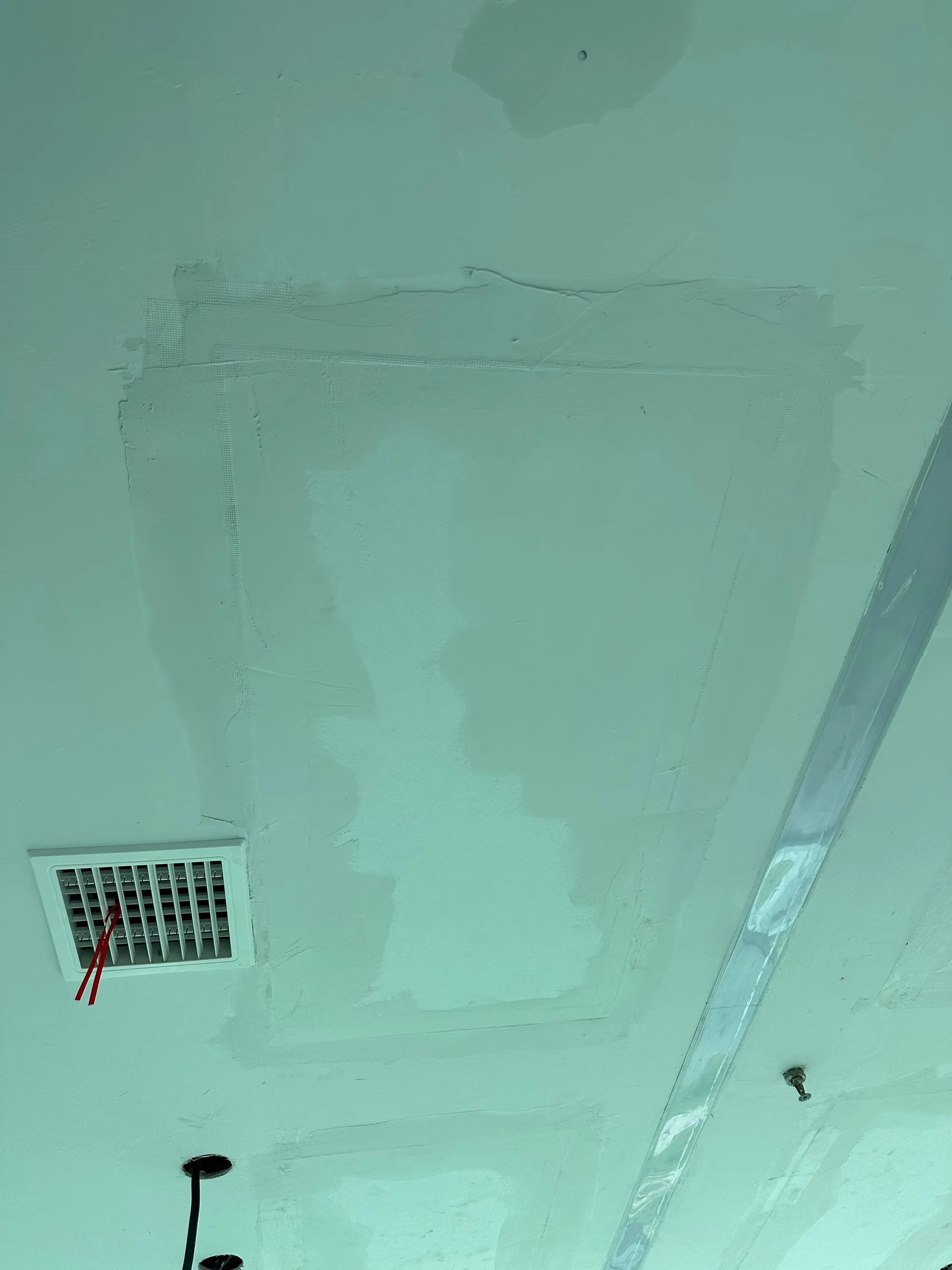
A PowerBoard 250 taped and jointed into the ceiling before painting
Taped, jointed and skimmed
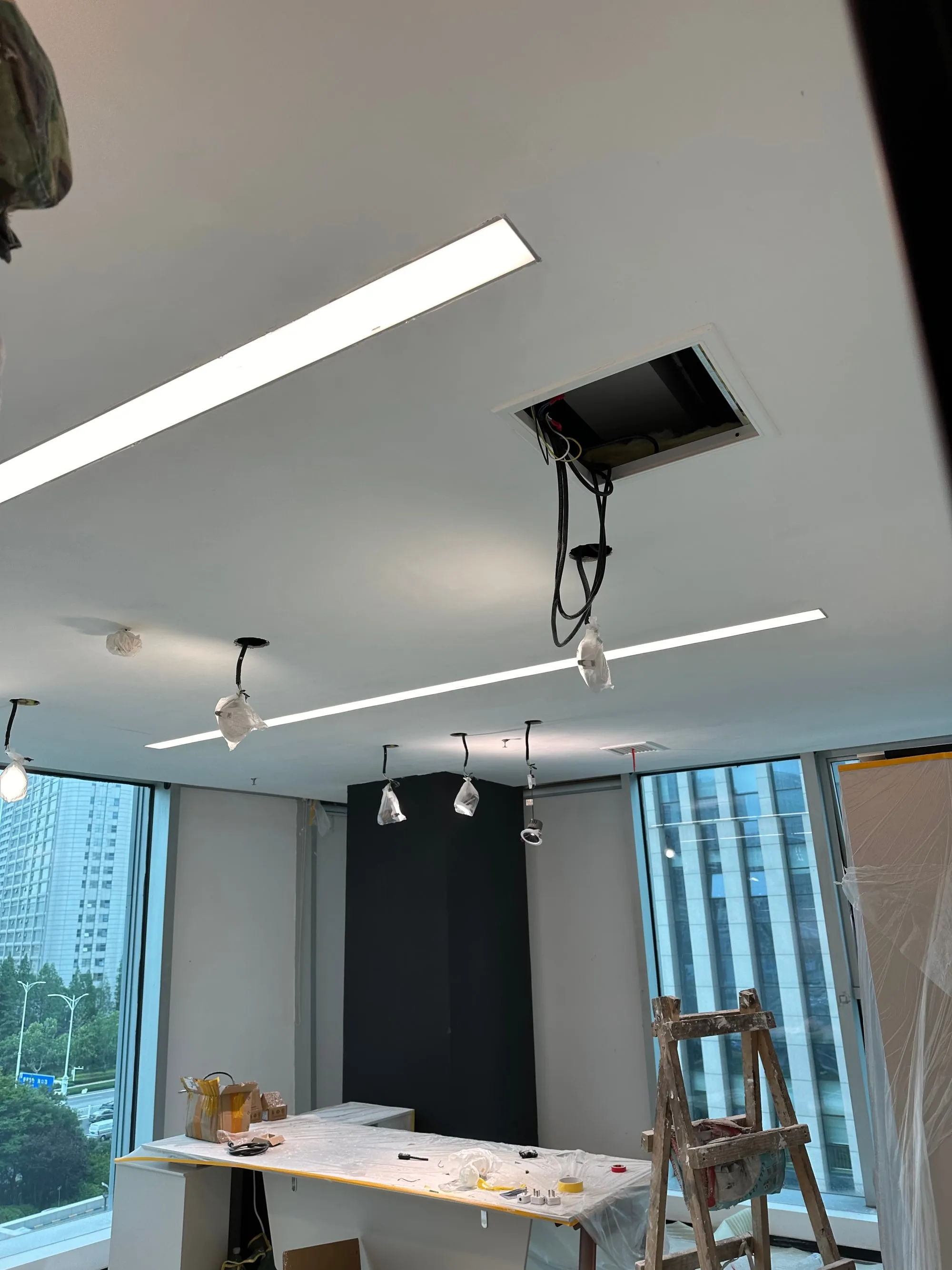
A finished office ceiling with lighting and no visible heating
Painted. Nothing to see.
Product IDPB-S-250, proprietary sandwich panel
Output250 W per board · 488 W/m² of heated area
Board size1200 × 600 mm · heating width 470 mm
Thickness · weight12.5 mm · 6.6 kg per board
Electrical240 V AC · 0.75 A · 230 Ω per board
Boards per zoneUp to 12
Surface temperature50–60 °C
FixingInto the ceiling grid, then taped and skimmed
ConnectionPowerBoard plug-and-play cable system

PowerBoard 250 datasheet →

Mounted · 500 or 750 W per board

PowerBoard 500 and 750

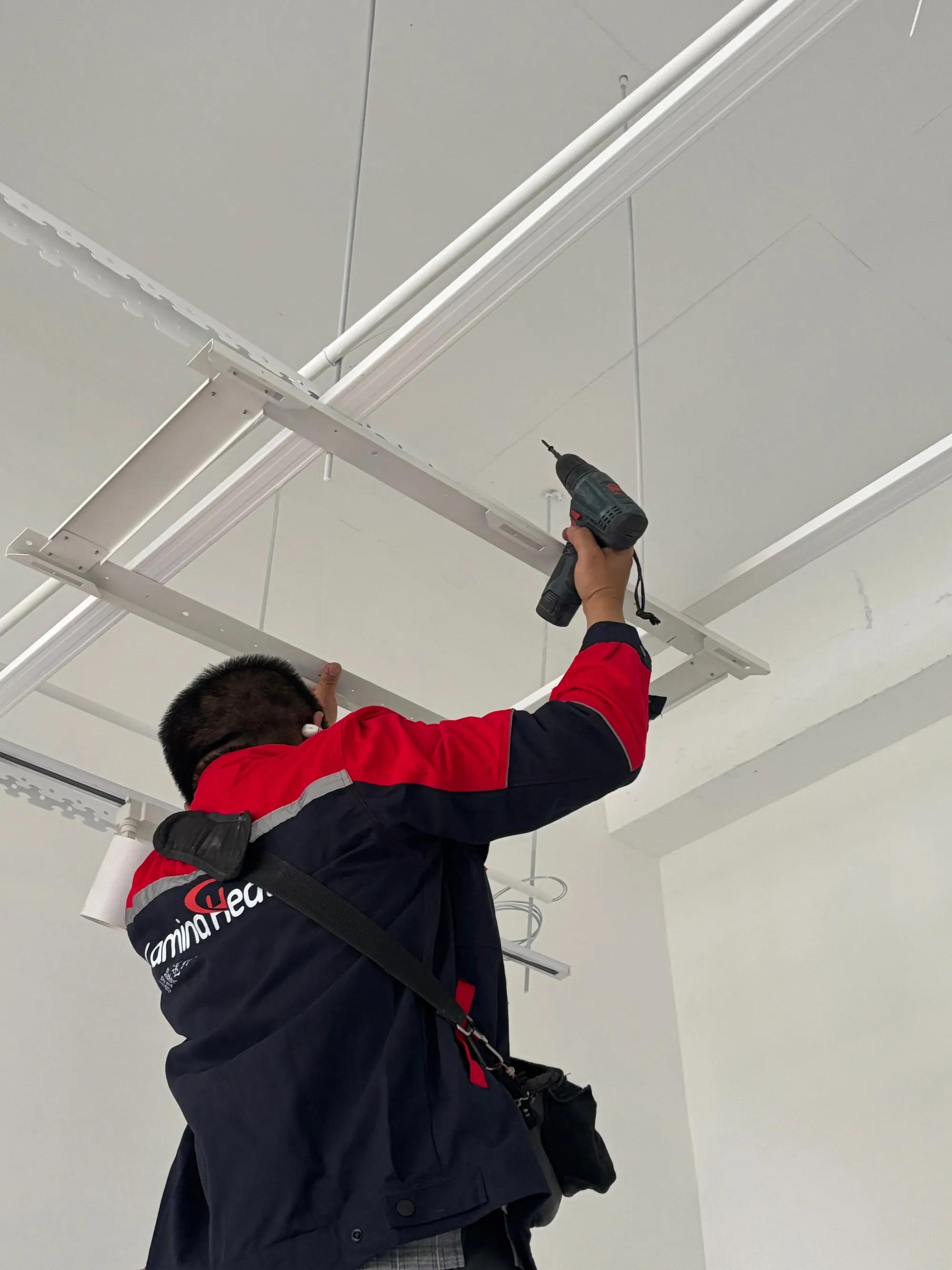
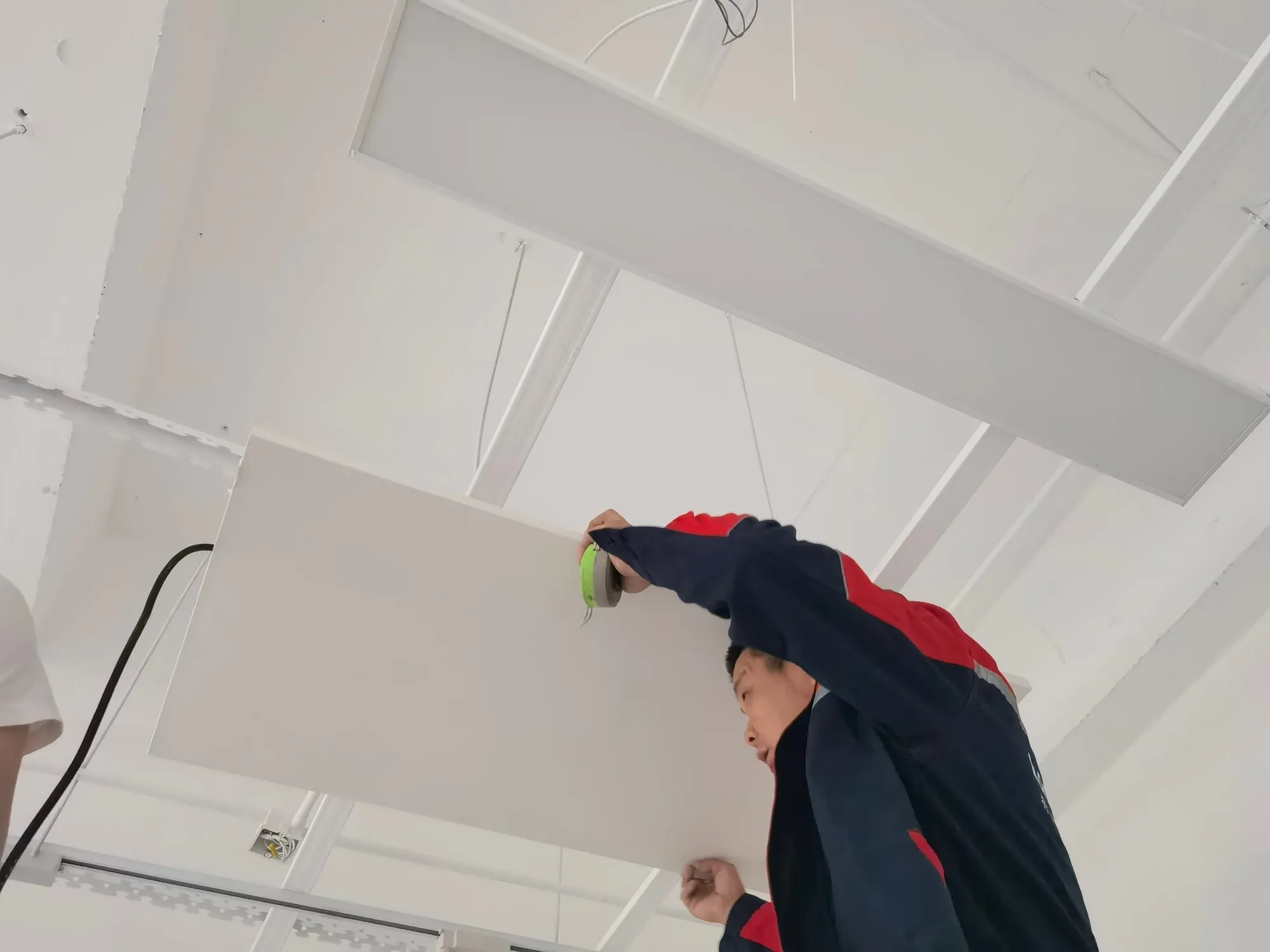
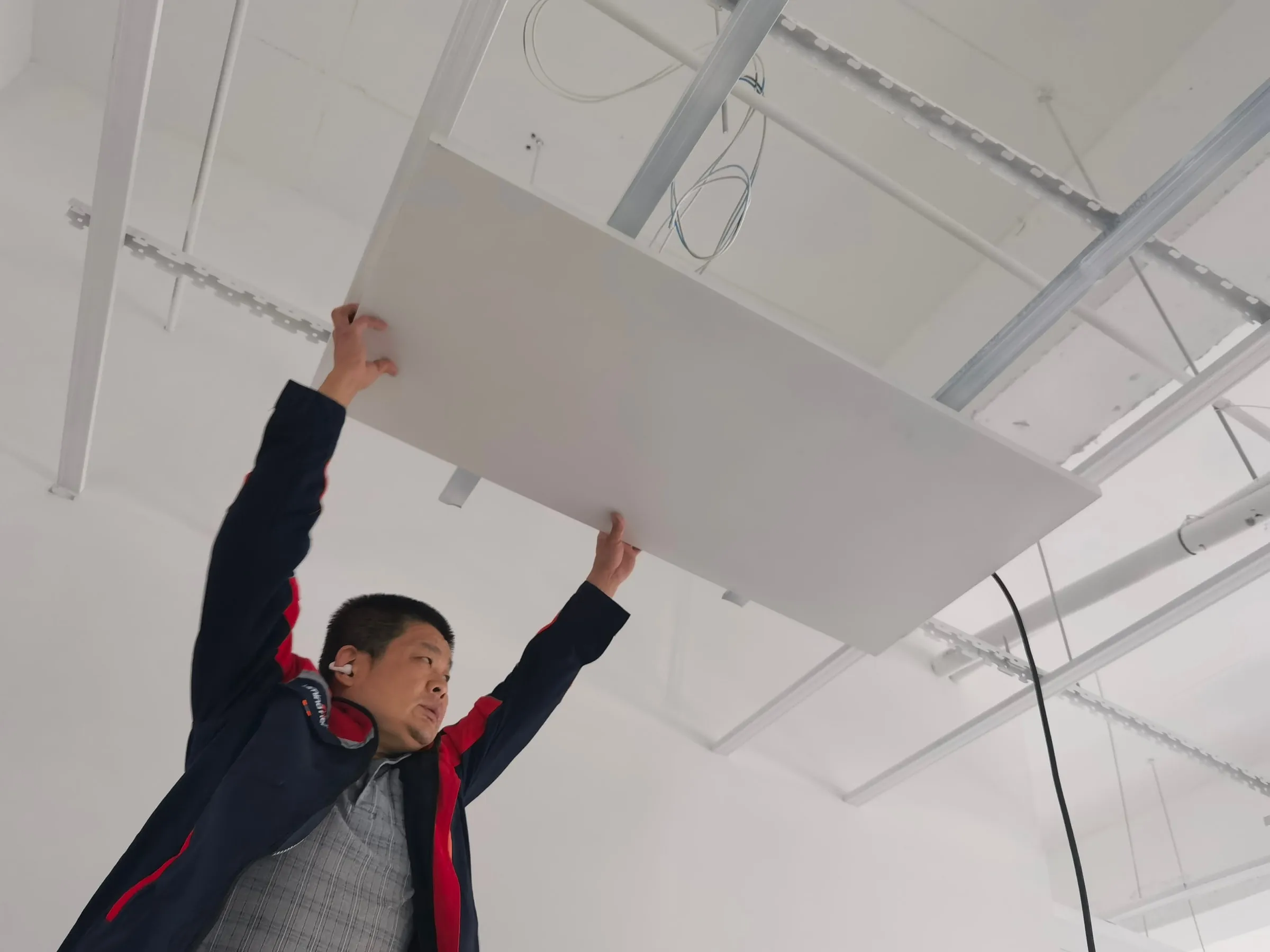
An installer fixing the mounting frame for a PowerBoard panel to a finished ceiling
The mounting frame goes up first, fixed straight to the finished ceiling. No ceiling is opened.

The same element at twice and three times the output, in a 25 mm thick ceiling-mounted panel. It runs at a higher surface temperature, so it goes onto the ceiling rather than into it. This is the system for buildings where no construction work is allowed and the heat has to arrive quickly.

  • 25 mm ceiling-mounted element. A self-contained panel that fixes to the finished ceiling, so nothing above it is touched.
  • Bracket-mounted or suspended. Fixed flat to the ceiling on a bracket frame, or hung below it on hooks and wires where services, height or a vaulted soffit make that easier.
  • Wired to connection boxes. Rather than daisy-chaining, each panel is wired back to a connection box and from there to the supply, laid out per project by our design team.
  • Highest output we make. 500 or 750 W a board, 980 or 1470 W/m² of heated area, felt within 10 to 20 minutes. Up to seven 500 W boards or four 750 W boards on a zone.
  • Nothing is disturbed. No floors lifted, no walls opened, no plant room. The usual route into an occupied building.
PowerBoard panels mounted between exposed timber joists in a workshop ceiling
Mounted between exposed joists, Switzerland
An installer sealing the edge of a mounted PowerBoard panel on the ceiling
Panel mounted and edge-sealed
SpecificationPowerBoard 500PowerBoard 750
Product IDPB-S-500PB-S-750
Output per board500 W750 W
Output per m²980 W/m²1470 W/m²
Board size1195 × 595 mm1195 × 595 mm
Thickness · weight25 mm · 10 kg25 mm · 10 kg
Electrical240 V · 2.1 A · 115 Ω240 V · 3.3 A · 75 Ω
Boards per zoneUp to 7Up to 4
FixingBrackets or suspendedBrackets or suspended
ConnectionTo connection boxesTo connection boxes

Which one

PowerBoard 250

A new or replacement plasterboard ceiling is going in, and the heating must be invisible. Plug-and-play wiring, twelve boards a zone, skimmed flush with the rest of the ceiling.

PowerBoard 500 and 750

The ceiling stays as it is. Open offices, home renovations and occupied buildings that need high output fast, mounted on brackets or suspended on wires.

Specification

ElementPowerBoard 250 · PowerBoard 500 / 750
Voltage110–240 V AC
Module1200 × 600 mm plasterboard grid (PB250)
Installed output500–1500 W/m²
Build-up2–3 mm skimmed (PB250) · none (PB500 / 750, mounted)
Surface temperature50–60 °C (PB250) · 80–105 °C (PB500 / 750)
Infrared proportion60–80% of output
Time to felt warmth10–20 min
InstallationPlug-and-play cable system, about 12 minutes per board
CertificationCE, UKCA, BEAB tested to IEC 60335-1
Warranty10 years product · 20-year tested life

Technical downloads

Need a document that is not listed? Ask usand we will send it directly.

Questions we get asked

Will I see the panels?

PowerBoard 250 is skimmed into the ceiling and disappears. PowerBoard 500 and 750 are surface-mounted panels and are visible, which is the trade-off for a higher output with no construction work.

How quickly does a room warm up?

Felt warmth in 10–20 minutes from cold. Ceiling panels have the highest radiant proportion of the three systems, so people feel the heat before the air temperature has moved.

Can it be installed in an occupied building?

Yes. This is the system we specify when floors and walls cannot be disturbed. Boards go up in a standard ceiling grid and connect with a plug-and-play cable system.

What about tall rooms?

Ceiling height changes the required output, not the suitability. Send us the section and we size the boards against it.

Energy use, estimated

How much energy this surface actually uses.

A radiant surface does not run continuously. It cycles under the thermostat, and the share of time it is on is set by how well the building holds heat. Tell us the standard the building was built or renovated to and how big the space is.

Building standard
Days per year the heating is in use. Shorter in mild coastal climates, longer inland and at altitude.
24/7 temperature control kWh per season kWh per day Held at temperature around the clock, cycling under the thermostat
Smart use, 10 h/day kWh per season kWh per day Heated only through the hours the rooms are occupied
Installed power
W/m² of room · kW
On, cycling
of the time
Element on the surface
W/m² over of the
Per m² per season
kWh/m² at 24/7 · kWh/m² at 10 h/day

±10% tolerance. Climate, exposure, glazing, ventilation rate and how the building is actually used all move the number.

How this is calculated

Energy = area × installed W/m² × hours per day × duty cycle × days in the season. The only difference between the two figures is the hours: 24 for continuous temperature control, 10 for smart use through the occupied hours.

  • Passive or near-passive (Passivhaus · KfW 40 · EPC A · very high performance): 30 W/m² installed, on 15% of the time.
  • New build to current standard (GEG · KfW 55 · Part L 2021 · EPC B): 50 W/m² installed, on 20% of the time.
  • Modernised (EnEV 2002–2016 · EPC C · insulated retrofit): 75 W/m² installed, on 25% of the time.
  • Partly modernised (WSchV 1984–1995 · EPC D · some insulation): 100 W/m² installed, on 30% of the time.
  • Unmodernised (Pre-1978, before WSchV 1977 · EPC E–G · solid wall): 120 W/m² installed, on 35% of the time.

Element density = installed W/m² ÷ coverage. Ceiling panels (PowerBoard): 8–25% of the surface, 15% assumed. PowerBoard 250 15–25% · PowerBoard 750 8–15%.

Indicative only. Your project's figures come out of the heat-loss calculation and the layout drawing.

Send us a floor plan.We will send back a heating system.

Project data, drawings or CAD files in. A room-by-room heat loss, element layout and priced proposal out. No obligation.