Are infrared heaters safe? What to know before you fit them at home
Are infrared heaters safe? Radiation, surface temperatures, fire, water, children and pets, and the tests and certifications behind our systems.

“Infrared” and “radiation” in the same sentence can sound worrying, especially if you have kids, pets or someone at home with a health condition. So it’s a fair question.
The short answer: yes, a properly made and properly installed infrared heating system is safe. It gives off the same kind of gentle, long-wave infrared your own body does, the surfaces stay warm rather than hot, nothing burns and there are no fumes. What really makes one system safer than another is the build quality, the voltage, the testing and the certification, so that’s what this article looks at.
Is the radiation harmful?
No. “Radiation” just means energy travelling as waves. Light is radiation. So is the warmth you feel from a sunny window or from the person sitting next to you.
The radiation people rightly worry about, like X-rays and ultraviolet, sits at the other end of the spectrum. Those waves are short and carry enough energy to damage skin and DNA. Infrared is at the long, low-energy end. It can make things warmer, and that’s all it does.
Our heating surfaces give off long-wave infrared at 6 to 15 µm. Your body gives off infrared in that same band, with a peak at around 9 to 10 µm. It’s absorbed at the surface of your skin and felt as warmth. There’s no UV. If you’d like the physics in more depth, is far infrared heating safe? goes further.
Short-wave heaters are a bit different. Halogen, quartz and patio heaters have a small element that glows at hundreds of degrees, and their infrared is much more intense close up. They’re fine used as intended, but that’s the kind of heater the usual warnings about not sitting too close are aimed at, not heating built into a wall or ceiling.
How hot does it get?
This is the question that matters most day to day, and it’s why built-in infrared heating is easy to live with. The heat is spread over a whole floor, wall or ceiling, so the surface only needs to be gently warm.
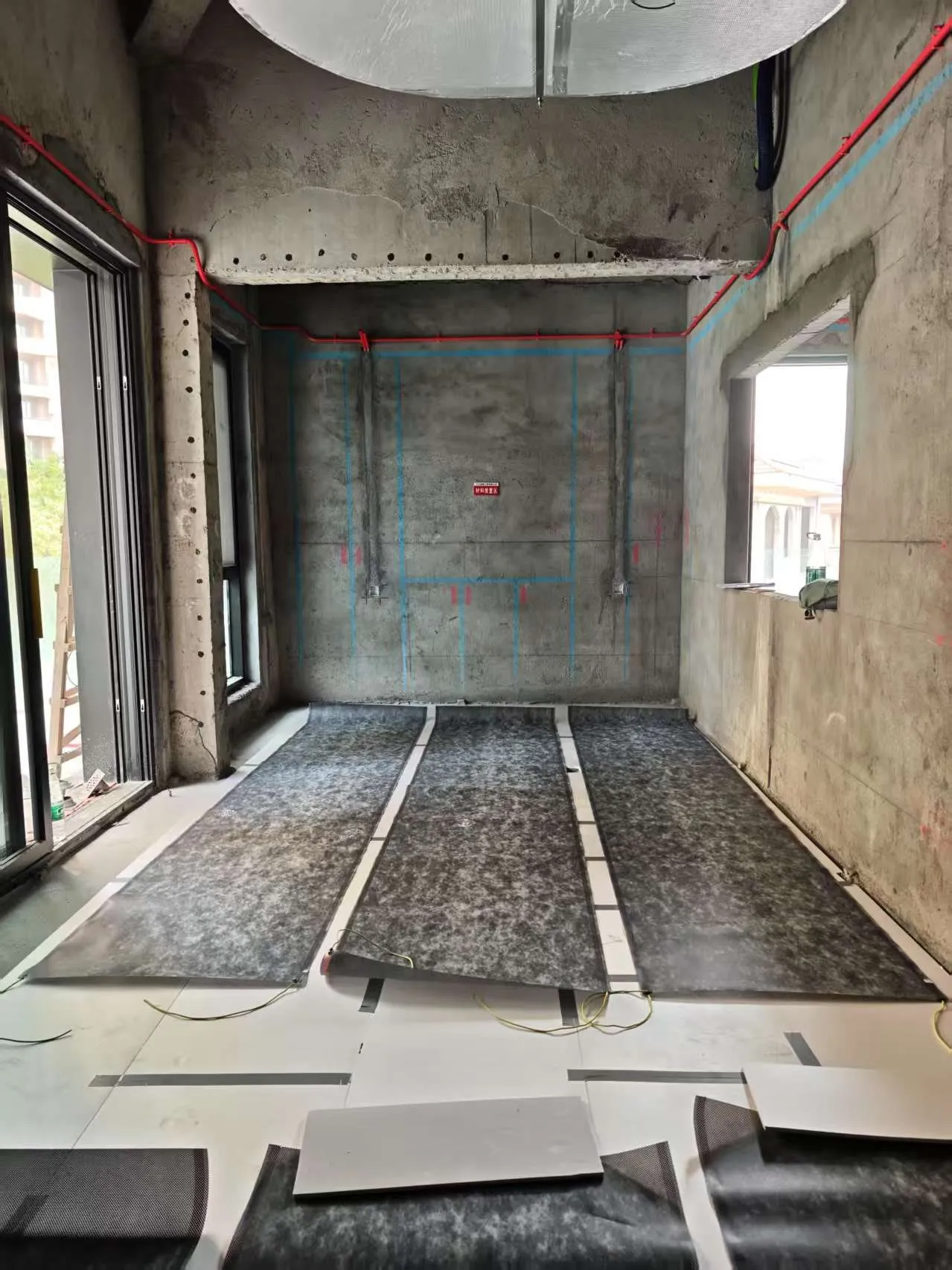
- Floors stay under 29 °C at the surface, and up to 35 °C only in special areas. That’s below skin temperature, so babies can crawl and pets can lie on it all day.
- ComfortScrim walls and ceilings run at 40 to 55 °C. A wall feels warm to hot to the hand, similar to a radiator. A ceiling is out of reach.
- PowerBoard ceiling panels run at 50 to 60 °C for the flush PowerBoard 250, and 80 to 105 °C for the surface-mounted PowerBoard 500 and 750, which go high up on the ceiling, well out of reach.
Every room has its own thermostat, and floors have a floor sensor so the surface stays within its limit.
Can infrared heating cause a fire?
Any electrical product can fail, which is why testing matters. What you’re looking for is an element that won’t catch or spread a flame, even when something goes wrong.
Our SafeTech EGS element is held in a direct flame in our own lab. It doesn’t keep burning and the flame doesn’t travel along it. Because the carbon fibre is spread across the whole element rather than squeezed into one hot wire, there’s no single hot spot running at high temperature. The element is also tested with water, a high-voltage test and by being bent, punctured and pulled. You can watch all five tests here:
SafeTech · five tests every element passes
Safety is not a claim we make about the system. It is a set of tests the element itself passes, filmed in our own laboratory, and the certifications that follow from them.
- Direct flame test
Fire resistance
The element is held in direct flame. It does not sustain a flame or propagate one along the film.
- Submerged and energised
Water immersion
Submerged and energised. Zero moisture absorption, which is what lets the element go into a bathroom or a wet room.
- Grounding test
Full-surface grounding
A grounded conductive layer across the whole element rather than a wire with a sheath, so a fault anywhere on the surface is carried to earth.
- HIPOT test
High-potential test
Every element is HIPOT tested before it leaves the factory, at multiples of its working voltage.
- Flex and puncture test
Structural integrity
Flexed, punctured and pulled. A damaged area is spliced in place and re-tested rather than replaced.
What about electric shock and water?
Two different approaches keep this safe.
- ComfortScrim runs at extra-low voltage, 12 to 48 V from a separate power supply, and under 24 V inside a shower enclosure. That’s the safety extra-low voltage range, and it’s why it can go into bathroom walls and floors. More on that in infrared heating for bathrooms.
- SafeTech EGS runs at mains voltage and is earthed across its whole surface, not just along one wire. If the element were ever damaged, the fault is carried straight to earth, so the circuit’s protection can switch it off. It’s tested submerged in water while switched on, and it absorbs no moisture. The floor version is explained in electric infrared underfloor heating.
As with any fixed electrical heating, a qualified electrician makes the final connections to your circuit and its protection.
Nothing burns, and nothing blows dust around
There’s no gas, oil or wood involved, so there’s no flame, no flue, no fumes and no risk of carbon monoxide from the heating. There’s also no fan and no stream of hot air carrying dust around the room, which people with allergies often notice.
Does infrared heating dry out the air?
No heating removes moisture from the air, but warming the air does lower its relative humidity, and that’s what makes skin and eyes feel dry. Radiant heating helps in two ways: you’re comfortable with the air 2 to 3 °C cooler, and there’s no fan-driven warm air blowing across you. Warm walls also sit well above the temperature where condensation forms. There’s more in do non-radiant heaters dry out the air? and radiant heating and humidity.
Certificates worth asking for
Certification is what separates engineered heating from a cheap plug-in panel, so ask any supplier for it. For ours:
| System | Where it goes | Voltage | Certification |
|---|---|---|---|
| ComfortScrim | walls, ceilings, floors | 12–48 V | CE, TÜV, RoHS |
| SafeTech EGS | floors | mains | IEC 60335-1 (BEAB), UL 2683, UL listed, CE, UKCA |
| PowerBoard | ceilings | mains | IEC 60335-1 (BEAB), CE, UKCA |
Our elements are tested for a lifespan of more than 20 years and come with a 10-year warranty.
So, is infrared heating safe for your home?
If it’s a certified system, installed properly, with a thermostat in each room: yes. The infrared itself is the same gentle warmth your body gives off. The surfaces stay warm rather than hot. Nothing burns. And each of those points can be checked on paper before anything goes into your walls.
If you’re curious how it actually warms a room, how does infrared heating work? walks through it step by step.
Infrared heating safety: your questions
Are infrared heaters safe?
Yes, when they are certified and installed properly. Built-in infrared heating gives off gentle long-wave infrared, the same kind the human body gives off, at surfaces that stay warm rather than hot. There is no flame, no fumes and no carbon monoxide. Look for recognised certification and a thermostat in every room.
Is infrared radiation harmful to health?
No. Infrared is non-ionising: it does not have the energy to damage skin or DNA the way X-rays or ultraviolet can. It is absorbed at the surface of the skin and felt as warmth. Our heating surfaces give off long-wave infrared at 6 to 15 µm and no UV.
Is infrared heating safe for babies, children and pets?
Yes. Our heated floors stay under 29 °C at the surface, which is below skin temperature, so children can crawl and pets can lie on them. Walls run at 40 to 55 °C, similar to a radiator, and ceilings are out of reach. There is no hot grille, no glowing element and nothing to knock over.
Can you leave infrared heating on overnight?
Built-in infrared heating is fixed, thermostat-controlled heating, designed to run whenever it is needed, like any central heating. Portable plug-in heaters are different: follow the maker’s instructions for those.
Can infrared heating cause a fire?
A certified system is designed and tested not to. Our SafeTech EGS element is held in a direct flame and does not keep burning or spread the flame, and the surfaces run at 29 to 55 °C, far below the temperature at which household materials ignite. As with any electrical heating, correct installation by a qualified electrician matters.
Is infrared heating safe in a bathroom?
Yes, with the right system. ComfortScrim runs at 12 to 48 V from a separate power supply, and under 24 V inside a shower enclosure. SafeTech EGS is tested submerged in water while switched on and absorbs no moisture.
Do infrared heaters dry out the air?
Less than air-based heating. No heater removes moisture, but warming the air lowers relative humidity. With radiant heating you are comfortable with the air 2 to 3 °C cooler, and there is no fan blowing warm air across you, so the air feels less dry.
Is infrared heating bad for your eyes?
Not built-in heating. The warnings about eyes relate to very intense short-wave infrared, from sources like glowing industrial heaters. A floor, wall or ceiling at 29 to 55 °C gives off gentle long-wave infrared and does not glow.