IR-A, IR-B and IR-C: which infrared is right for indoor heating?
IR-A, IR-B and IR-C explained: the wavelengths, which heaters emit each band, how they feel, and why long-wave IR-C suits homes, offices and clinics.
Shop for an infrared heater and you’ll meet a lot of labels: short-wave, medium-wave, long-wave, near, far, IR-A, IR-B, IR-C. They aren’t marketing flavours. They describe where on the spectrum a heater works, and that decides how it feels, where you can use it and how comfortable it is to live with.
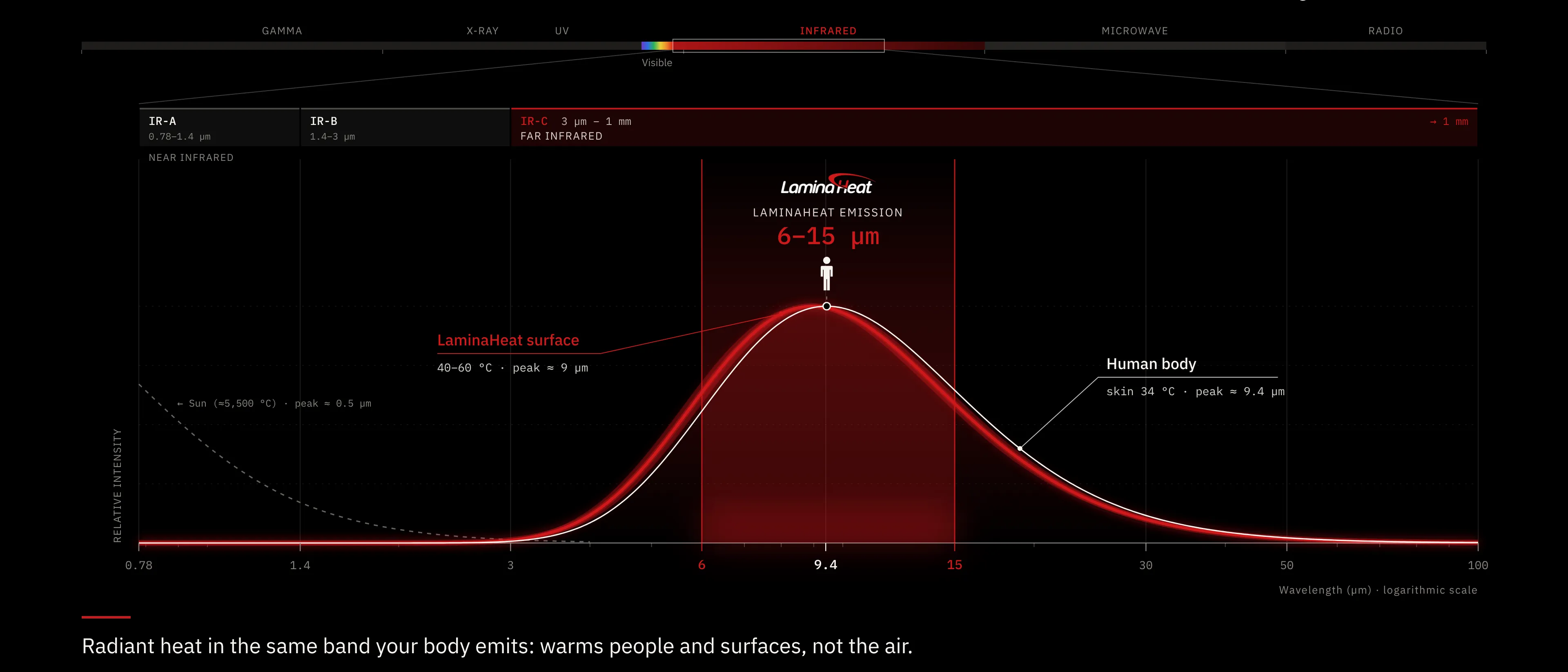
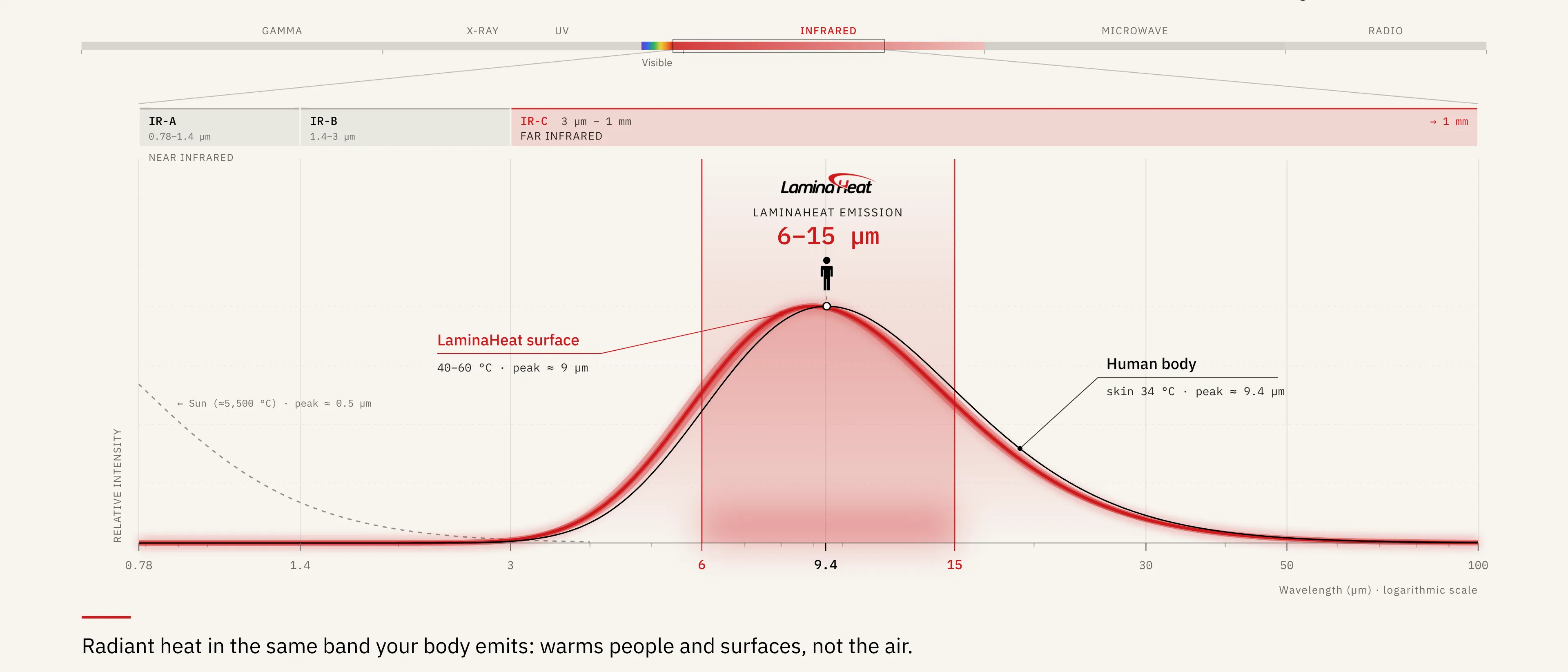
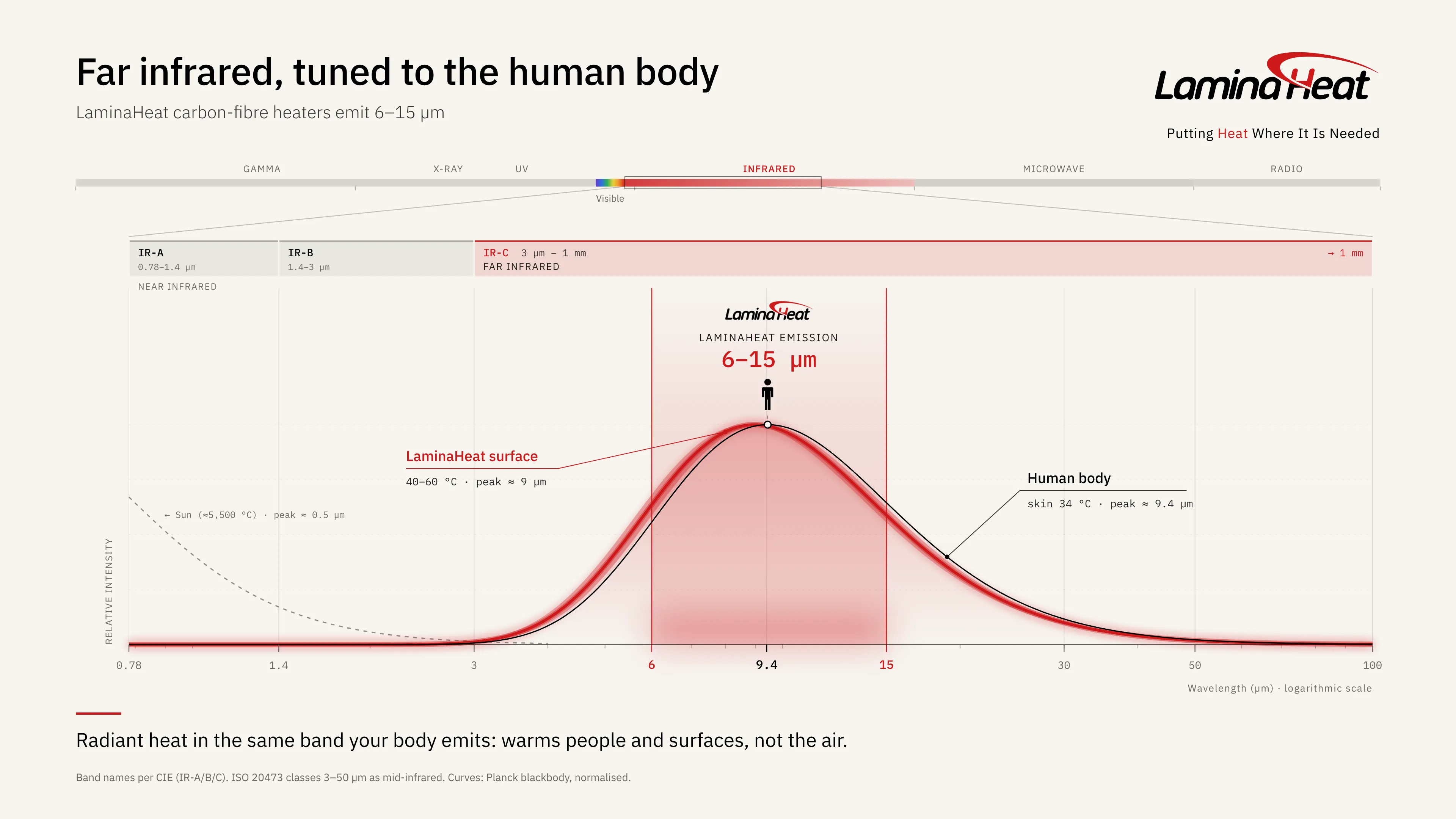
What are IR-A, IR-B and IR-C? They are the three infrared bands defined by the CIE, the international lighting commission. IR-A runs from 0.78 to 1.4 µm, IR-B from 1.4 to 3 µm, and IR-C from 3 µm to 1 mm. Glowing heaters such as halogen and quartz bars work in IR-A and IR-B. Gently warm surfaces such as heated walls, ceilings and floors work in IR-C, the same band the human body gives off.
The three bands at a glance
| IR-A | IR-B | IR-C | |
|---|---|---|---|
| Wavelength | 0.78–1.4 µm | 1.4–3 µm | 3 µm–1 mm |
| Also called | Short-wave, near infrared | Medium-wave | Long-wave, often “far infrared” |
| Element temperature | about 1,800 °C and up | about 700–1,800 °C | below about 700 °C |
| Typical heaters | Halogen bars, the sun | Quartz and carbon lamp heaters, gas patio heaters | Ceramic heaters, infrared panels, heated walls, ceilings and floors |
| Visible glow | Bright | Red-orange | None below about 500 °C |
| How it feels | Intense and immediate, like a spotlight | Strong up close, fades with distance | Even, gentle warmth, like a sunny wall |
What puts a heater in a band is its temperature. The hotter the element, the shorter the wavelength. A halogen element at about 2,200 °C peaks at 1.2 µm. A ceiling at 50 °C peaks at about 9 µm. The full table, from the sun down to human skin, is in far infrared heating: why 6 to 15 µm is the wavelength that matters.
IR-A: short-wave heat for spot heating
IR-A heaters are small elements that glow brightly. They switch on to full output in a second or two, and the beam is strong enough to cut through wind. That makes them useful outdoors, on terraces and loading bays, and for spot heating one workstation in a large, open building.
The downsides show up indoors. The glow and glare are tiring to live with, the heat is concentrated in a narrow beam, and IR-A reaches deeper into the skin than the other bands, so it feels intense up close. It is also the only band with an open research question about long, close exposure, which we cover in are infrared heaters safe?. For a room you sit in for hours, it’s the wrong tool.
IR-B: medium-wave, the middle ground
IR-B heaters, such as quartz tubes, carbon lamp heaters and gas patio heaters, run cooler than halogen and glow red-orange. They are a little softer than IR-A and still quick, so they suit covered terraces, workshops and sports halls where people come and go.
They share the same basic limits indoors: a small, hot element that has to be mounted out of reach, a visible glow, and heat that feels strong near the heater and weak a few metres away.
IR-C: long-wave, made for rooms people live in
IR-C covers everything from a 700 °C ceramic heater down to a 29 °C heated floor, so it’s worth splitting:
- Hot IR-C, around 300 to 700 °C: ceramic and dark heaters, used in workshops, stables and industrial halls.
- Warm IR-C, around 90 to 110 °C: wall-hung infrared panels.
- Gentle IR-C, around 29 to 60 °C: heating built into walls, ceilings and floors. This is where our systems sit, peaking at about 9 µm with the strongest output between 6 and 15 µm.
At the gentle end, the heater’s curve sits almost on top of the human body’s, which peaks at about 9.4 µm. The heat is absorbed in the outer layer of your skin and by every surface in the room, so the whole room warms evenly and feels comfortable at a lower air temperature. The surface is too cool to glow, so it can disappear behind plaster, under tiles or into a ceiling. More on why that matters is in how does infrared heating work?.
Near, mid and far: the naming trap
You’ll also see near, mid and far infrared, and they don’t line up neatly with IR-A, B and C.
- ISO 20473 calls 0.78 to 3 µm near infrared, 3 to 50 µm mid-infrared and 50 µm to 1 mm far infrared.
- The CIE scheme puts everything from 3 µm to 1 mm into one band, IR-C.
- The heating industry usually says far infrared for long-wave heating in IR-C.
So a heated ceiling at 6 to 15 µm is IR-C under the CIE, mid-infrared under ISO 20473, and far infrared on most product pages. It’s the same heat under three names. When you compare heaters, ignore the label and ask for the surface temperature. That tells you the band.
Which infrared is right for which space?
| Space | Best fit | Why |
|---|---|---|
| Open terraces, loading bays | IR-A or IR-B | Instant, directional, cuts through wind |
| Workshops, high halls, spot heating | IR-B or hot IR-C | Heats people in one zone without heating the whole volume |
| Homes, bedrooms, living rooms | Gentle IR-C | Silent, invisible, even warmth for hours at a time |
| Offices and schools | Gentle IR-C | No glare, no fans, room-by-room control |
| Clinics, salons, care homes | Gentle IR-C | Low surface temperatures, no air movement, nothing to clean |
| Bathrooms | Gentle IR-C, low voltage | Warm walls and ceilings, no hot element near water |
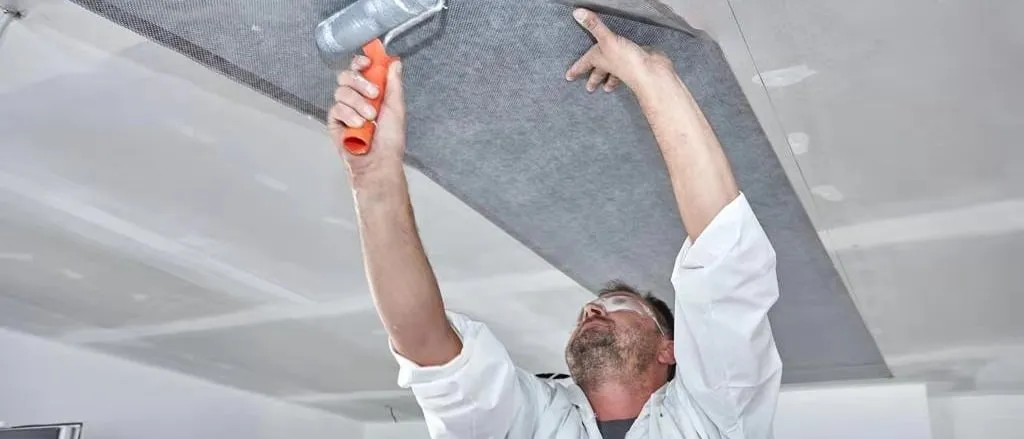
If you’re planning heating for rooms people use every day, look for gentle IR-C: a large surface at a moderate temperature. Our ComfortScrim goes behind plaster on walls and ceilings, PowerBoard panels fit into ceilings, and SafeTech EGS goes under the floor finish.
IR-A, IR-B and IR-C: your questions
What is the difference between IR-A, IR-B and IR-C?
They are the three infrared bands defined by the CIE. IR-A runs from 0.78 to 1.4 µm and comes from very hot, glowing sources such as halogen heaters. IR-B runs from 1.4 to 3 µm and comes from quartz, carbon lamp and gas patio heaters. IR-C runs from 3 µm to 1 mm and comes from cooler surfaces: ceramic heaters, infrared panels, heated walls, ceilings and floors, and the human body.
Which infrared is best for heating a home?
Long-wave IR-C from a large surface at a moderate temperature, such as a heated wall, ceiling or floor at 29 to 60 °C. It peaks at about 9 µm, the same band the human body gives off, so it feels like even, gentle warmth. It has no glow and can be hidden in the room’s finishes.
Is IR-C the same as far infrared?
Usually, in heating. The heating industry calls long-wave infrared in the IR-C band far infrared. Strictly, ISO 20473 calls 3 to 50 µm mid-infrared and only 50 µm to 1 mm far infrared, so a heated surface at 6 to 15 µm is IR-C under the CIE and mid-infrared under ISO 20473.
Are short-wave infrared heaters bad?
No, they are the right tool for some jobs. Short-wave IR-A and medium-wave IR-B heaters are fast and directional, which suits terraces, loading bays and spot heating in large halls. They are less suited to rooms people sit in for hours, because of the glow, the concentrated beam and the hot element.
How do I know which band a heater emits?
Look at the surface or element temperature. Above about 1,800 °C the peak is in IR-A, between about 700 and 1,800 °C in IR-B, and below about 700 °C IR-C. A heated wall or ceiling at 40 to 55 °C peaks at about 9 µm.
Which infrared band does the human body emit?
IR-C. Skin at about 34 °C emits long-wave infrared that peaks at about 9.4 µm. Gentle heating surfaces at 29 to 60 °C emit in almost the same band.
Do IR-C heaters glow?
Hot IR-C heaters above about 500 °C can show a faint glow. Infrared panels and heating built into walls, ceilings and floors run far cooler and give off no visible light at all.