Heating a 120 m² office from under the tiles: SafeTech EGS in Laoshan, Qingdao
A 120 m² open-plan office in Qingdao heated with SafeTech EGS film under tiles: one-day install, thermal-camera commissioning, 13.2 kW on one thermostat.
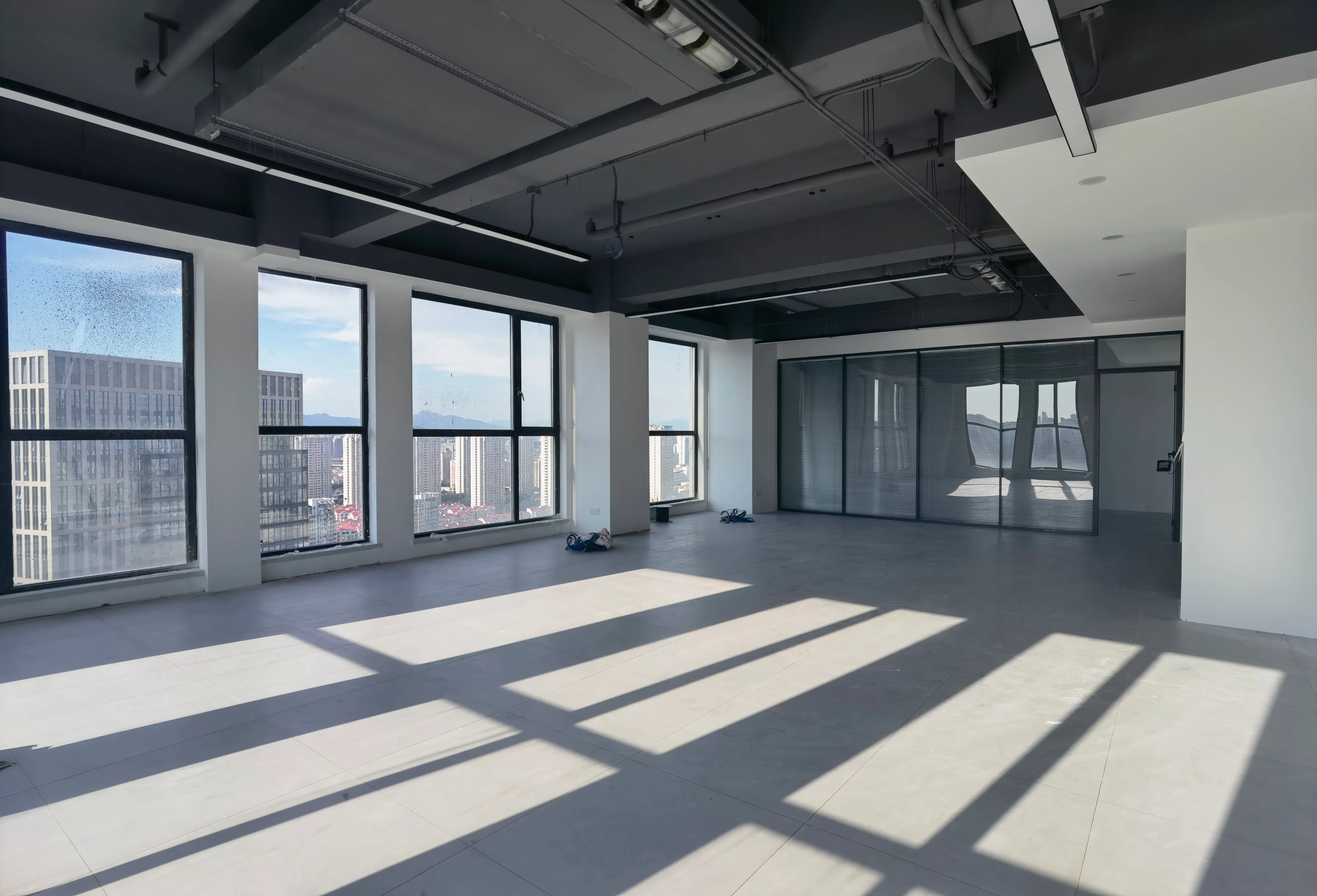
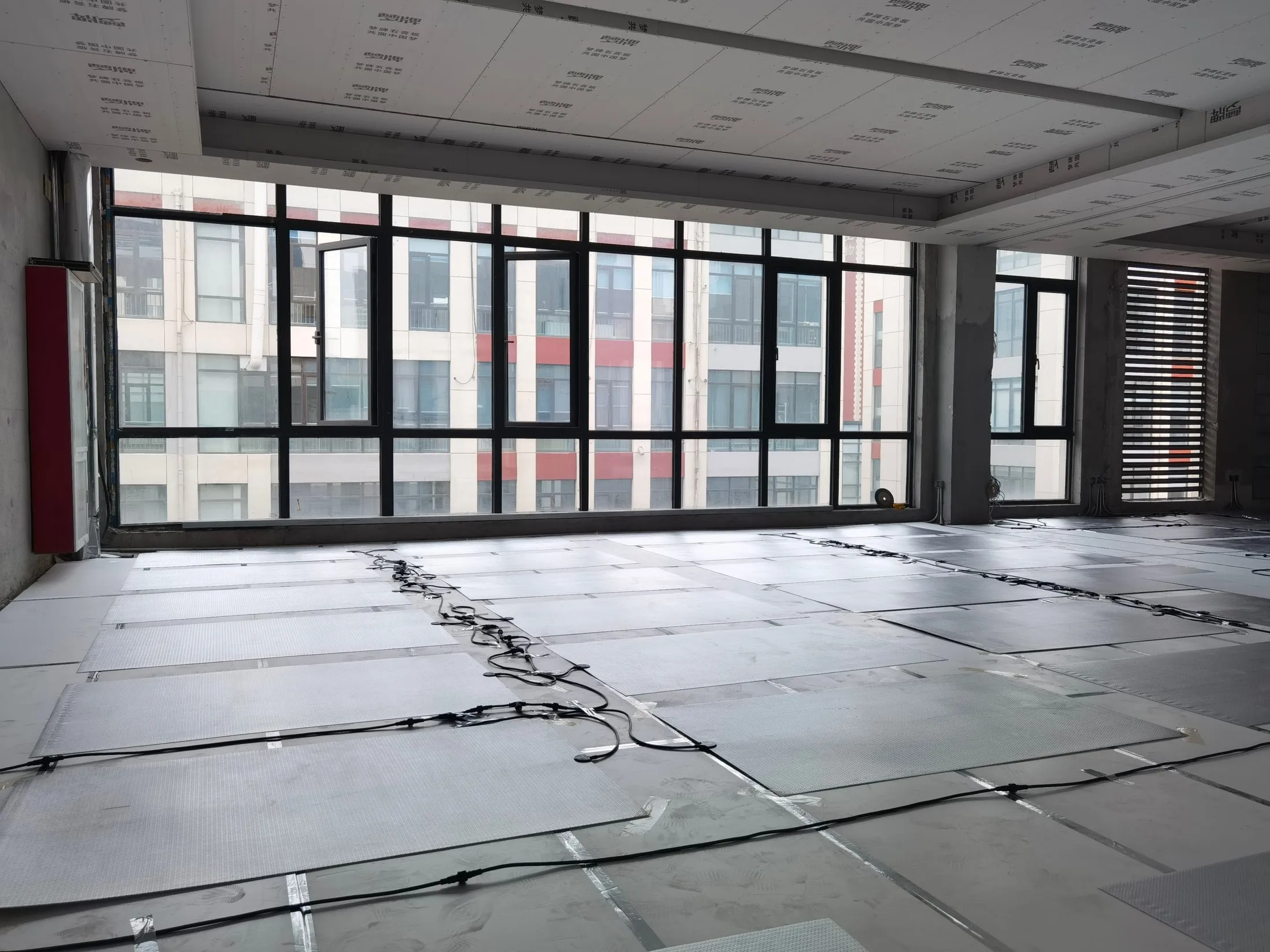
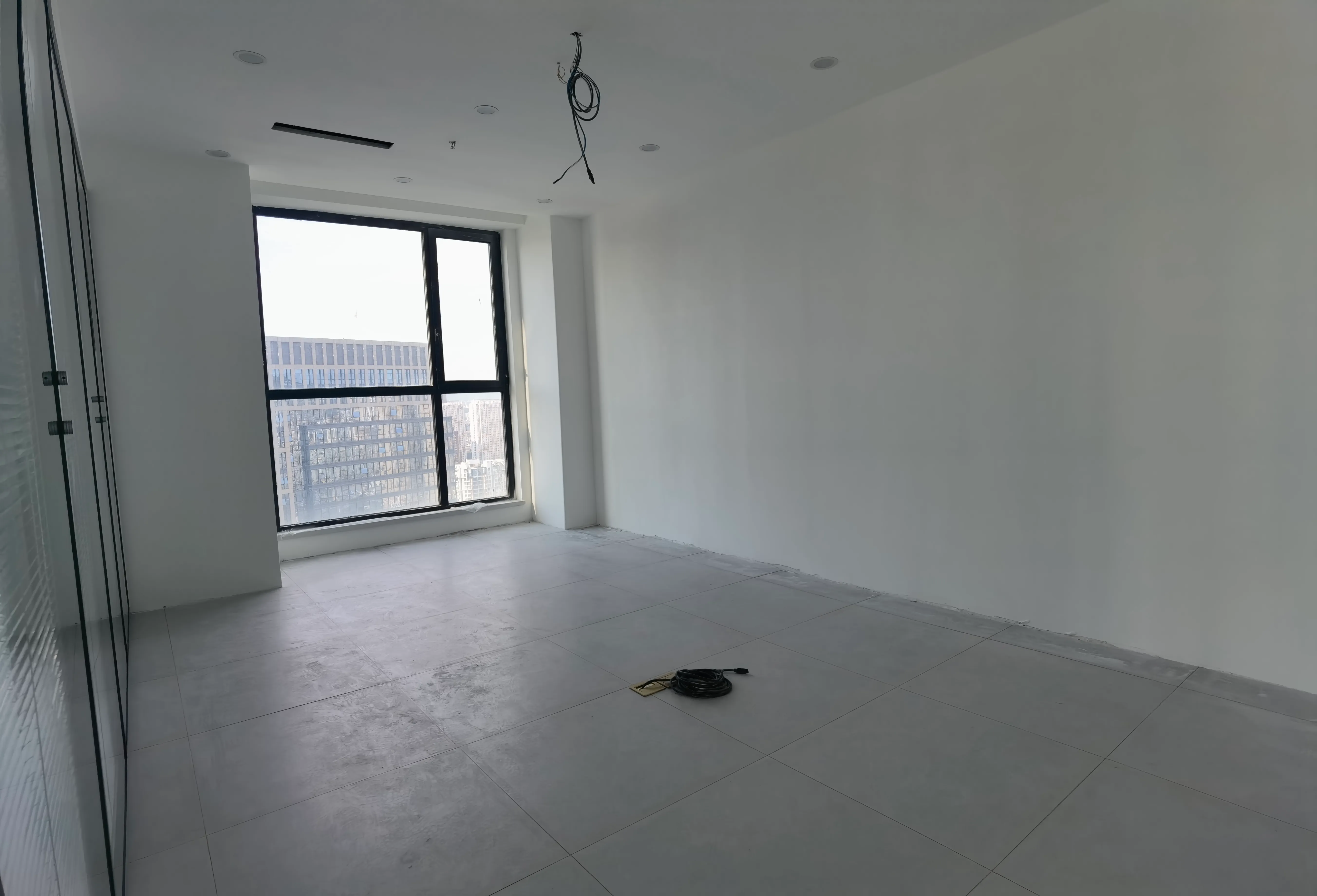
Laoshan is the eastern district of Qingdao, where the city runs out into the hills and the coast. This office is a single open floor plate of 120 m² with a window wall facing the sea. The client, a Qingdao-based company, wanted the space to stay as open as the view: no radiators under the windows, no ceiling units, no visible heating hardware at all, and a tiled floor throughout.
That brief rules out most of the usual options. Radiators need wall space. Fan coils need a ceiling void and ductwork. A hydronic underfloor system needs a manifold, a plant room and a screed deep enough to bury the pipes — weight and build-up nobody had planned for.
The answer was to heat the floor with a film, and to keep the whole build-up thin enough that the tiles could go straight on top.
What went in
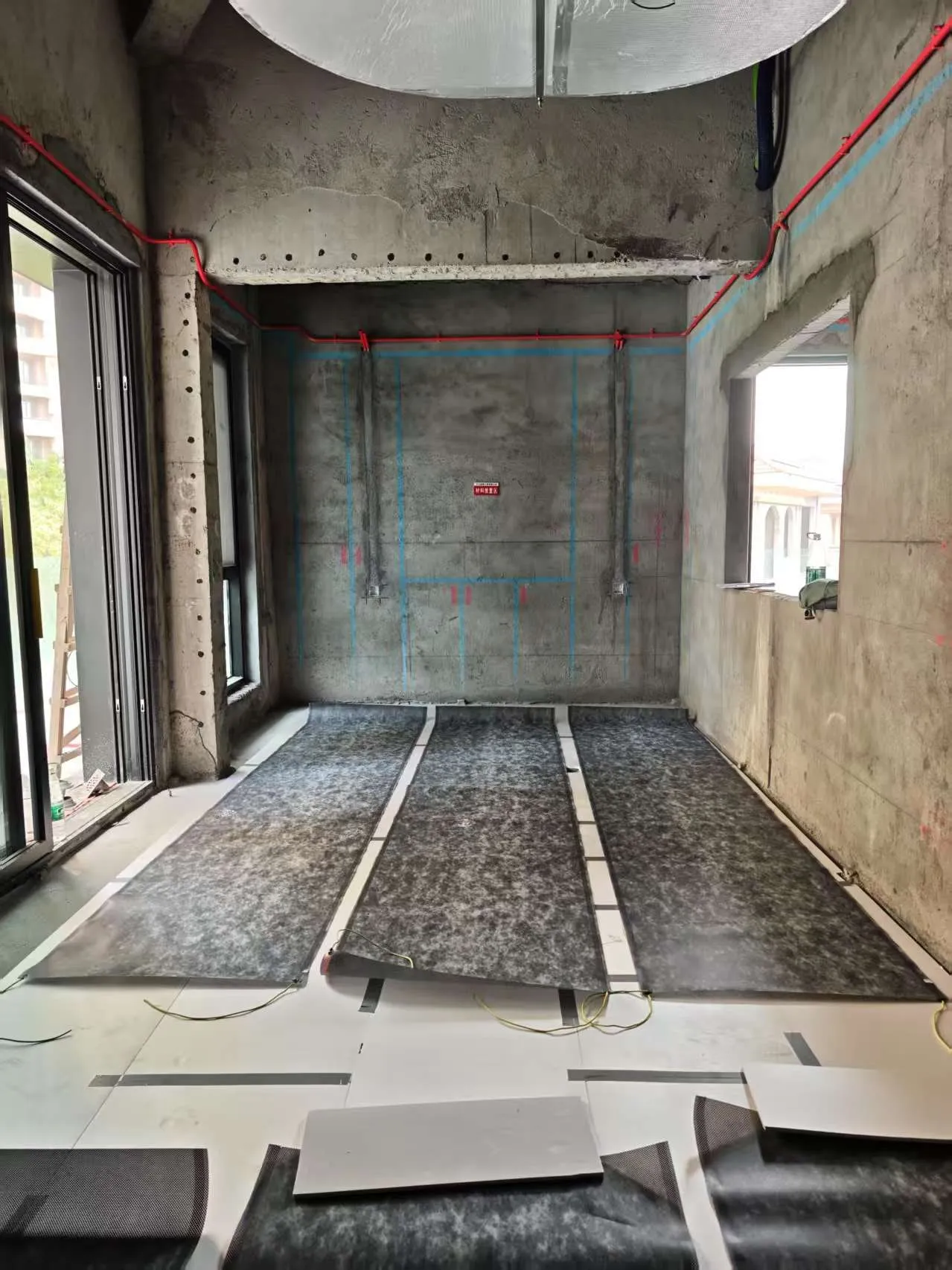
SafeTech EGS is our 230 V carbon-fibre heating film for floors. The heating element is a carbon-fibre veil — the same material we laminate for our low-voltage ComfortScrim — built here into a five-layer construction designed for mains voltage:
- a full-surface earth layer over the element, so a fault anywhere across the film has a path to earth
- fire-retardant insulation on both sides of the element
- glass-fibre encapsulation top and bottom
The floor was specified at 110 W/m² across the full 120 m², giving 13.2 kW installed, all on a single thermostat. The thermostat doesn’t carry that load itself: at 13.2 kW the floor draws far more current than a thermostat relay is rated for, so the thermostat switches contactors in the distribution board and the contactors switch the film. Because the space is one open room with one use, one zone was the right answer; splitting it would have added controls without adding comfort.
The build-up from the slab up: insulation board, SafeTech EGS, levelling compound, tile adhesive, tiles.
One day
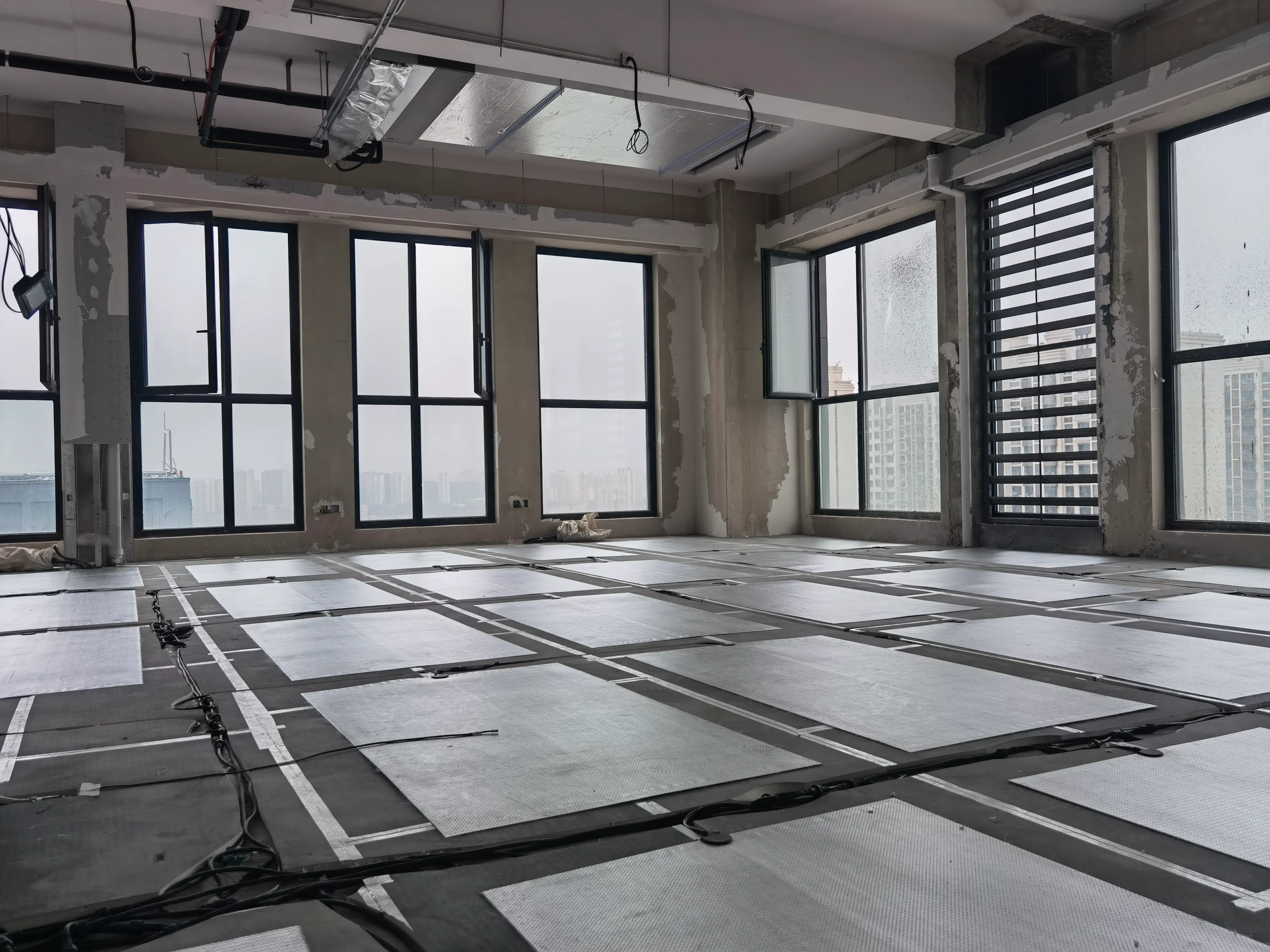
Our team laid the insulation, rolled out and connected the film, and made all the electrical terminations in a single working day. The next morning the floor belonged to the tiler.
That is the practical argument for a film in a commercial fit-out, and it’s worth stating plainly: there is no manifold, no plant room, no pipe run, no pressure test, no waiting for a screed to cure before the next trade can start. The heating install fits inside the tiling programme rather than sitting in front of it.
The terminations are the part that takes care, and the part we photograph most, because it’s what an electrician will want to see: each roll connected, the earth layer bonded back to the distribution board, and everything tested before the levelling compound goes over it.
Why the safety file matters under a tiled floor
Putting a mains-voltage heating film under a floor that people will walk on all day is not the same as putting a low-voltage scrim in a domestic ceiling. The specification has to hold up in front of an electrical contractor, a building owner and, eventually, an insurer.
SafeTech was designed for exactly that conversation. The construction is type-tested to IEC 60335-1, and every roll goes through a Hi-Pot test at 3,000 VDC before it leaves our factory in Qingdao: any leakage through the insulation means the roll is scrapped, not shipped. Insulation resistance is checked at over 500 MΩ.
None of that is visible in the finished floor. It’s the reason we can put the film there.
Commissioning with a thermal camera
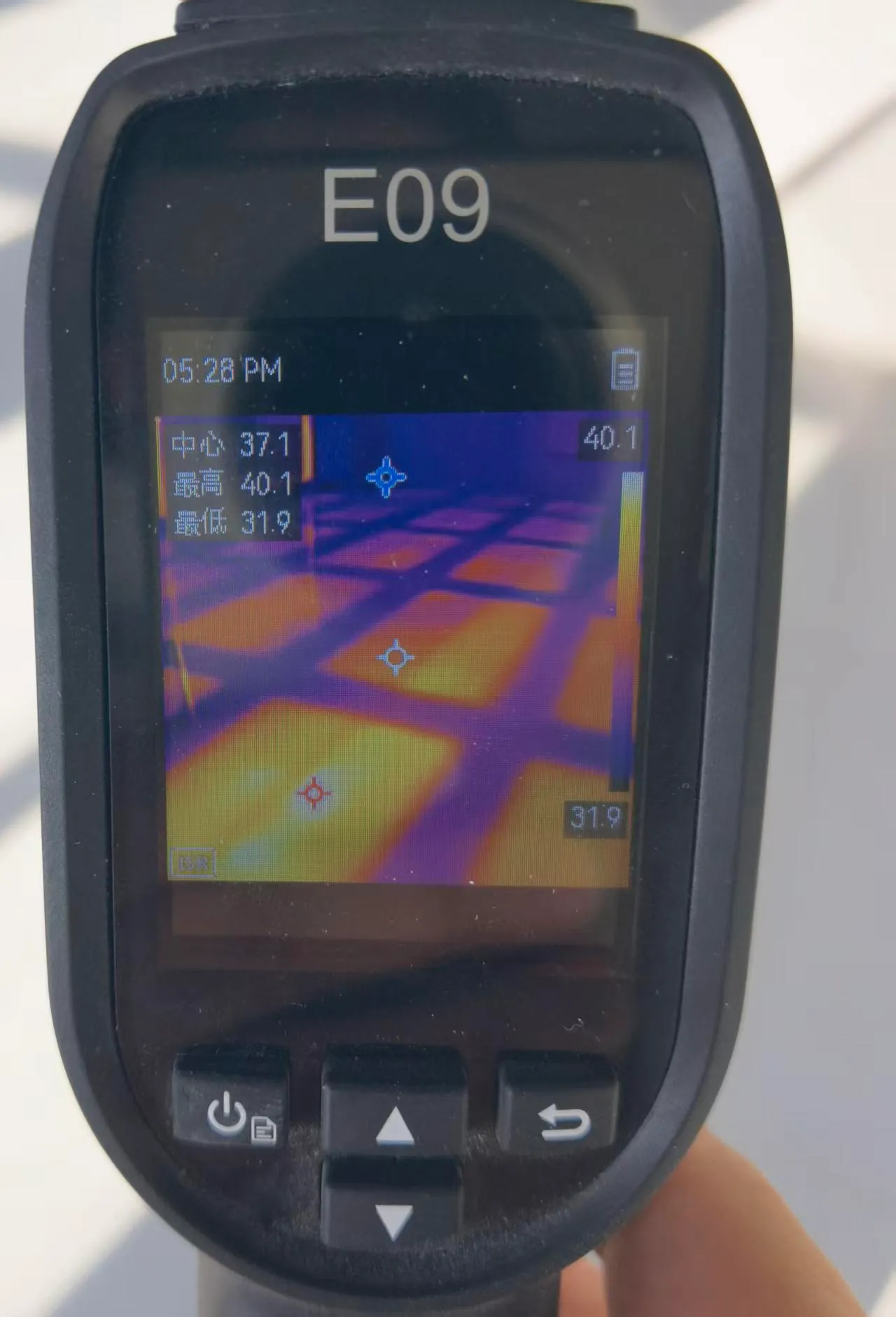
We don’t hand over a floor on the strength of a thermostat reading. On 8 September, with the tiles down and the adhesive cured, the whole plate was brought up from cold and walked with a thermal camera.
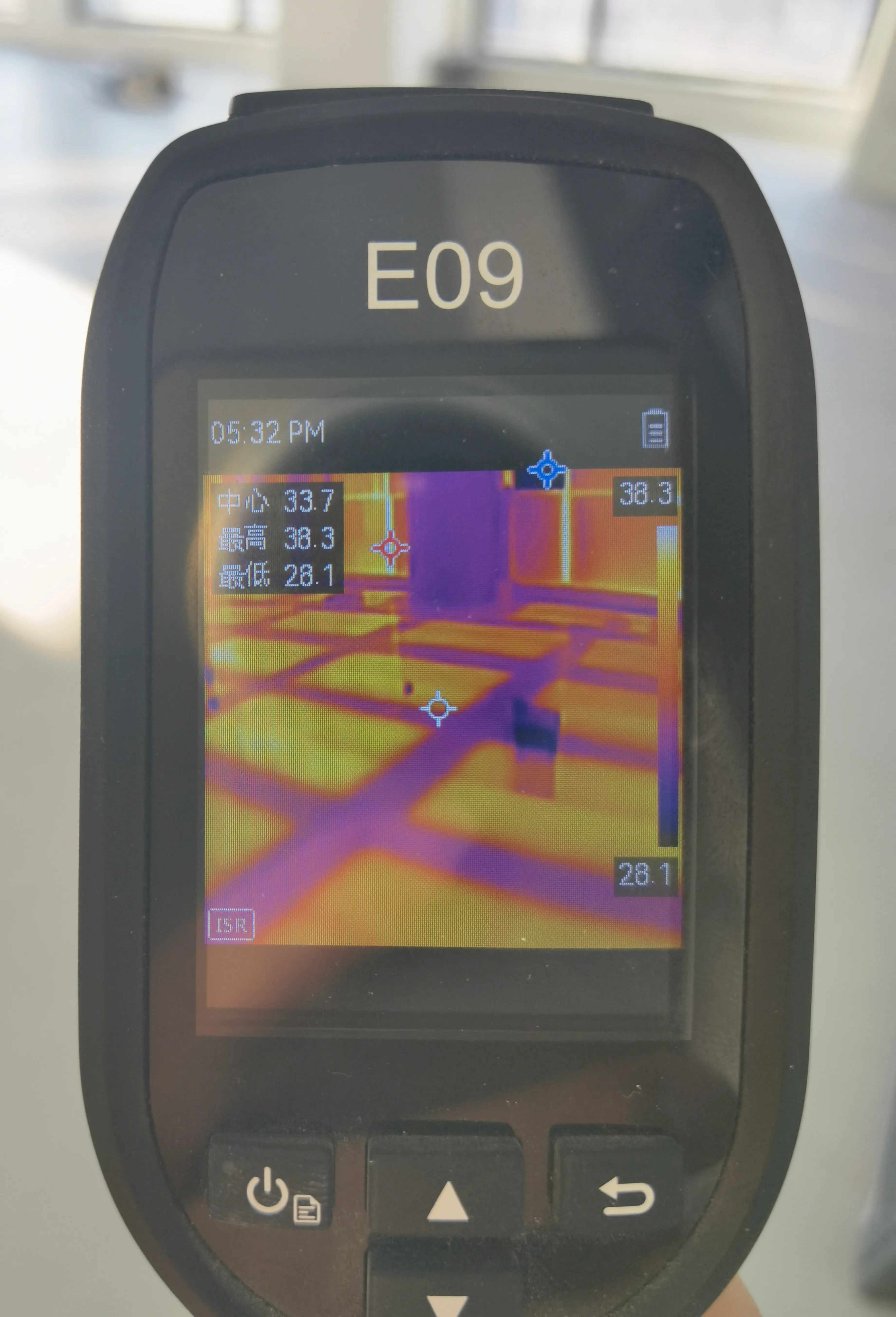
What you’re looking for is boring, and boring is the point: every strip of film warming at the same rate, showing evenly through the tiles; no cold band where two rolls meet; no bright spot at a connection. The image above is the Laoshan floor during first heat-up. The stripes are the film itself reading through the tile; the darker lines between them are the laying gaps, and they close in the image as the tile reaches temperature.
A floor that shows a cold strip or a hot connector at this stage is a floor with a laying or termination fault. It is far cheaper to find that with a camera on commissioning day than with a complaint in January.
What it’s like to work in
Floor heating is mostly convective — around 30% of the output arrives as radiant heat and the rest warms the air from the floor up — which suits an open-plan office well. The warmth starts at floor level, where people sit, rather than at the ceiling. There’s no fan noise and no draught line under the window wall.
The right building for a film
We’re careful about where we recommend electric floor heating. It turns one unit of electricity into one unit of heat — that’s physics, and we won’t tell you otherwise — so it earns its place on capital cost, on build-up, on programme and on the buildings a wet system doesn’t fit. A single open floor plate, a tiled finish, a one-day install window and a client who wanted nothing visible is one of those buildings.
If you’re specifying floor heating for a commercial fit-out and would like the construction details, the certification file or the commissioning method for this project, get in touch. Distributors and electrical contractors in Europe: we’re building our partner network now — see our partner page.
Project: Laoshan, Qingdao · SafeTech EGS 230 V · 120 m² · 110 W/m², 13.2 kW · one thermostat, switching through contactors · build-up: insulation, SafeTech EGS, levelling compound, tile adhesive, tiles · installed by LaminaHeat · commissioned 8 September 2026.