A warm house with nothing on the walls: heating a villa in Qingdao
How we heated a two-storey villa in Qingdao through its walls and ceilings, including a curved dining-room ceiling, with nothing visible once it was painted.
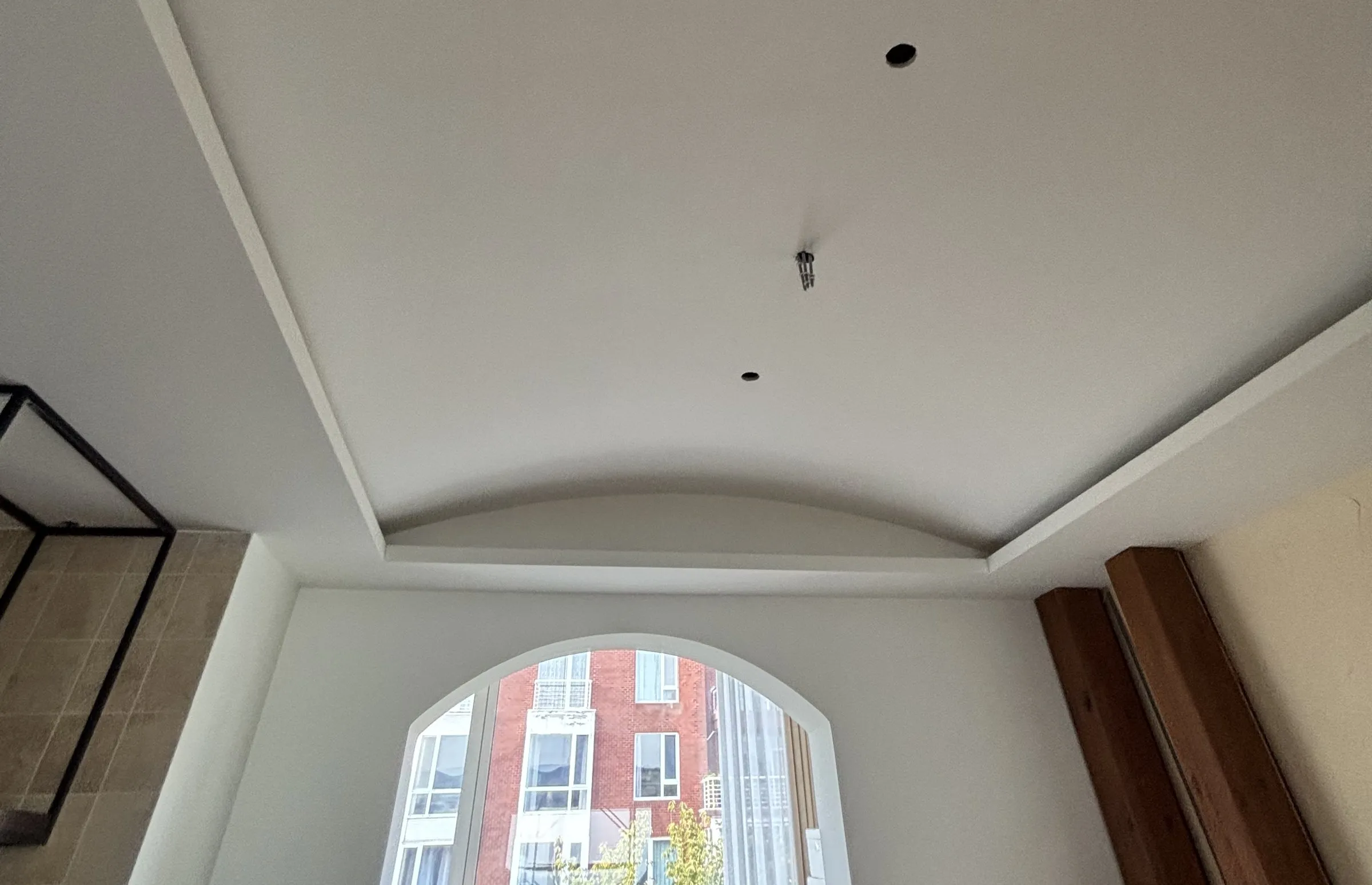
Look at the photo at the top of this page. It’s a dining room in a villa in Qingdao, with a curved ceiling and an arched window. You can’t see a radiator anywhere, and that’s because there isn’t one. The heat comes from the ceiling itself.
The whole house works this way. It has two floors and looks out over the sea, and every room is heated from the walls or the ceiling. Once the painters had finished, there was nothing left to see.
How it works
We use a heating sheet called ComfortScrim. It’s made of carbon fibre and is about as thin as a sheet of paper (around 0.4 mm). The installers stick it to the wall or ceiling, cover it with a thin layer of filler, and then it gets painted like any other wall.
When you switch it on, the whole surface gets gently warm and the heat spreads into the room. It feels a bit like sitting in the sun. The air doesn’t get blown around, and there’s no noise.
Where the heat went
Every room in the house is heated. Here’s where the heating sheets went:
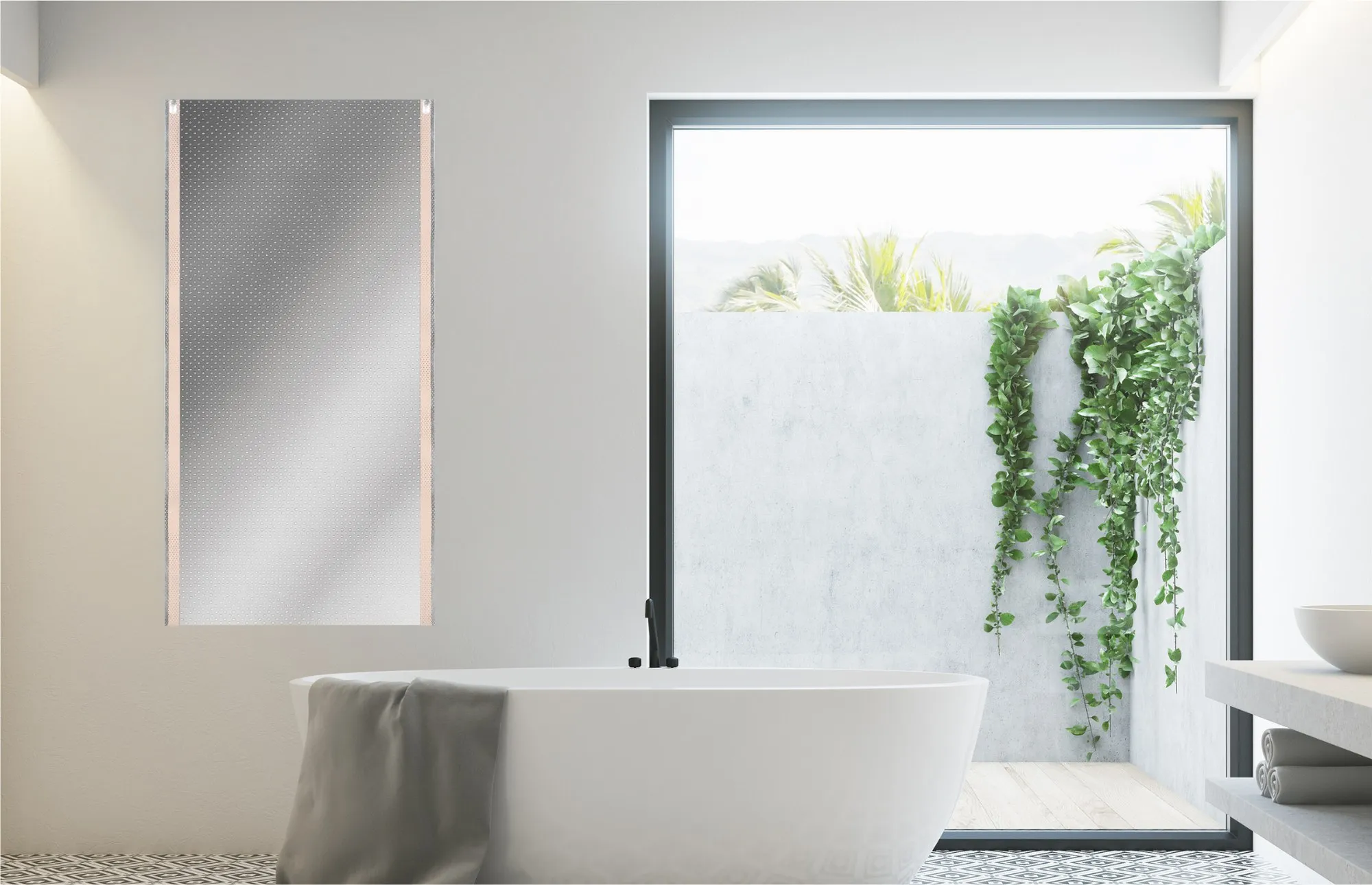
- In the bathrooms we put it behind the toilet, above the bath and behind the towel rack, so the towels hang against a warm wall and stay dry.
- In the bedrooms and the attic room it’s in both the walls and the ceilings.
- In the kitchen and dining area it’s in the ceiling, so the walls stay free for cupboards.
- In the hallways and on the stairs there’s a little extra heat, so walking from one room to the next doesn’t feel cold.
- On the tricky surfaces, the curved ceiling in the dining room and the sloping ceiling in the sun room, it went in just like anywhere else.
That last point is the one we like most about this house. The heating sheet is thin and bends easily, so it follows a curve or a slope without any fuss. A radiator could never do that.
The numbers
For those who like the details: the house has 192 m² of floor space over two floors. We used 33 heating sheets and split the house into 11 zones, so each area can be set to its own temperature. The owner controls it all from an app on their phone. The house was designed to sit at a comfortable 22 °C, give or take a couple of degrees.
Why it’s safe in a bathroom
ComfortScrim runs on low voltage, 48 V in this house. A small box called a power supply turns the normal mains electricity into this much lower voltage before it reaches the walls. So the heating behind the bath isn’t carrying mains power, and if someone drills into a wall later to hang a picture, they’re not drilling into mains electricity either.
Checking it works
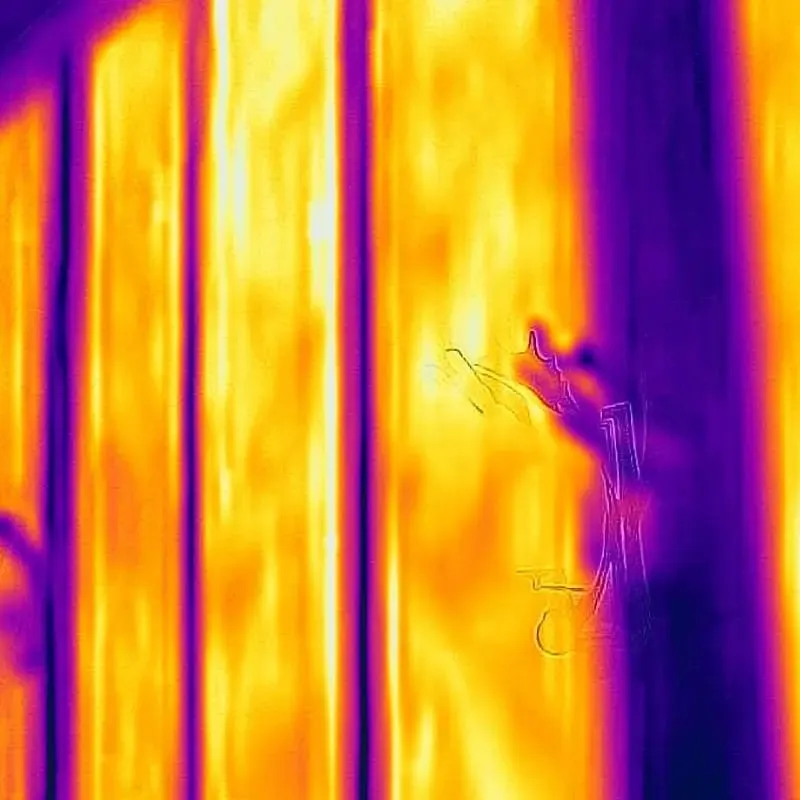
Once everything is painted, the walls look completely normal. So how do you know the heating is doing its job? We walk through the house with a thermal camera, which shows warm areas in yellow and orange and cooler areas in blue and purple.
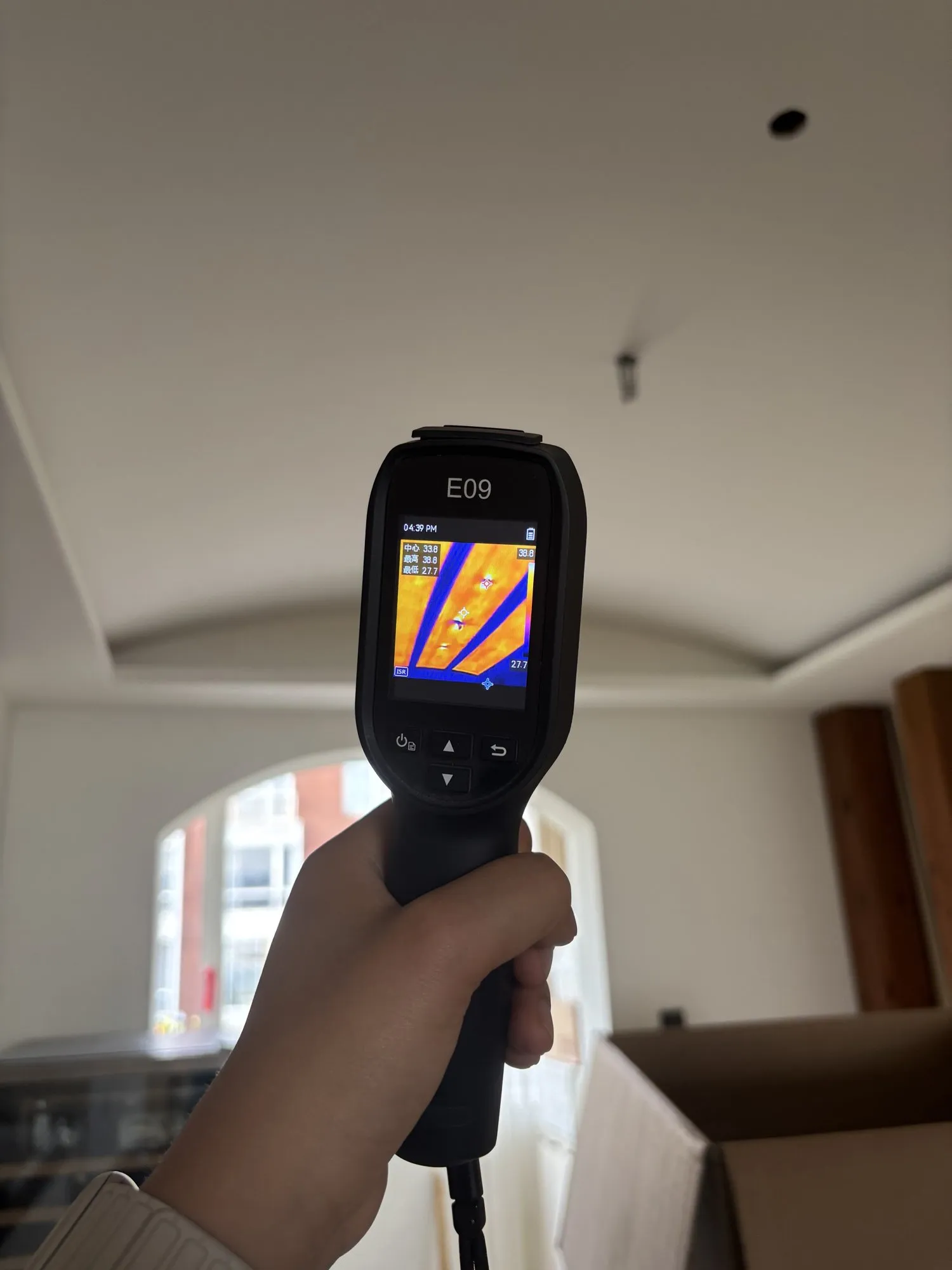
On the curved dining-room ceiling you can see the heating as warm stripes that follow the curve. The thin blue lines in between are the small gaps between the sheets. The warmest spot was 38.8 °C.
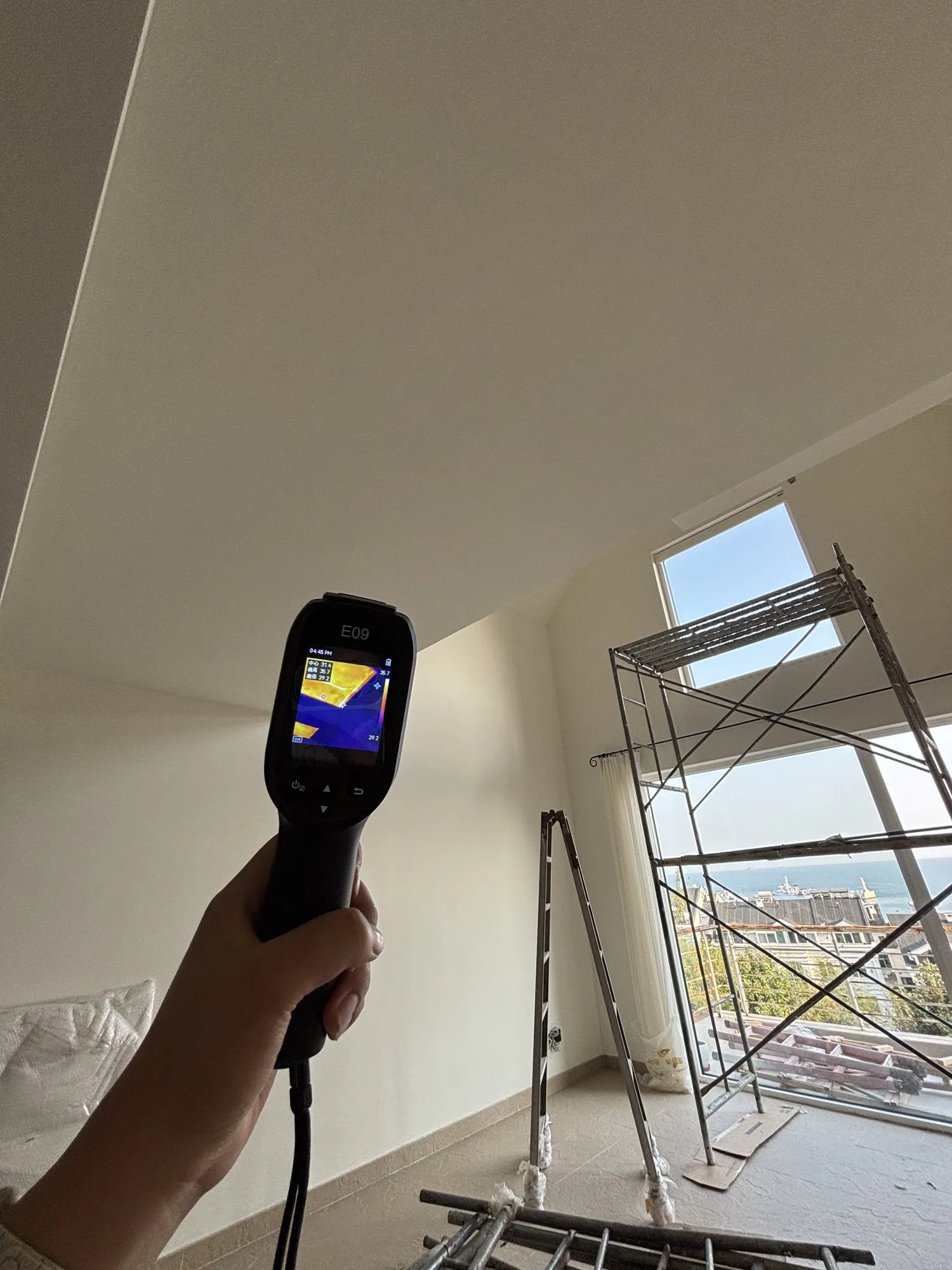
On the sloping ceiling in the sun room, the warm area sits exactly where the heating was put in. The warmest spot was 35.7 °C.
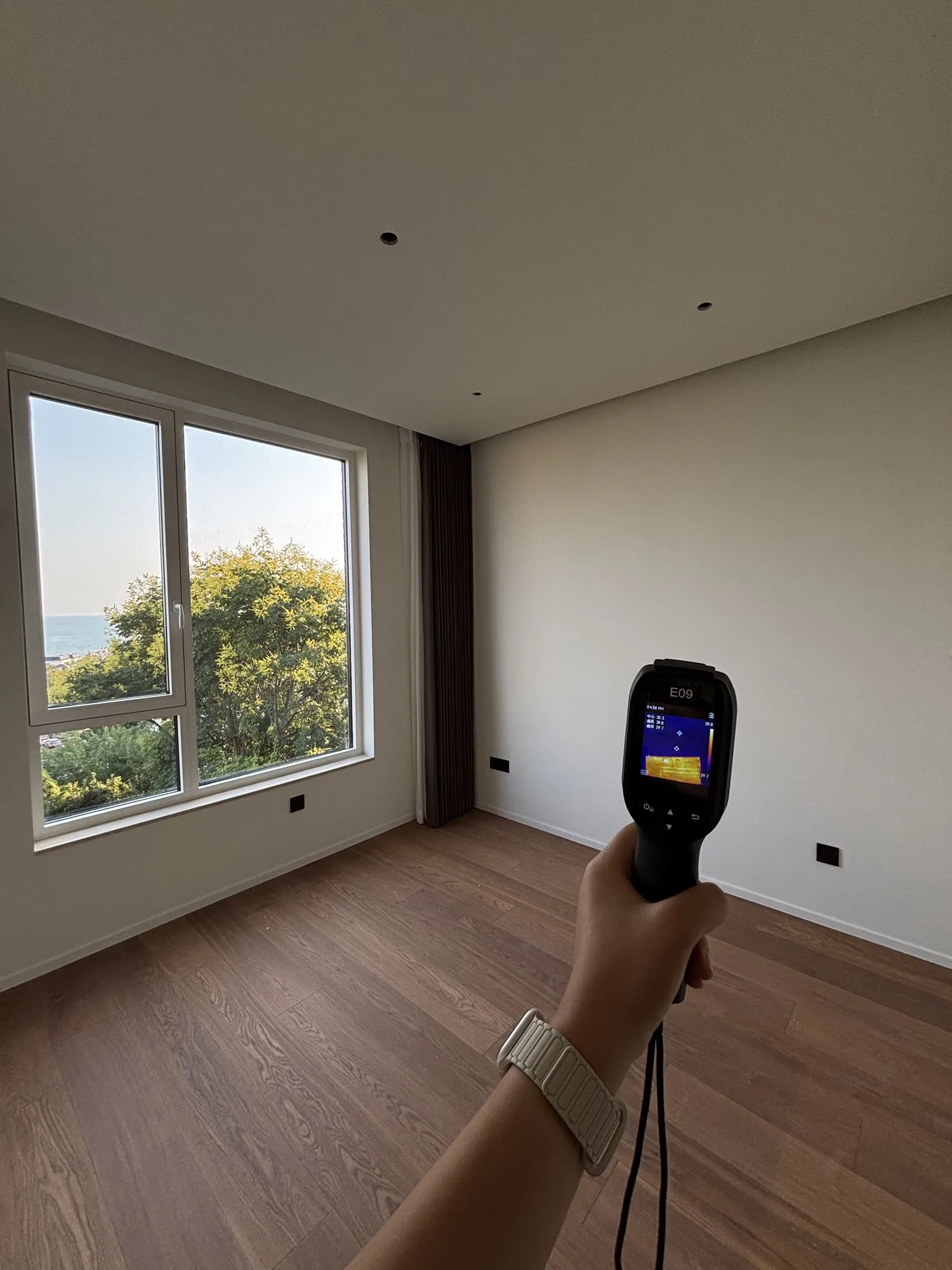
In each room we’re checking three simple things: the heat is where the plan says it should be, no section has stayed cold, and nothing is running too hot. Readings in the 30s are just right. That’s warm to the touch, but nowhere near hot. Because the warm surface is so big, it doesn’t need to be hot to heat the room.
Behind the scenes
The power supplies are tucked away in built-in cupboards, out of sight.
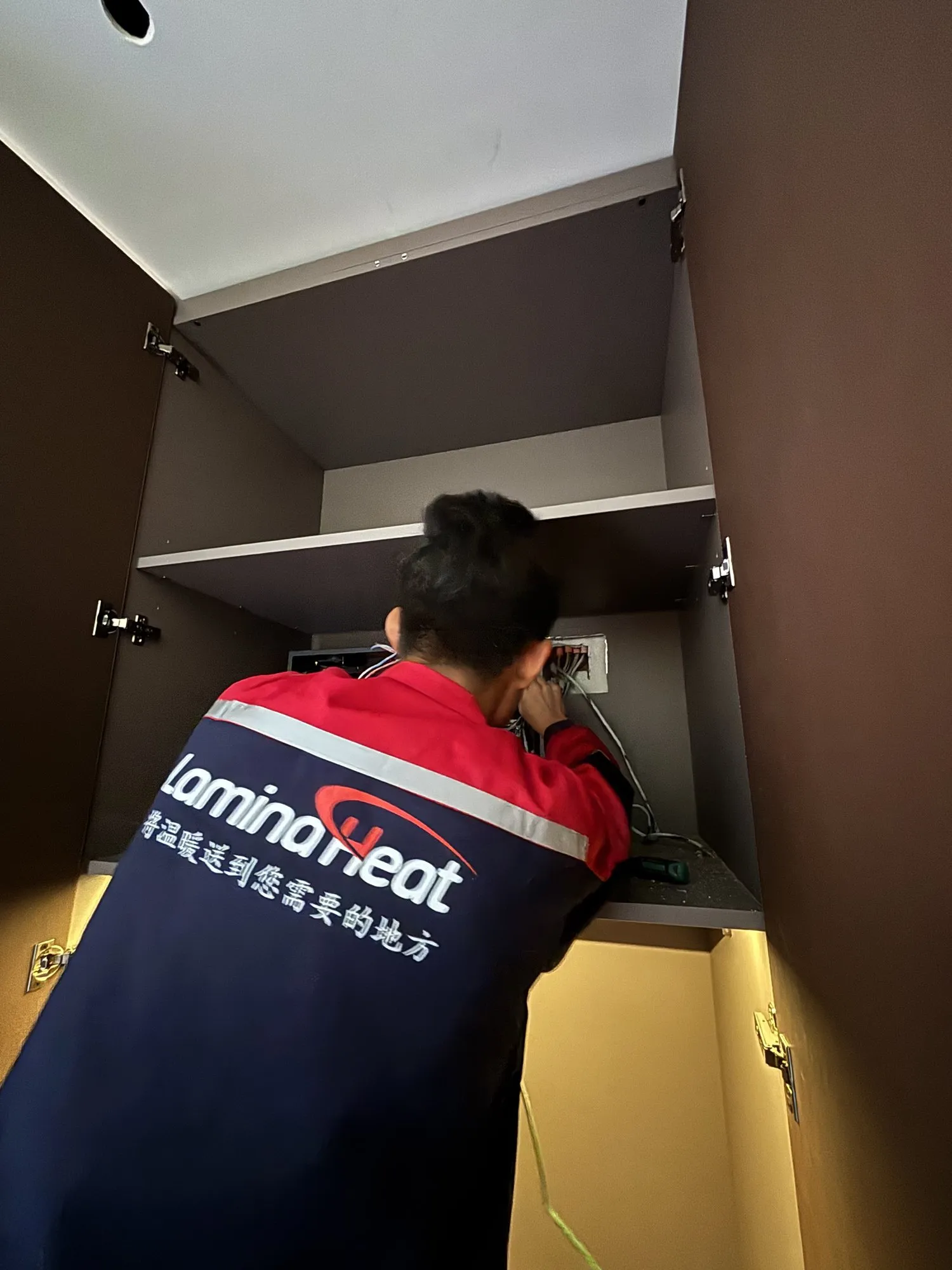
All the wiring goes in before the walls are finished, so it has to be right the first time. That means the right cable for each job, every circuit clearly labelled, and enough electrical capacity for the heating on top of everything else in the house, like the oven.
Is this right for your home?
Wall and ceiling heating is a good fit when floor heating is awkward or not quite enough. Bathrooms where you want warm walls and dry towels, rooms where the floor is already finished, and unusual shapes like curved or sloping ceilings are all good examples. This villa had all of them.
If you’re planning a home like this and want to know where the heating would go, send us your floor plans and we’ll draw up a layout for free. If you’re an installer or builder interested in working with us, have a look at our partner page.
Project: villa, Qingdao · ComfortScrim, 48 V · walls and ceilings, including a curved ceiling and a sloping sun-room ceiling · 192 m² over two floors · 33 heating sheets · 11 zones · 17,990 W in total · three power supplies · app-controlled thermostats · designed for 22 ± 2 °C · installed by LaminaHeat.