Low voltage electric heating for bathrooms: zones, voltages and safety
Low voltage electric heating for bathrooms: what the bathroom zones allow, why SELV heating is safe near water, and how a 12–48 V system is installed.
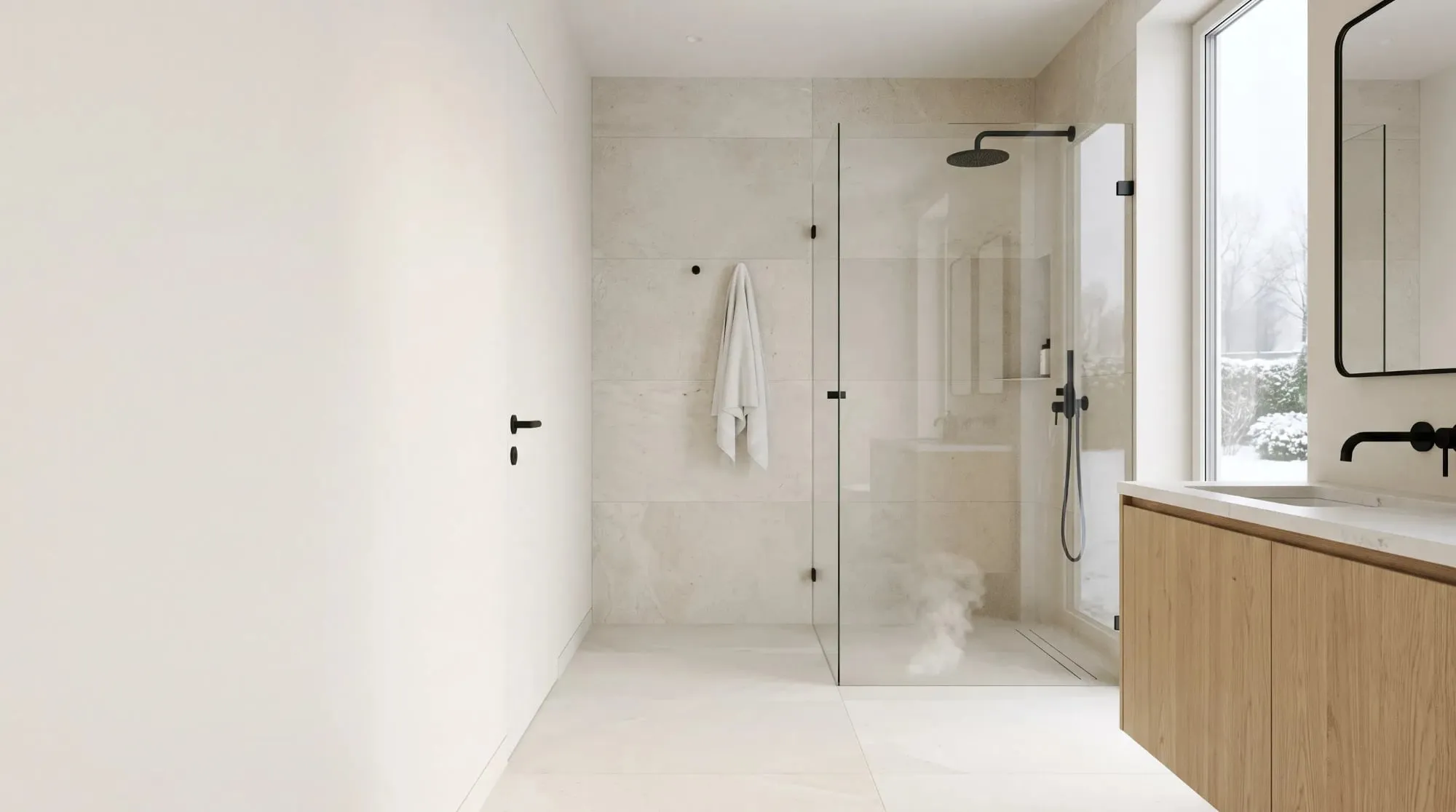
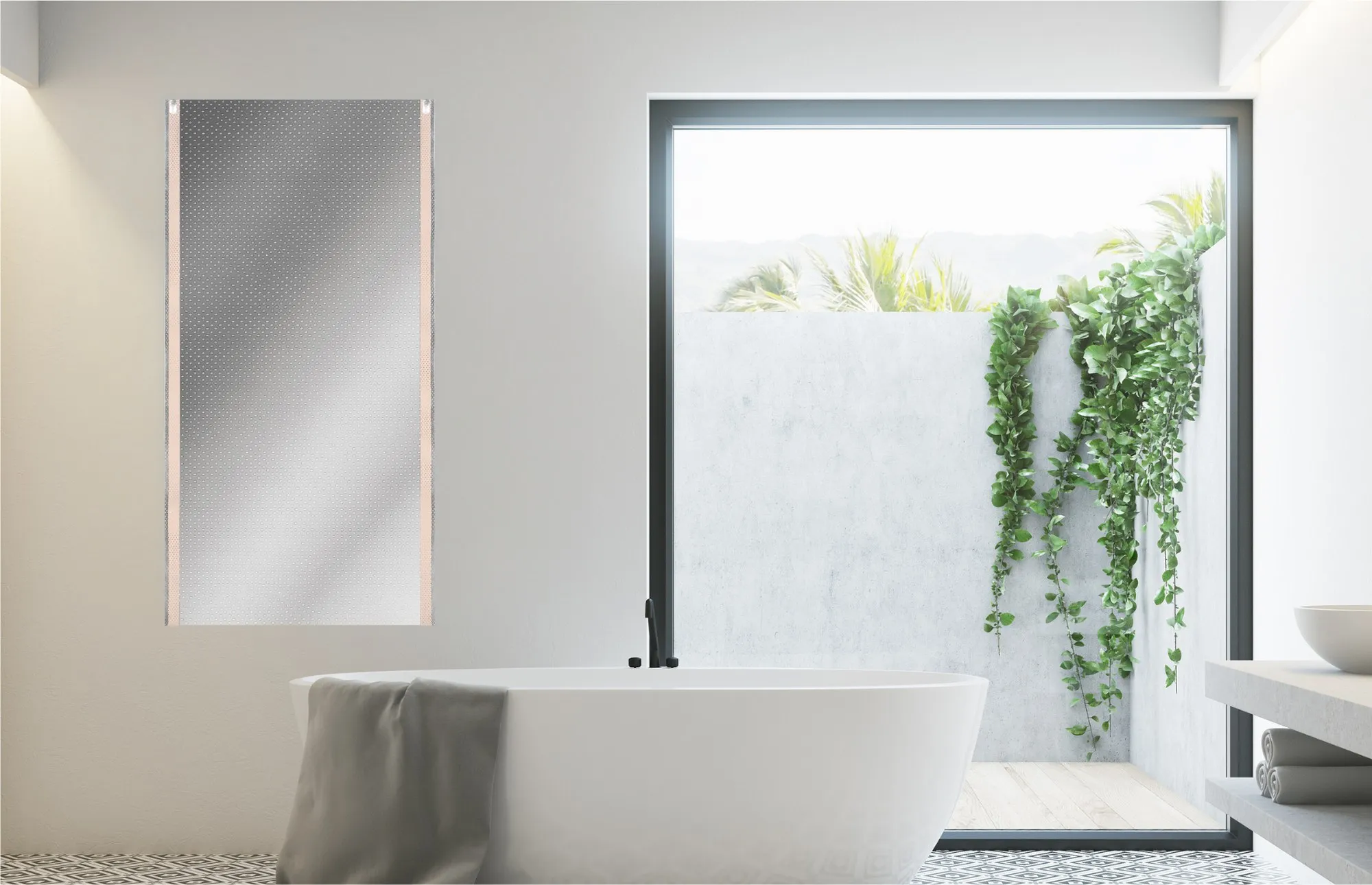
Is low voltage heating safe in a bathroom? Yes. It’s the safest kind of electric heating you can put in one. The heating runs at 12 to 48 volts, AC or DC, and the power supply that turns the mains down sits outside the bathroom. So the normal 230 volts never comes into the room. Near the bath or shower we go lower still, under 24 volts. At those voltages, a wet wall, a damaged cable or a drill going through the heating can’t give anyone a dangerous shock.
Electricians are especially careful in bathrooms, and for good reason. Water, bare feet and metal taps make an electric shock much more dangerous. This article explains, in plain terms, what the rules allow, why low voltage heating fits them so well, and how our ComfortScrim heating goes into a bathroom wall, ceiling or floor.
Why bathrooms have their own electrical rules
Wet skin lets electricity through far more easily than dry skin. A voltage you wouldn’t feel with dry hands can be dangerous when you’re standing barefoot on a wet floor, holding a metal tap. So the wiring rules treat bathrooms as a special case, with limits on what can go where.
Different countries have their own versions. The international one is IEC 60364-7-701. In the UK it’s Section 701 of BS 7671, and in Germany DIN VDE 0100-701. The details vary a little, but they all work the same way: they split the bathroom into zones depending on how close you are to the bath or shower.
The bathroom zones, simply explained
| Zone | Where it is | What’s allowed at low voltage, roughly |
|---|---|---|
| Zone 0 | Inside the bath or shower tray | Only safety extra-low voltage up to 12 V, with the power supply outside the bathroom zones |
| Zone 1 | Above the bath or shower, up to 2.25 m high | Safety extra-low voltage up to 25 V, with the power supply outside zones 0 and 1 |
| Zone 2 | A strip around zone 1 (60 cm in the UK) | Fixed equipment protected against splashes, including low voltage |
| Outside the zones | The rest of the room | Normal fixed equipment, protected by a safety switch |
This is a simplified version, and your electrician will follow the exact rules where you live. But you can see the pattern: the closer you get to the water, the more the rules want low voltage, supplied from outside the room. Low voltage heating is exactly that.
How low voltage bathroom heating is set up
- The power supply goes outside the bathroom. We fit our Multi Zone Power Supply in a utility room, an airing cupboard or a hallway cupboard. That’s where the mains is turned down, so it never enters the bathroom.
- A safety transformer does the turning down. Inside the power supply, a doughnut-shaped transformer turns 230 volts into low voltage and keeps the two sides completely apart, with no wire between them. We test that separation at 4,000 volts.
- Each part of the bathroom gets the right voltage. Walls and ceilings away from the water can run at up to 48 volts. In the shower, and anywhere the heating comes close to the bath, we keep it below 24 volts.
- The bathroom gets its own thermostat and its own fuse in the power supply. If anything ever trips, only the bathroom is affected, and a light on the power supply shows you which room it was.
- The heating is made to cope with water. ComfortScrim is carbon fibre. It doesn’t soak up water and it can’t rust. We test it under water, switched on.
The power supply also switches itself off if it overheats, if the heating draws too much power or if there’s a problem with the mains. For the full explanation, see low voltage heating: how it works and why it is safer.
Where the heating goes in a bathroom
In the wall, behind the tiles or plaster. This is the most popular choice. The wall itself becomes the heater, pleasantly warm to the touch at 40 to 55 °C. Towels hung against it dry out, and the cold, damp corner where mould usually starts doesn’t get the chance.
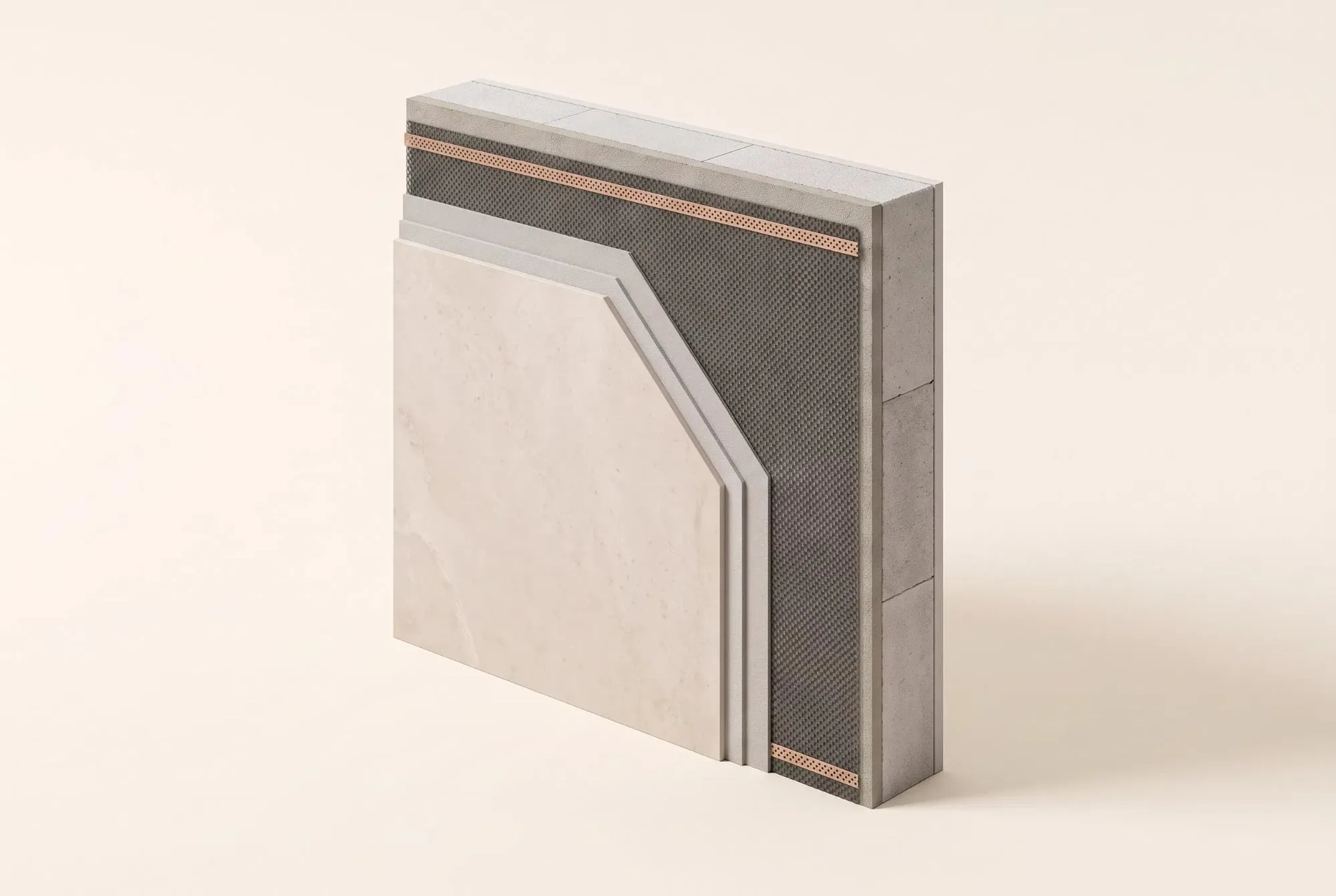
What’s inside a heated bathroom wall, from the back: the masonry, a base coat, the ComfortScrim mesh with its copper strips, a layer of render and tile adhesive, then the tile. The heating adds just 2 to 3 mm.
In the ceiling. Good for small bathrooms where most of the walls are tiled, and it keeps the heating away from the shower.
In the floor. ComfortScrim goes into the thin layer under the floor tiles, adding 2 to 3 mm, and keeps the floor just under 29 °C. Warm tiles under bare feet are why a lot of people want floor heating in the first place.
In the shower. This is possible too, below 24 volts with the power supply outside the room. A warm shower wall makes the whole room feel warm the moment you step out.
Whichever you choose, it’s all hidden. No radiator, no towel rail, nothing to clean around, bump into or rust.
What low voltage makes possible
- Drill wherever you like. Mirrors, cabinets, grab rails, towel hooks: you can drill through the heated wall, with holes up to 70 mm across, and nobody gets a shock. The heating just carries on around the hole.
- No shock risk from the heating, even if the wall gets wet or something gets damaged.
- Safe for children and older people. The walls get warm, not hot. In care homes we keep walls within reach at 43 °C or below.
- Warm in minutes. You can switch it on shortly before a shower instead of leaving it on all day.
Getting it installed
- Your electrician puts in a circuit for the power supply, connects the thermostats and tests everything.
- Your plasterer or tiler sets the heating mesh into the plaster, tile adhesive or floor layer, much like the reinforcing mesh they already use.
- We supply the heating cut to fit your bathroom, the power supply, the thermostats, the drawings, and help during the installation.
Which tile adhesive and waterproofing? MAPEI, the tile adhesive maker, has published a recommendation for laying our heating with their products. It’s written for our SafeTech EGS floor heating, but the points that matter in a bathroom are the same:
- Waterproofing goes on before the tiles. In showers and other wet areas, MAPEI recommend MAPELASTIC, a flexible waterproofing layer, on top of the levelling layer that covers the heating and under the tile adhesive.
- Use a flexible tile adhesive. A heated surface warms up and cools down every day, so the adhesive needs to give a little. MAPEI name S1 adhesives such as KERAFLEX MAXI S1 ZERO or ULTRALITE S1 FLEX, and for tiles larger than 1.2 m², S2 adhesives such as ULTRALITE S2 FLEX.
- For natural stone, they name MAPESTONE MAXI S1 or ELASTORAPID.
You can download the full recommendation, with the primers and levelling compounds for each kind of floor, as a PDF. It’s issued by MAPEI GmbH for Germany, so in other countries check with your local MAPEI office. Why the adhesive matters so much is explained in choosing adhesive for a heated floor.
Before anything is tiled or plastered over, each piece of heating is measured and the readings are written down. Then we check it with a thermal camera to make sure every part warms up evenly.
How it compares with other bathroom heating
| Low voltage heating | Towel rail | Standard heating mat | |
|---|---|---|---|
| Voltage in the room | 12 to 48 V | 230 V | 230 V |
| Can you see it? | No | Yes | No |
| Warms the walls | Yes | No | No |
| Can you drill into it later? | Yes | Doesn’t apply | No |
| In the shower area | Yes, under 24 V | No | Limited |
For bathroom layouts, running costs and what it’s like to live with, see infrared heating for bathrooms.
Planning a new bathroom? Send us the layout with the bath or shower marked. We’ll show you where the heating goes, what voltage each part runs at and where the power supply should go.
Low voltage bathroom heating: your questions
Is low voltage heating safe in a bathroom?
Yes. The heating runs at 12 to 48 volts from a safety transformer outside the bathroom, so mains voltage never comes into the room. Near the bath or shower we keep it below 24 volts. At these voltages, a wet or damaged heating element can’t give a dangerous shock.
What voltage is allowed in bathroom zone 1?
Roughly, safety extra-low voltage up to 25 volts AC, with the power supply outside zones 0 and 1, plus some fixed equipment like showers and extractor fans. The exact rules depend on your country: IEC 60364-7-701, BS 7671 Section 701 in the UK or DIN VDE 0100-701 in Germany. Your electrician should plan the installation.
Where does the transformer go?
Outside the bathroom, in a utility room, cupboard or hallway, with a little space around it to stay cool. The mains is turned down there, before it reaches the bathroom.
Can low voltage heating go in a shower?
Yes, below 24 volts and with the power supply outside the room. ComfortScrim is carbon fibre, doesn’t soak up water, and is tested under water while switched on.
Can I drill into a heated bathroom wall?
With ComfortScrim, yes. You can drill holes up to 70 mm across for mirrors, cabinets or rails, with no shock risk, and the heating keeps working around the hole.
Do I still need a safety switch (RCD)?
Yes. The power supply’s mains circuit is protected the way your local rules require, which in the UK and Germany includes a 30 mA RCD for bathroom circuits. The low voltage adds a second, separate layer of safety on top.
Which tile adhesive should I use over bathroom heating?
A flexible one, because a heated surface moves a little as it warms and cools. MAPEI’s recommendation for our heating names S1 adhesives such as KERAFLEX MAXI S1 ZERO or ULTRALITE S1 FLEX, S2 adhesives for tiles over 1.2 m², and MAPELASTIC waterproofing under the tiles in wet areas. It is issued for Germany; elsewhere, check with your local MAPEI office.
Is wall or floor heating better for a bathroom?
Both work well. Wall heating dries towels and keeps damp corners away; floor heating gives you warm tiles underfoot. Many bathrooms have both, running from the same power supply.