Low voltage heating: how it works and why it is safer
What low voltage electric heating is, how a safety transformer feeds a 12–48 V heating element, and why it is safer in walls, floors and wet rooms.
What is low voltage heating? It’s electric heating that runs on a much lower voltage than the sockets in your home: 12 to 48 volts, AC or DC, instead of 230. A small power supply, usually fitted in a utility room or cupboard, takes the normal mains electricity and turns it down before it goes anywhere near the heating. The heating itself, hidden in your walls, ceiling or floor, only ever gets the low voltage. At that level it can’t give anyone a dangerous electric shock.
To put the numbers in context: your laptop charger works at around 20 volts, a car battery at 12. That’s the kind of voltage in the wall.
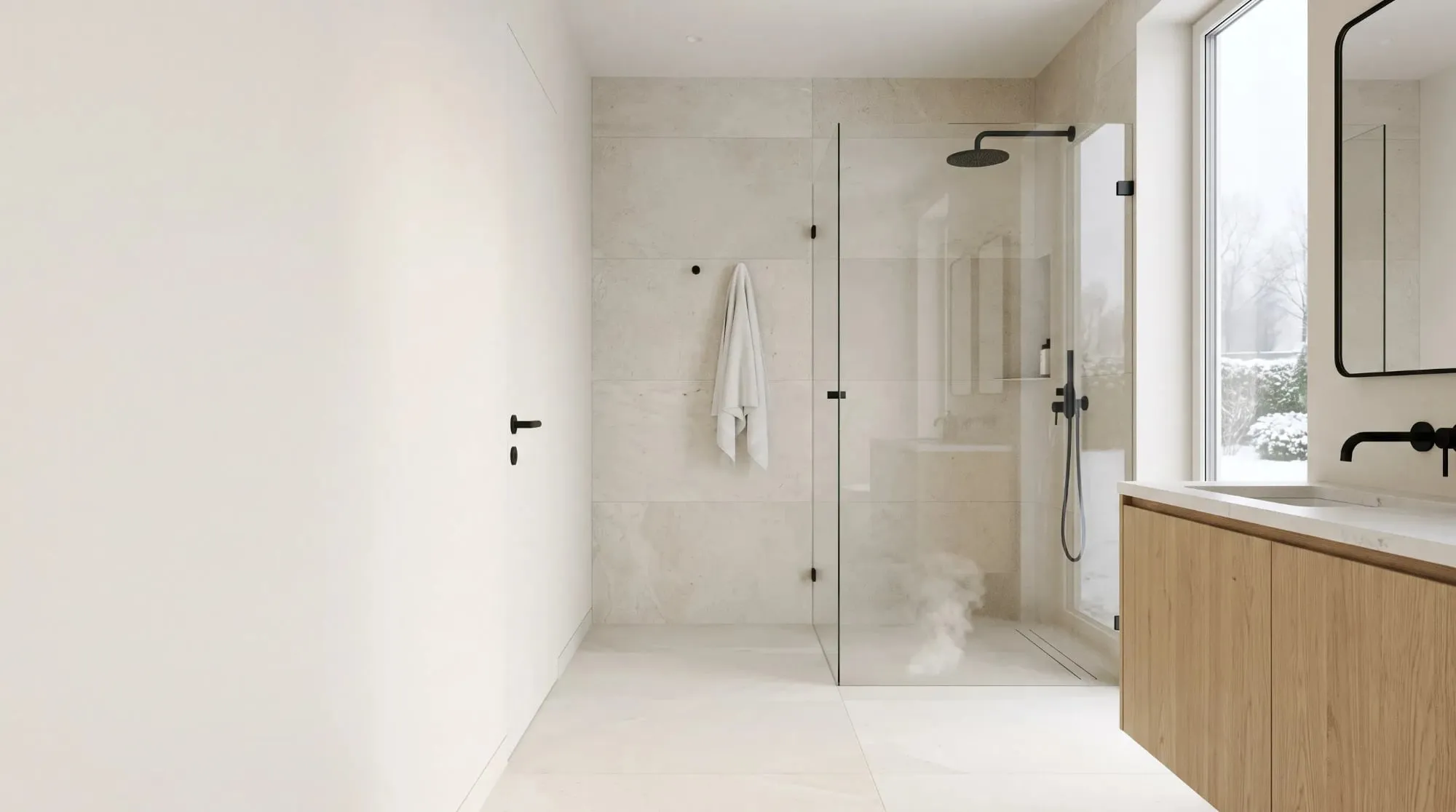
It means you can do things with heating you normally wouldn’t. You can put it in a bathroom wall, drill through it to hang a mirror, or put it in a child’s bedroom, without worrying about what happens if a nail goes in twenty years from now.
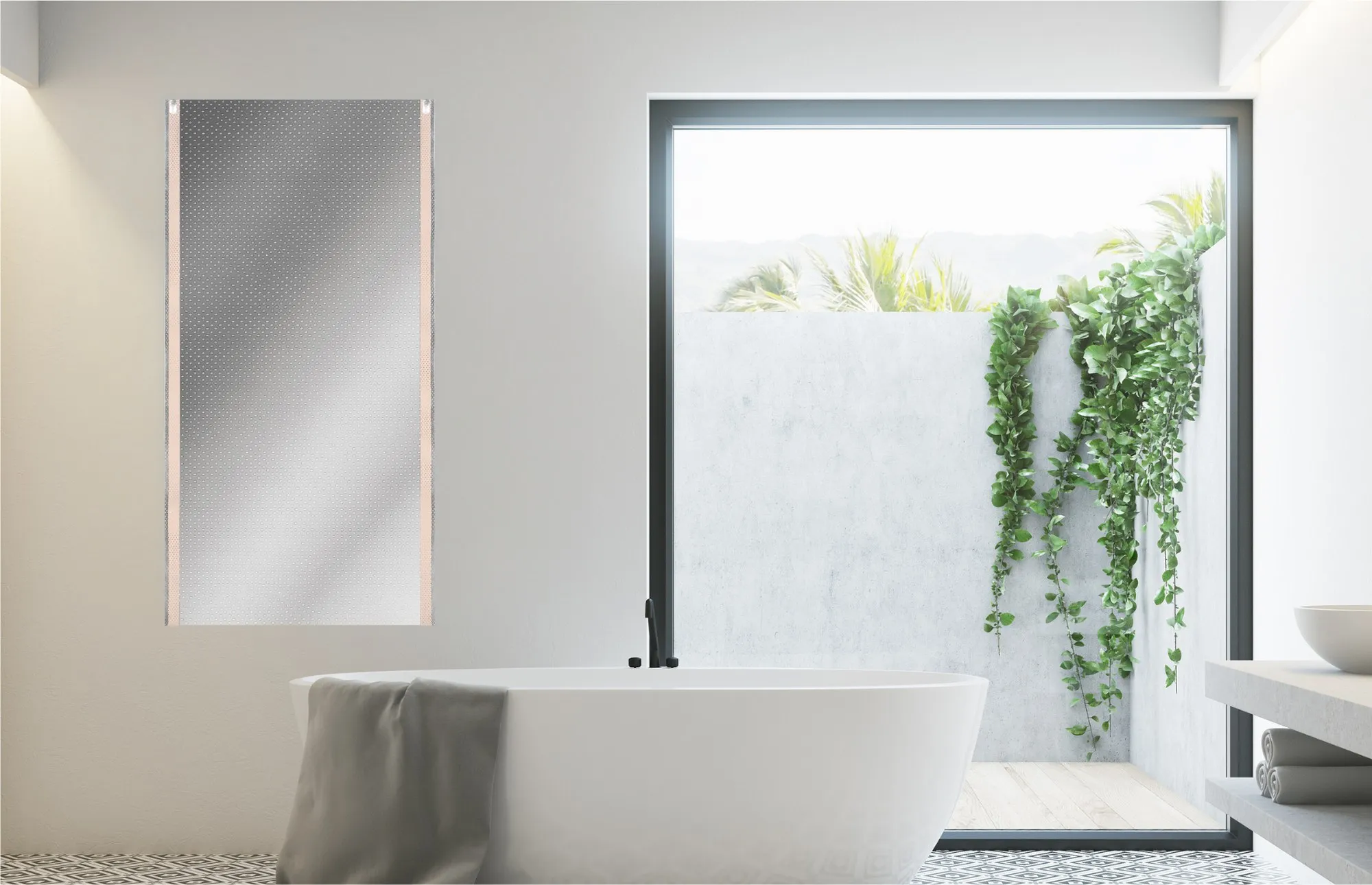
Our low voltage system is called ComfortScrim. It’s a thin carbon-fibre mesh, 0.4 mm thick, that your plasterer covers over like any other wall. Below we explain how it works, what keeps it safe and where it makes most sense.
Why a lower voltage is safer
You get an electric shock when current flows through your body, and it’s the voltage that pushes it through. At 230 volts, a damaged cable can push enough current through a person to hurt them badly. That’s why normal heating built into a wall or floor needs good insulation, an earth connection and a safety switch in your fuse box, all there to protect you if something goes wrong.
Low voltage heating takes a different route. The voltage is simply too low to push a dangerous current through dry skin. Electricians have a name for this: SELV, short for safety extra-low voltage. It covers anything up to 50 volts AC or 120 volts DC, as long as it comes from a proper safety transformer that keeps it completely separate from the mains.
Skin conducts electricity much better when it’s wet, so the rules are stricter in bathrooms. That’s why, in a shower, we keep our heating below 24 volts.
The safety switch and the fuses are still there. They just aren’t the only thing keeping you safe anymore.
How the system fits together
There are four parts, and only one of them is in the room you’re heating:
- The heating mesh. ComfortScrim, set into the plaster on a wall or ceiling, or into the layer under your floor tiles. It warms a wall or ceiling to 40 to 55 °C, or a floor to just under 29 °C.
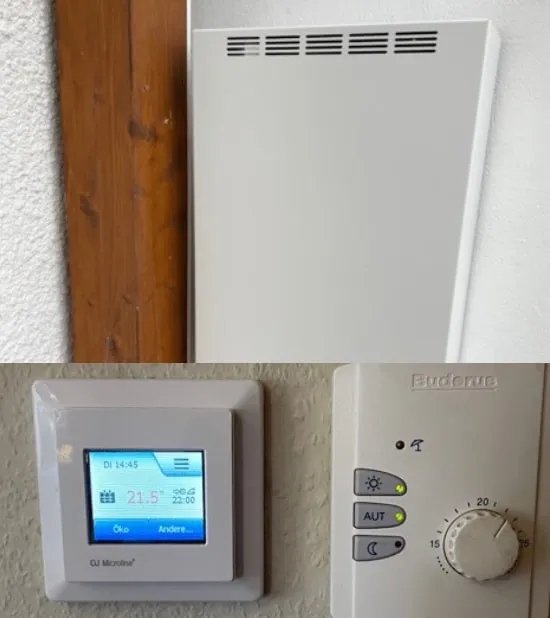
- A thermostat in each room, so every room can be set to its own temperature and timetable.
- The power supply. We call ours the Multi Zone Power Supply. It hangs on a wall in a utility room, cupboard or plant room. Mains electricity goes in and low voltage comes out, with a separate output for each room.
- Its own circuit in your fuse box, fitted by your electrician.
The mains stops at the power supply. Every cable in the walls, and the heating mesh itself, only ever carries low voltage.
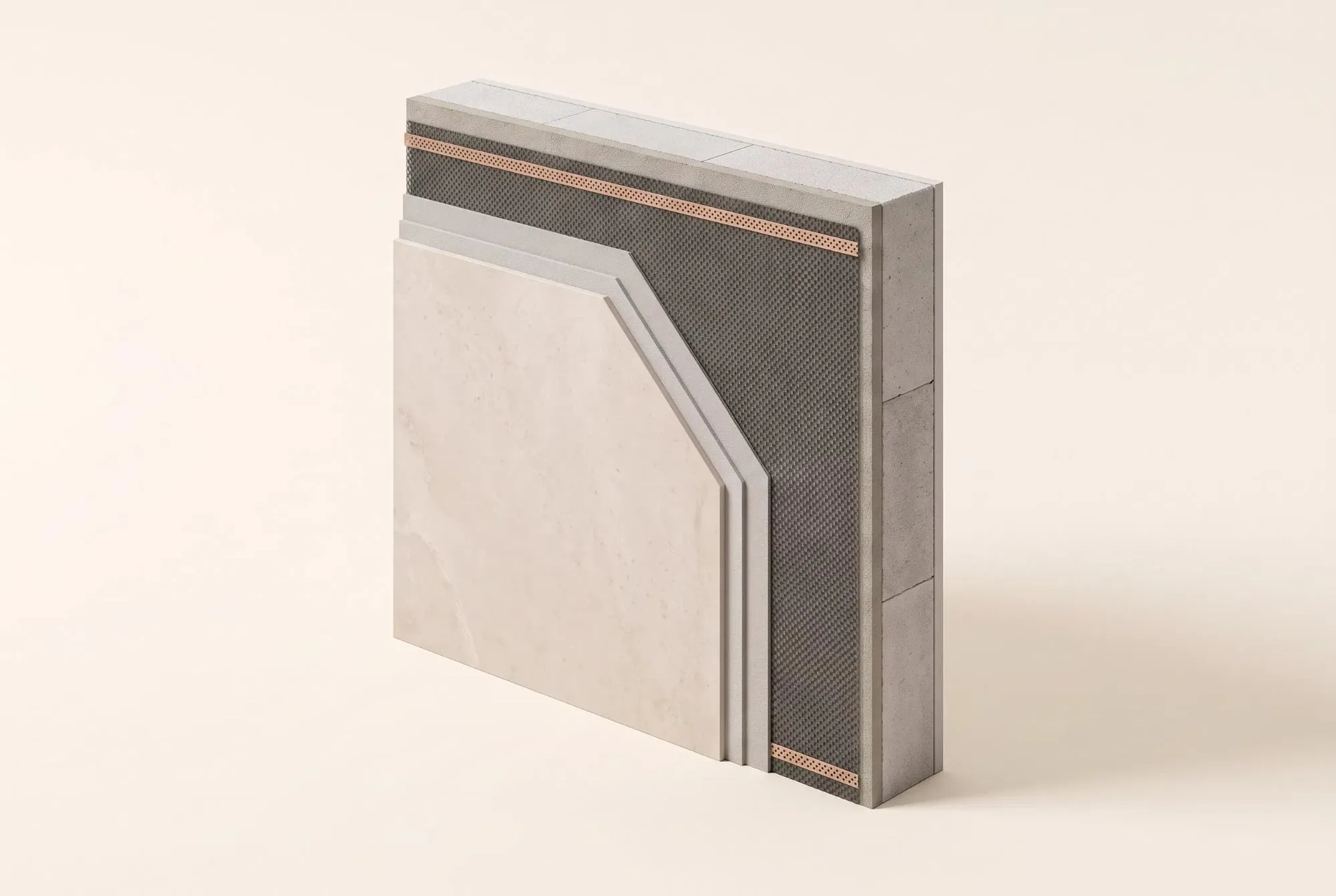
Inside a heated wall, from the back: the masonry, a base coat, the ComfortScrim mesh with its copper strips, a layer of render and tile adhesive, then the tile. The mesh adds just 2 to 3 mm.
What the transformer does
Inside the power supply is the part that does the real work: a doughnut-shaped transformer, called a toroidal transformer. It turns 230 volts into low voltage, and it keeps the two sides completely apart. There’s no wire running from one side to the other. The energy passes across through magnetism, so the mains has no way to reach your walls. We test that separation at 4,000 volts.
Around the transformer, the power supply keeps an eye on itself:
- If it gets too hot, at around 130 °C inside the transformer, it switches off and shows a red light until someone checks it.
- If a room draws too much power, that output switches off after three seconds and tries again half an hour later.
- If the mains voltage goes wrong, for example during a power surge, it switches off and starts again by itself once things are back to normal.
- Every room has its own fuse. If one blows, only that room stops, and a light shows you which one. The rest of the house carries on heating.
- It starts gently, bringing each room on one after another instead of all at once.
It’s also efficient and quiet. About 96% of the electricity going in comes out as heat in your rooms, and there’s no fan, so it makes no noise.
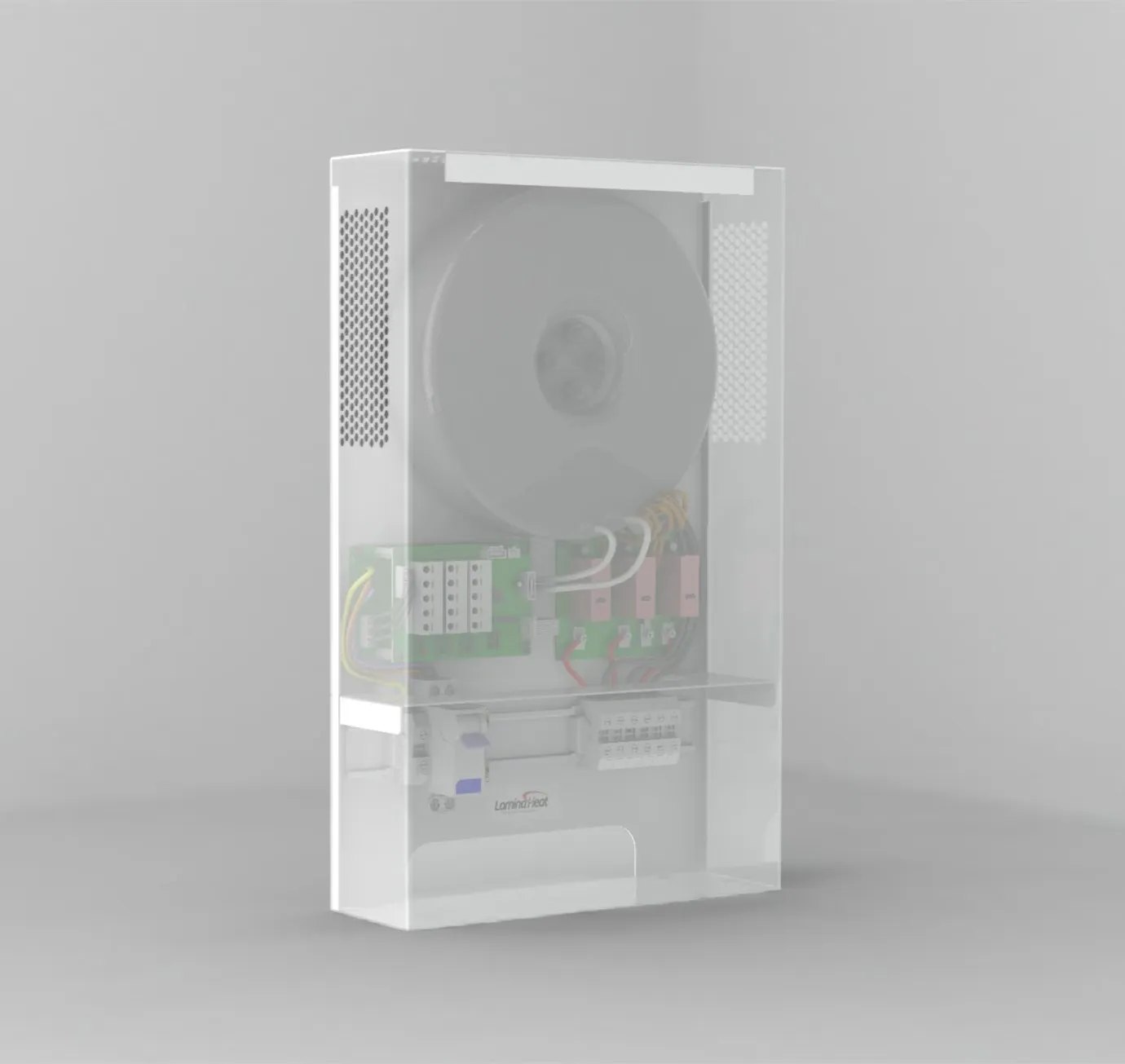
Inside the Multi Zone Power Supply: the doughnut-shaped transformer at the top, the control board, and a fuse for every room.
What low voltage lets you do
Drill into the wall. Shelves, pictures, a TV, a mirror: you can drill through the heated wall wherever you need to, making holes up to 70 mm across, with no danger to whoever’s holding the drill. The heating is a mesh, not a solid sheet, so the electricity just flows around the hole and the wall keeps warming.
Heat rooms with water in them. Bathrooms, shower rooms and wet rooms are where normal electric heating needs the most care. Low voltage is the natural choice there. We go into this in low voltage electric heating for bathrooms.
Heat children’s rooms. A heated wall feels about as warm as a warm bath, and the voltage behind it is too low to hurt anyone.
Use your own solar power. The power supply can also run directly from solar panels or a home battery. In spring and autumn, a good share of your heating can come from electricity you made yourself. More in infrared heating and solar.
Heat one room at a time. One power supply looks after up to five rooms, each with its own thermostat. Empty rooms stay off, and when every room is warm enough, the power supply goes into standby after 30 minutes.
The downsides
There are a few things to know before you choose it.
- The power supply needs a place to live. It’s a metal box that hangs on a wall somewhere dry indoors, with at least 10 cm of space around it so it can stay cool. A utility room, a cupboard or a plant room is ideal.
- Thicker cables. Lower voltage means more current for the same amount of heat, about ten times as much at 24 volts as at 230. The cables have to be sized for that, which is why we plan the wiring with the layout rather than leaving it to guesswork.
- It’s planned for your home. We cut the heating mesh to your room layout and size the power supply to match, anywhere from 800 W for one room up to 6,000 W for five.
If you want heating under a laminate, wood or tiled floor without a separate power supply, our SafeTech EGS floor heating runs straight off the mains instead. It has its own safety measures, but it isn’t low voltage.
Low voltage or normal mains heating?
| Low voltage (ComfortScrim) | Mains voltage heating | |
|---|---|---|
| Voltage in your wall or floor | 12 to 48 V | 110 to 240 V |
| Shock risk if it’s damaged | None from the heating | Relies on insulation, an earth and a safety switch |
| Can you drill into it later? | Yes, holes up to 70 mm | No |
| Bathrooms and showers | A natural fit | Possible, with strict precautions |
| Needs a separate power supply | Yes | No |
| Can run straight from solar or a battery | Yes | Only through an inverter |
Where it makes the most sense
- Bathrooms, shower rooms and wet rooms
- Children’s rooms, nurseries and schools
- Care homes and hospitals, where people may lean against a wall for a long time. There we keep walls within reach at 43 °C or below; infrared heating in hospitals explains why.
- Homes with solar panels or a battery
- Any wall you expect to drill into later
- Whole houses, with walls, ceilings and floors all on one system
Curious what it would look like in your home? Send us your floor plan. We’ll show you where the heating goes, size the power supply and tell you roughly what it would cost to run.
Low voltage heating: your questions
What is low voltage heating?
Electric heating that runs at 12 to 48 volts, AC or DC, instead of the 230 volts from your sockets. A power supply with a safety transformer turns the mains down before it reaches the heating, so only low voltage goes into your walls, ceiling or floor.
Is low voltage heating safer than normal electric heating?
Yes. At this voltage, the heating can’t push a dangerous current through a person, even if it’s damaged. Normal mains heating relies on insulation, an earth connection and a safety switch to protect you if something goes wrong; low voltage heating is safe because of the voltage itself.
What does SELV mean?
Safety extra-low voltage. It means a circuit at no more than 50 volts AC or 120 volts DC, supplied through a safety transformer that keeps it completely separate from the mains. It’s the standard choice for electrics in bathrooms and swimming pools.
Can you drill into low voltage wall heating?
With ComfortScrim, yes. You can drill holes up to 70 mm across through the heated wall with no shock risk. The heating keeps working because the electricity flows around the hole in the mesh.
What does the transformer do?
It turns 230 volts into low voltage and keeps the two sides completely apart, so the mains can’t reach your walls. Ours is tested at 4,000 volts, switches off if it overheats or a room draws too much power, and has a separate fuse for every room.
Does low voltage heating cost more to run?
No. All electric heaters turn their electricity into heat, and our power supply is about 96% efficient. Because every room has its own thermostat, you only heat the rooms you’re using, which is where most of the savings come from.
Can low voltage heating run on solar panels?
Yes. The power supply can take power directly from solar panels or a home battery, as well as from the mains.