Underfloor heating under laminate, vinyl and wood: what actually works
Can you put underfloor heating under laminate, vinyl or engineered wood? Yes, with the right underlay, a floor sensor and a temperature limit. Here’s how.
Wood has opinions about heat. Laminate and vinyl do too. Put them over a heated floor carelessly and they let you know: gaps open between boards, edges lift, a click joint creaks every time someone walks across it. This is why so many people are told, by a flooring shop or a well-meaning relative, that you can’t have underfloor heating under a wooden floor.
You can. Plenty of people do. You just have to respect what the material can take, and most of the rules come down to a single number.
First, a caveat. The temperatures and outputs below are typical figures, not promises. Every flooring product has its own limits, every room its own heat loss. Your flooring manufacturer’s instructions win over anything written here, and for a plan you can rely on, have a professional look at your project. We do that for free: send us your floor plan.
The number that matters: about 27 °C
Most makers of laminate, engineered wood and vinyl that’s approved for underfloor heating set a maximum surface temperature of around 27 °C. Some allow a little more, some less. That’s the number to find on the box or the data sheet before you do anything else.
27 °C sounds low. It isn’t, for a floor. The skin on your feet is usually somewhere around 30 °C, so a floor at 25 to 27 °C feels distinctly warm underfoot without ever feeling hot. The comfort standards say much the same: for people in shoes, a floor surface of roughly 19 to 29 °C is comfortable, which we explain in understanding comfort.
The trouble starts when a floor is pushed past its limit. Wood is made of cells that hold water. Heat them too much and they dry out and shrink; the floor shrinks with them, and the gaps appear. Vinyl softens. Laminate’s core can swell and contract with the moisture coming and going. None of this is dramatic. It’s slow, and it’s avoidable.
What does the limiting: a sensor in the floor
A thermostat on the wall measures the air. The floor can’t be trusted to that alone, because the air may still be cool when the floor is already warm enough. So every SafeTech EGS kit comes with a floor sensor that sits in the floor itself, alongside the heater, and tells the thermostat what the surface is actually doing. Set the floor limit to your flooring’s maximum, and the system holds the floor below it however cold the room is.
If you’re using a thermostat of your own rather than the one in the kit, make sure it has a floor sensor input and a maximum floor temperature setting. A thermostat that only reads the air will happily keep heating until the room feels right, whatever that does to the boards underneath. Many good thermostats can use both at once: the air sensor sets the comfort, the floor sensor sets the limit.
That one setting is most of what separates a wooden floor that lasts from one that complains.
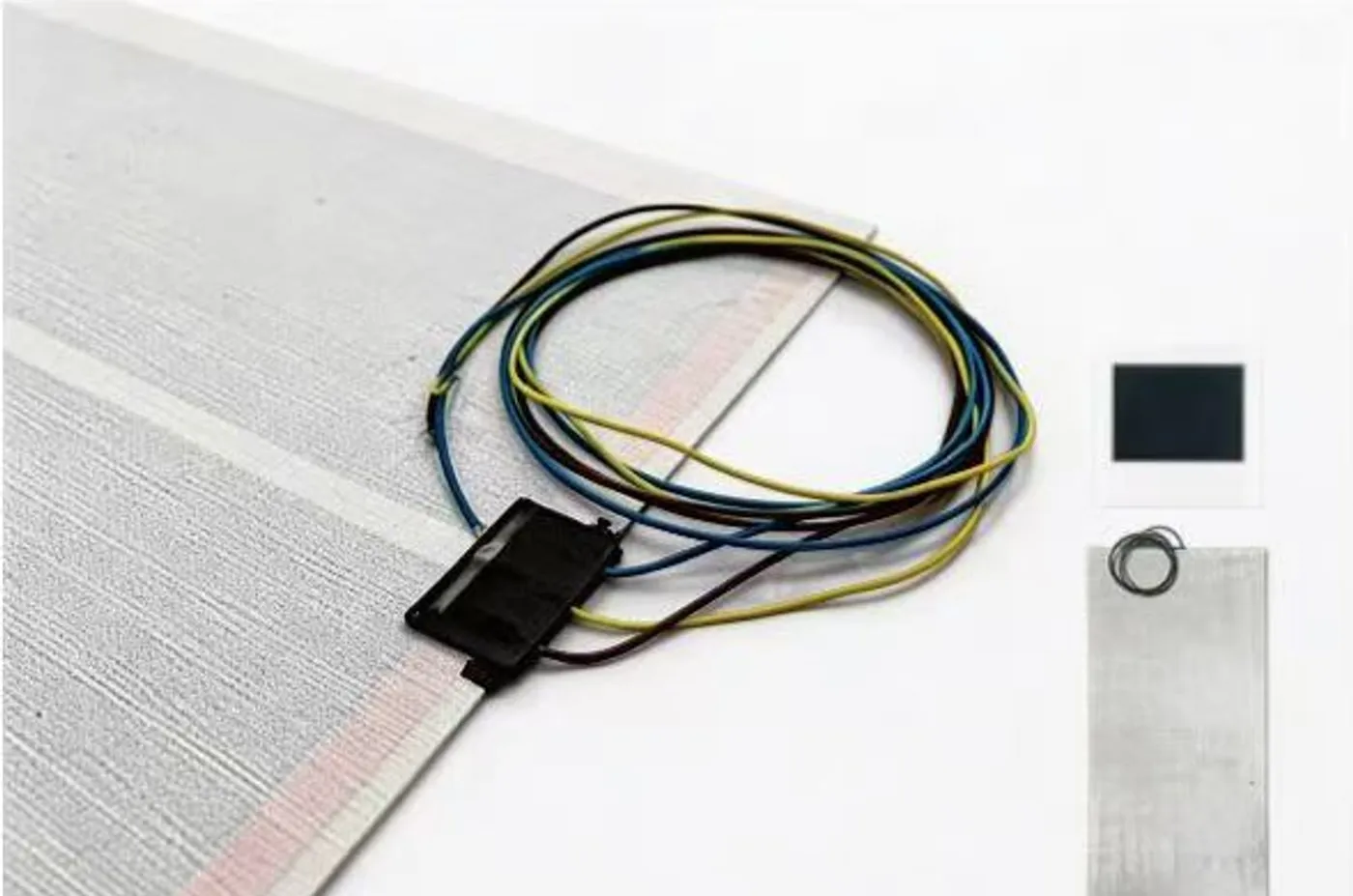
The thin SafeTech EGS kit: heater, cable tail, floor sensor and thermostat.
How the floor goes together
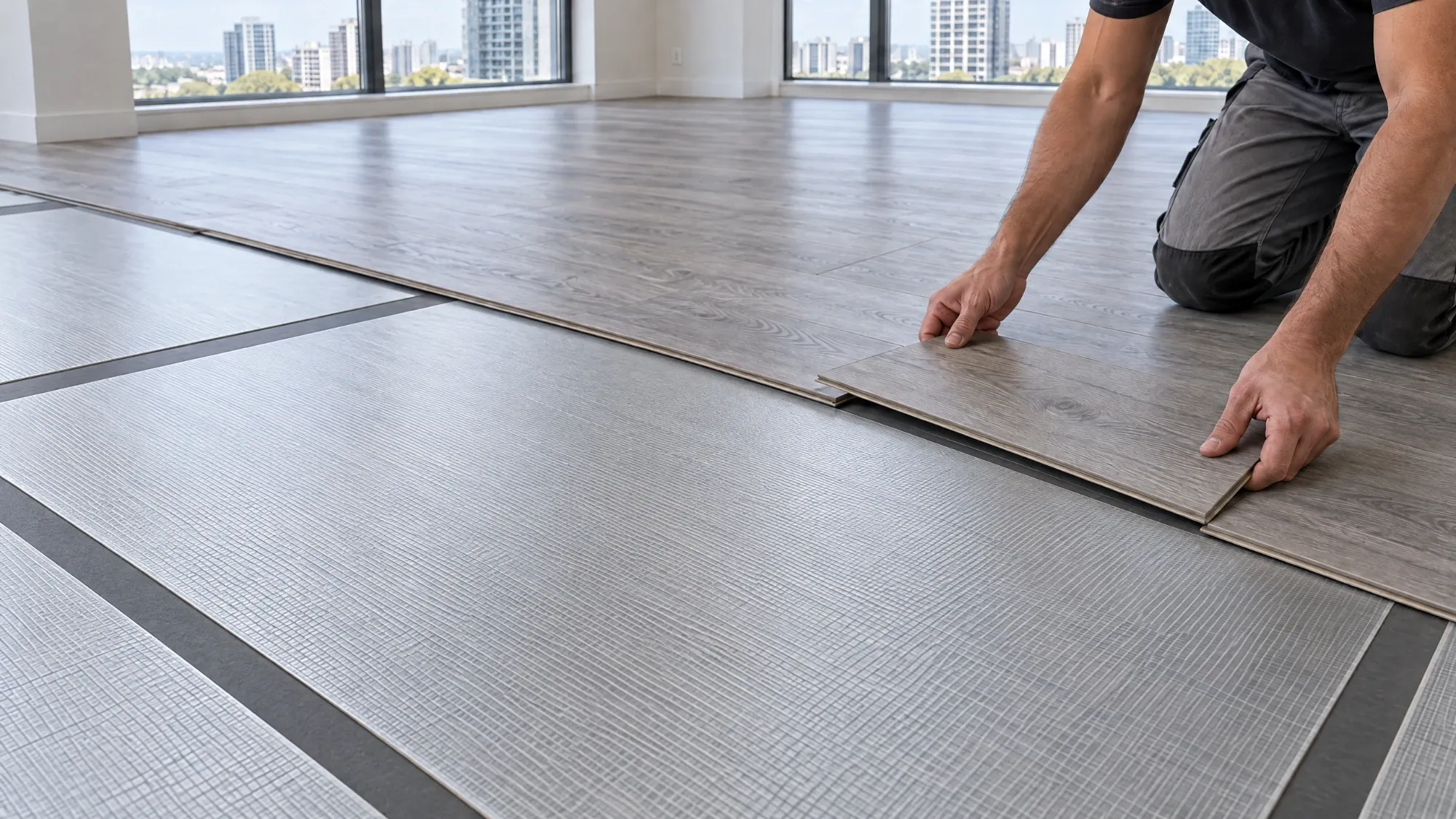
For a floating floor of laminate, engineered wood or click vinyl, SafeTech EGS uses the thin heater, 1.4 mm thick (5.4 mm at the connection point). From the bottom up:
- The subfloor, clean, dry and flat.
- An insulating underlay, 4 to 6 mm, rated for use with underfloor heating. It does two jobs: it sends the heat up into the room instead of down into the slab, and it gives the heater a firm, even bed.
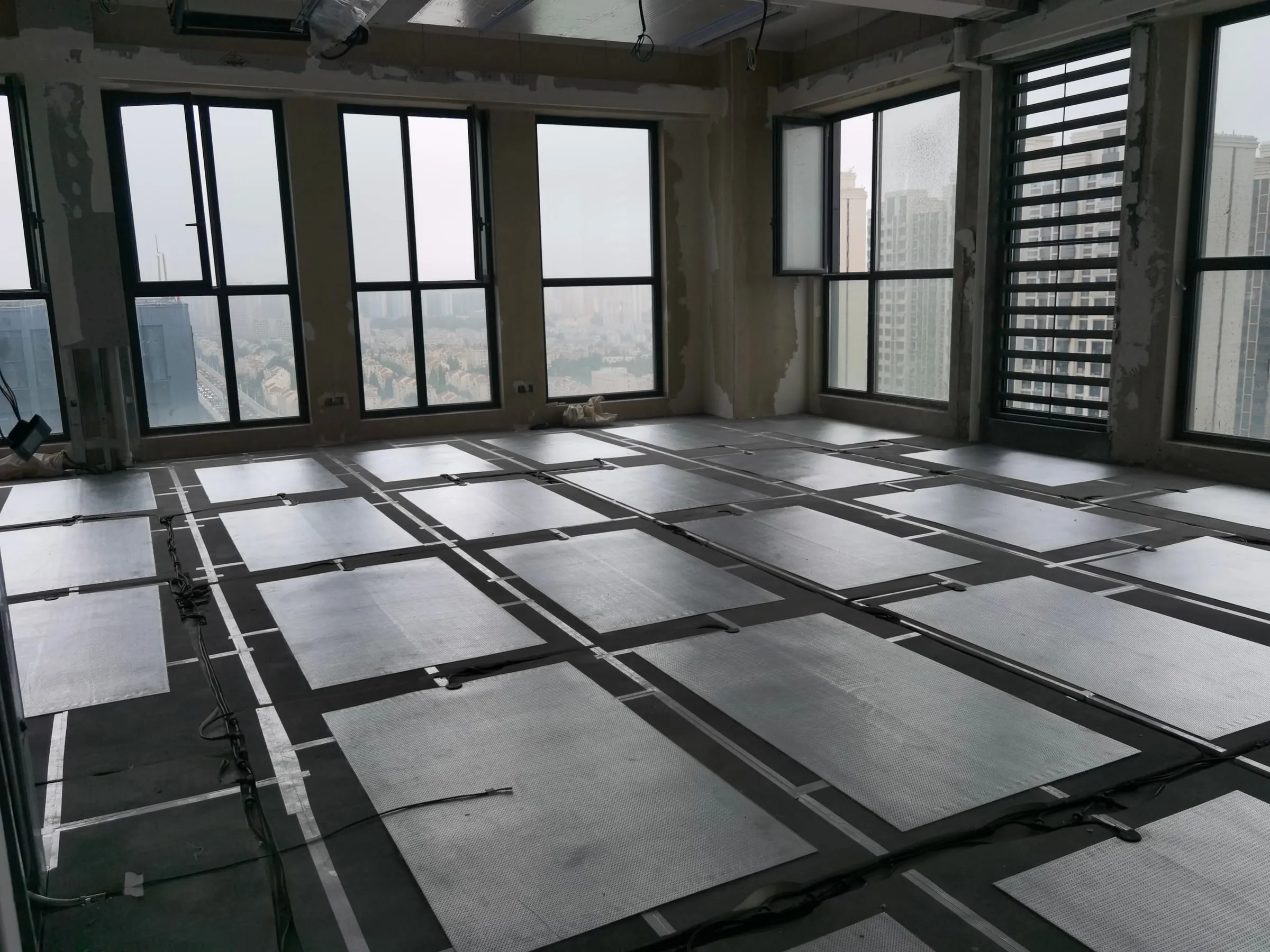
- The heater, laid out to the drawing and plugged together. Each one arrives made to length and pre-cabled, 600 or 900 mm wide.
- The floor finish, laid exactly as it would be without heating, along with any membrane its maker specifies.
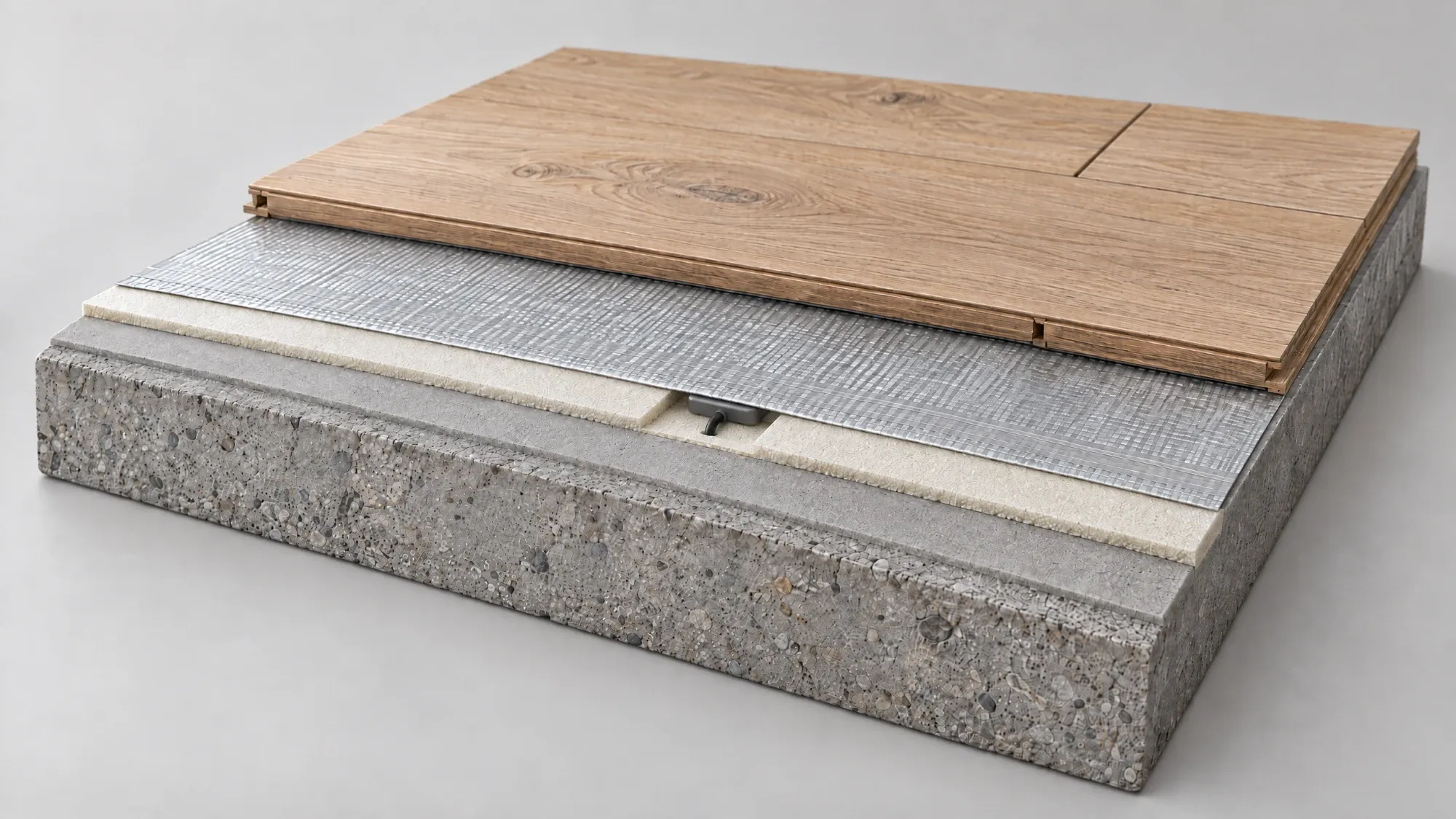
- 1 Floor finish Laminate, engineered wood or click vinyl · typically 8–15 mm
- 2 Heating film SafeTech EGS21F, thin · 1.4 mm
- 3 Connection 5.4 mm · sits in a cut-out in the underlay
- 4 Insulating underlay 4–6 mm · sends the heat upward
- 5 Levelling layer Where needed, so the base is flat
- 6 Existing slab Concrete or screed
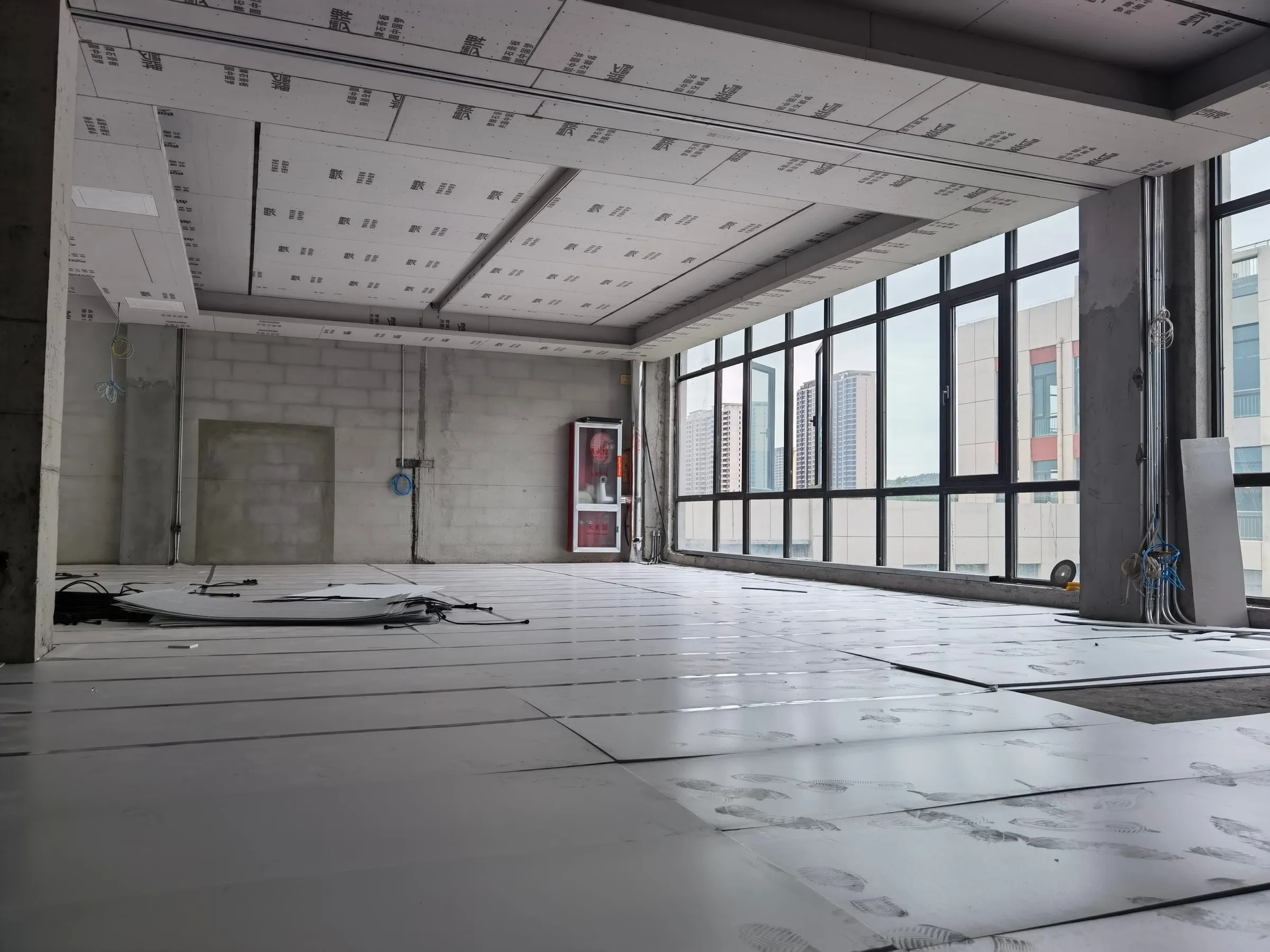
Heaters set out to the layout drawing, ready for the finish to go straight over.
A few rules that matter:
- Never nail, screw or staple through the heater. A floating floor isn’t fixed down anyway, which is one reason it suits this so well. Plan any fixings, such as door stops or threshold strips, around the layout.
- Don’t heat under fitted furniture. Kitchen units, built-in wardrobes and baths don’t need a warm floor, and heat trapped under them goes nowhere. The layout leaves those areas out.
- Let the floor settle in. Flooring makers generally ask for boards to acclimatise to the room before laying, and for the heating to be brought up gradually the first time. Follow their instructions to the letter.
Glued-down vinyl and LVT are a different case: they sit on a smoothed levelling layer, so the heater goes into that layer instead, the same way it does under tile. The adhesives article covers that build-up.
Don’t skip the underlay
Heat doesn’t know which way is up. A heater lies between two things, the floor above it and the slab below it, and it sends its warmth into whichever one lets it go more easily. A bare concrete slab is cold, enormous and very good at soaking up heat, so without anything in between, a large share of what you pay for goes down into the concrete instead of up into the room.
How large? On a floor with no insulation in it already, it can easily be 20 to 30 percent of the output. That’s a rough estimate, and the real figure depends on the slab, the ground or room beneath it and how long you run the heating, but it’s heat you pay for every hour the floor is on.
The insulating underlay is what stops it. It sits directly under the heater and turns the heat back up, toward the finish and the room. It also makes the floor quicker to warm, because the heater is no longer trying to warm the slab at the same time. If your floor already has insulation in it, a heated room below or an insulated screed, the underlay still matters as a firm, even bed for the heater; if it doesn’t, it’s the single most important layer in the build-up.
Warm in minutes, not hours
Under a floating floor, the heater sits a few millimetres below your feet, with nothing heavy above it to warm first. That makes it fast. From cold, you’ll typically feel the warmth in around 30 to 40 minutes, against the hours a pipe system in a thick screed needs. We compare the two properly in electric or wet underfloor heating.
That speed changes how you use it. You don’t have to keep the floor warm all day in case someone walks in; you can heat the room for the hours it’s used and let it cool when it isn’t. As we found when we worked out what heating costs to run, heating rooms only while they’re in use is one of the biggest savings there is. These times are typical rather than guaranteed; the room, the finish and the starting temperature all play a part.
Floor by floor
Laminate. Works well, provided the product is marked as suitable for underfloor heating. Laminate is thin and dense, so heat gets through it easily.
Engineered wood. Our preferred wooden floor over heating. The layered construction makes it far more stable than solid wood, so it moves less as it warms and cools. Thinner boards let heat through more readily than thick ones.
Click vinyl and rigid core. Works well over the thin heater on underlay. Check the maker’s temperature limit, as some are lower than wood.
Solid wood. Possible in some cases, but solid boards move more and are often nailed, which rules out the floating build-up above. Talk to us and to the flooring supplier before choosing it.
Carpet. Thick carpet and its underlay are insulation, and insulation on top of a heater is the wrong way round. Thin carpets can work; talk to us first.
Rugs. A rug on a heated floor is fine. A thick rug covering most of a room cuts the heat reaching the room, and the system has a cut-out that acts if the floor beneath gets too warm.
Does the finish slow the heat down?
Yes, a little. Every floor covering resists heat passing through it, and wood resists more than tile. A common rule of thumb in the industry is to keep the total thermal resistance of the finish, including any rug or underlay above the heater, at or below about 0.15 m²K/W. Most laminates, click vinyls and thinner engineered boards come in well under that; your flooring supplier can give you the figure.
What the finish doesn’t change much is how much heat the floor can give off. That depends mainly on the floor’s surface temperature. A floor held at 27 °C in a 20 °C room gives off roughly 75 watts per square metre, which is plenty for a well-insulated room and may not be enough on its own in a draughty one. We go into that in can underfloor heating be your only heat source?
Why it’s worth the trouble
A heated wooden floor is one of those things people don’t miss until they’ve had it. Warm boards underfoot, no radiators taking up the walls, and a room that feels comfortable a degree or two cooler than one heated by warm air, because the warmth is coming from the surface you’re standing on. And because the heater sits just under the surface rather than buried in a screed, it warms up in minutes rather than hours.
If you’re choosing a floor now, choose one that’s approved for underfloor heating, find its temperature limit, and tell us both. Send us your plan and we’ll do the rest.
Underfloor heating under laminate and wood: your questions
Can you put underfloor heating under laminate?
Yes, as long as the laminate is approved for underfloor heating. SafeTech EGS uses a thin 1.4 mm heater laid on a 4 to 6 mm insulating underlay, with the laminate floated over it. A floor sensor keeps the surface below the laminate maker’s temperature limit.
How quickly does underfloor heating under laminate warm up?
Quickly, because the thin heater sits just under the floor finish with nothing heavy above it. From cold, you will typically feel the warmth in around 30 to 40 minutes, compared with hours for pipes in a thick screed. Times vary with the room, the finish and the starting temperature.
Do I need an insulating underlay under the heater?
Yes. Without insulation beneath it, a heater on a bare slab can easily lose 20 to 30 percent of its output downward into the concrete. That is a rough estimate, but the insulating underlay turns that heat back up into the room and helps the floor warm faster.
Does the thermostat need a floor sensor?
Yes. An air-only thermostat cannot see how warm the floor itself is getting. Use a thermostat with a floor sensor and a maximum floor temperature setting, set to your flooring maker’s limit, usually around 27 °C for wood and laminate. The SafeTech EGS kit includes one.
What temperature can a wooden floor take?
Most makers of engineered wood and laminate set a maximum surface temperature of around 27 °C. Check the data sheet for your product, and set the floor sensor limit to match.
Is engineered wood or solid wood better over underfloor heating?
Engineered wood. Its layered construction makes it more stable, so it moves less as it warms and cools. Solid wood can work in some cases but needs more care; talk to your flooring supplier first.
Can I use underfloor heating under vinyl?
Yes. Click vinyl and rigid-core floors go over the thin heater on underlay. Glued-down vinyl and LVT sit on a levelling layer, and the heater goes in that layer instead. Check the vinyl maker’s temperature limit.
Can I put a rug on a heated floor?
Yes. A rug reduces the heat reaching the room from the area it covers. The system has an overheat cut-out, but avoid covering most of a room with thick rugs or mattresses.