Testing electric underfloor heating: resistance, insulation, RCD and commissioning
How to test electric underfloor heating before, during and after installation: heater resistance, insulation resistance at 500 V DC, earth, RCD, staged heat-up and thermal imaging.
A heated floor is tested three times: before the heaters go down, before they’re covered, and when the floor is first switched on. Each test is cheap. Skipping one is how a fault ends up under 40 m² of tiles. This is the test sequence for SafeTech EGS, written for electricians. Your local wiring rules (BS 7671 in the UK, VDE 0100 in Germany, and their equivalents elsewhere) apply on top.
Instruments
- Insulation resistance tester (500 V DC)
- Multimeter (resistance)
- Clamp ammeter
- Earth loop / continuity tester and RCD tester
- Thermal imaging camera
Test 1: each heater, before laying
Measure the resistance of every heater on site, before it goes down. It must be within ±5% of the nominal value on its label. Record it. A heater outside tolerance is set aside, not laid.
Test 2: each circuit, before covering
With the heaters laid and connected, the main breaker off and the thermostat disconnected:
| Test | Between | Pass |
|---|---|---|
| Insulation resistance, 500 V DC for 1 minute | Live to earth; neutral to earth | 50 MΩ or more, steady, no decay |
| Loop resistance | Each circuit, both ends | Within ±10% of design (e.g. 20 Ω nominal: 18–22 Ω) |
| Earth continuity | Heater earth to board earth bar | Earth loop 4 Ω or less |
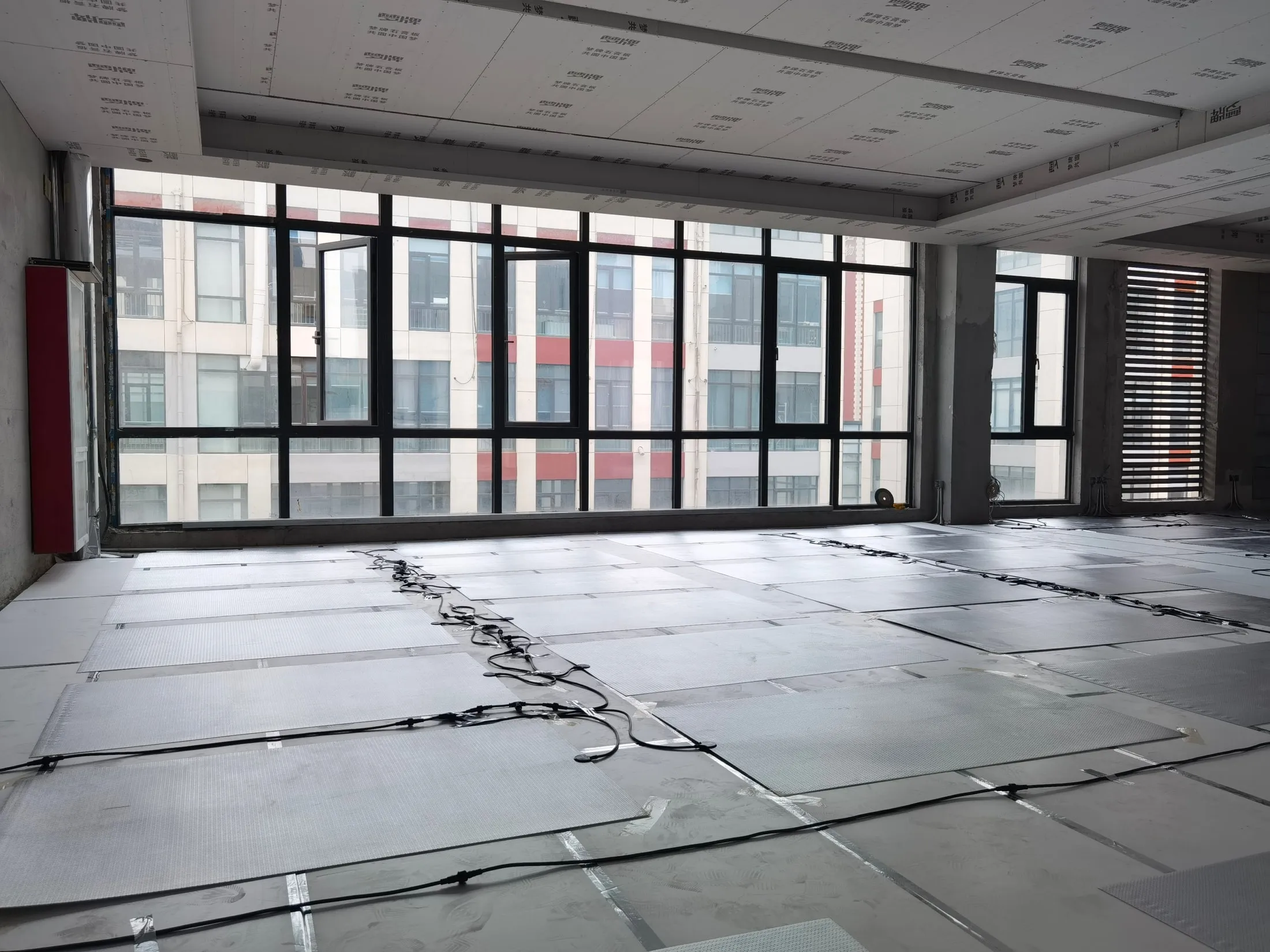
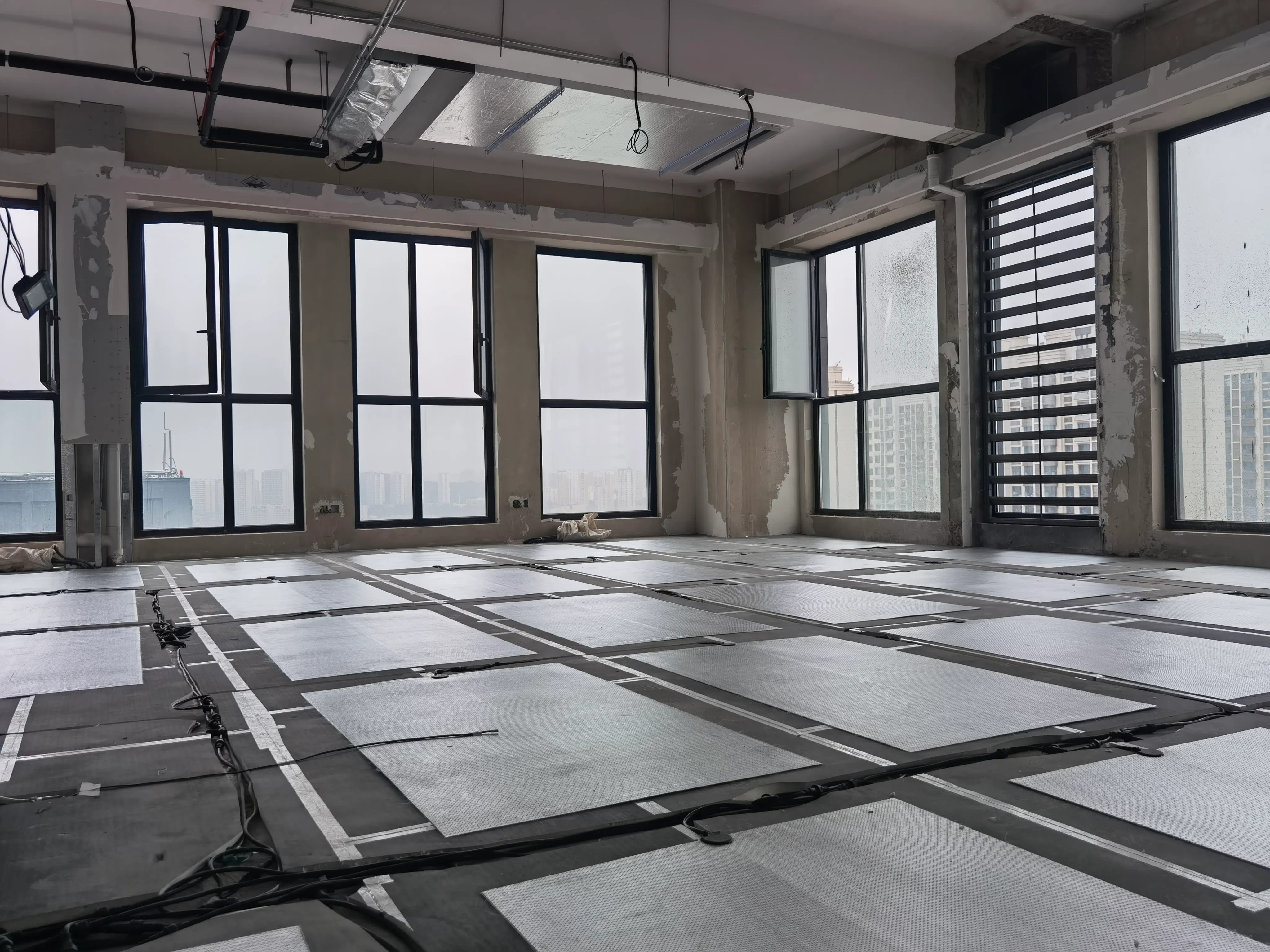
Photograph the layout with the readings before any levelling compound, adhesive or floor goes on. The photos and readings are the warranty file. Repeat the insulation test after the finish is laid; the finish trades are where damage happens.
For reference, every SafeTech EGS heater is Hi-Pot tested at 3,000 V DC in our factory, and production insulation resistance is above 500 MΩ. A site reading far below that points to damage during installation.
Test 3: protective devices
- RCD: 30 mA, trip time 0.1 s or less, Type A or B, rated for the connected load (e.g. 32 A for a 6 kW installation). Test with the button and with an RCD tester.
- Earth: connected independently to the board’s earth bar, never combined with neutral, never to pipework or steel.
Test 4: staged first heat-up
Only after the finish has fully cured (at least 72 hours for tile adhesive at 20 °C):
| Stage | Setting | Duration | Check |
|---|---|---|---|
| 1. Pre-heat | 15 °C | 4 hours | Thermostat working; current within ±10% of theory (1,500 W circuit at 220 V: about 6.8 A) |
| 2. Step up | +5 °C every 4 hours | Until design temperature | Floor sensor within limit; supply voltage within ±10% |
| 3. Hold | Design temperature | 24 hours | Thermostat cycling; zone temperature even to within 2 °C |
Test 5: thermal imaging
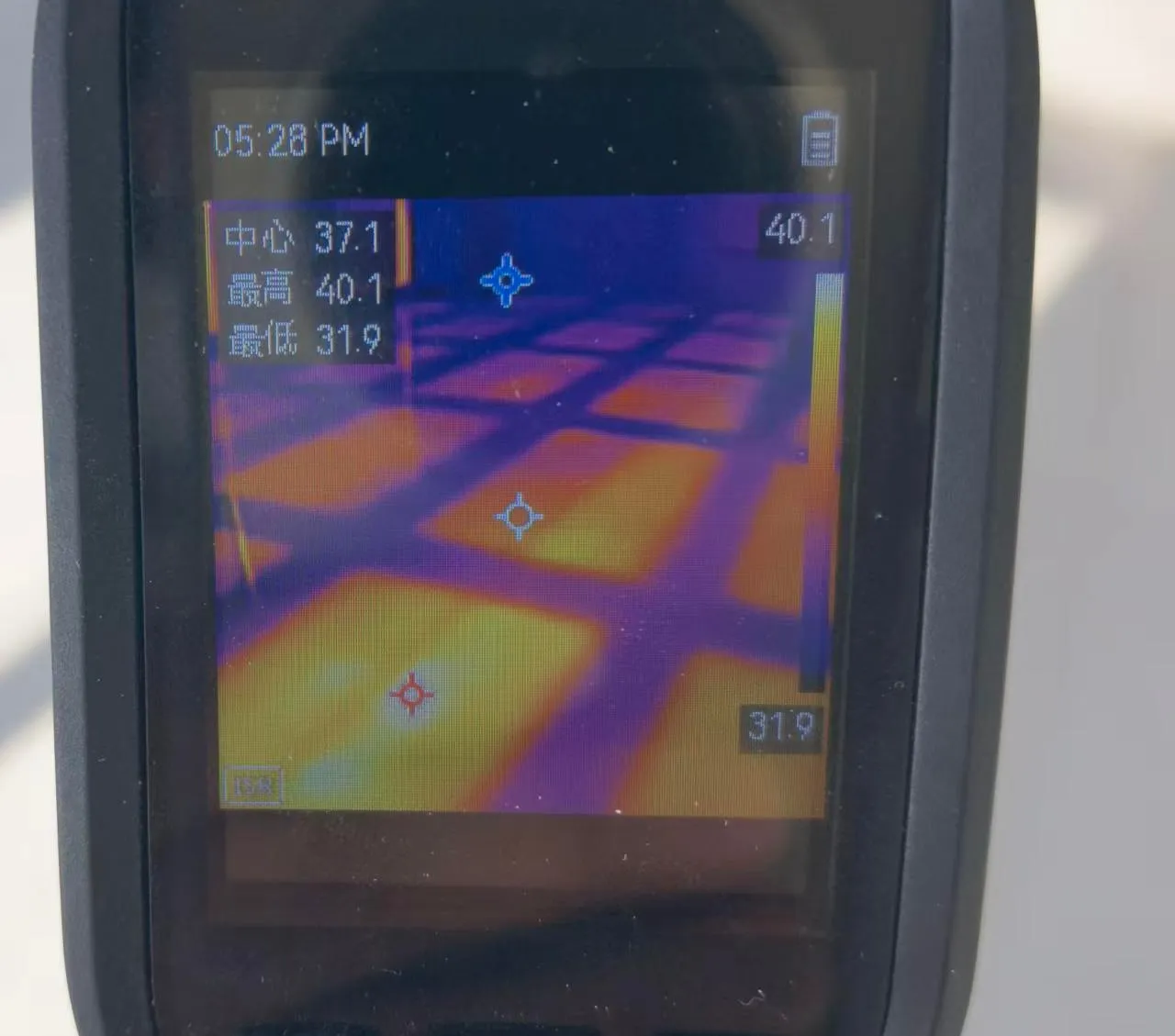
Walk the whole floor with a thermal camera at temperature. Every heater should show evenly, with no cold strip where heaters meet and no bright spot at a connection. The maximum difference within a zone is 2 °C. This is what we did on the Laoshan office floor, and it’s the fastest way to prove a floor is right.
Hand-over
The client gets the test record: heater resistances, insulation and loop readings, RCD trip time, photographs, thermostat settings, and the layout drawing showing where the heaters are. That drawing is what stops someone drilling into the floor in five years. If something does go wrong later, see electric underfloor heating not working.
Testing underfloor heating: your questions
How do you test electric underfloor heating?
Measure each heater’s resistance before laying, test insulation resistance at 500 V DC and loop resistance before covering, test the RCD and earth, then heat up in stages and check the floor with a thermal camera.
What insulation resistance should underfloor heating have?
For SafeTech EGS, at least 50 MΩ at 500 V DC, live to earth and neutral to earth, steady for one minute.
What resistance should an underfloor heating mat or film read?
Within ±5% of the nominal value on the label before laying, and each circuit within ±10% of the design value once connected.
What RCD does electric underfloor heating need?
A 30 mA RCD with a trip time of 0.1 seconds or less, Type A or B, rated for the connected load.
Why use a thermal camera?
It shows the whole floor at once. A cold strip or hot connection reveals a laying or termination fault on commissioning day, not in the middle of winter.
Electrical contractors interested in installing SafeTech EGS: see our partner page.