Electric underfloor heating not working? Seven common faults and what to check
Electric underfloor heating not warming up, tripping the RCD or heating unevenly? Seven common faults, what causes them, what you can check and when to call an electrician.
Most “broken” heated floors aren’t broken. A thermostat in the wrong mode, a schedule nobody remembers setting, or a rug in the wrong place accounts for a lot of call-outs. Real faults do happen, and a few simple checks tell you which kind you have.
Safety first. The heaters in an electric floor run at mains voltage. Anything beyond the thermostat settings and the breaker is a job for a qualified electrician. If you smell burning or see smoke, switch off the supply at the board and call an electrician. Never lift the floor or open the heaters yourself; that also voids the warranty.
1. The whole floor stays cold
Check: Is the thermostat on and calling for heat? Is it in floor, air or combined mode, and is the floor limit set very low? Is a schedule holding it in setback? Has the breaker or RCD tripped?
Likely causes: settings, a tripped breaker, or the thermostat itself. Our thermostat guide explains the modes.
2. The RCD keeps tripping
Check: Does it trip as soon as the heating switches on, or only sometimes? Has anyone drilled, nailed or screwed into the floor? Has there been a leak or spill?
Likely causes: damaged insulation on a heater or cable, often from a fixing driven into the floor, or moisture at a connection. An electrician can find the circuit with an insulation resistance test (it should read at least 50 MΩ at 500 V DC). After a spill, switch off and let the floor dry for 24 hours before switching back on.
3. One area is cold
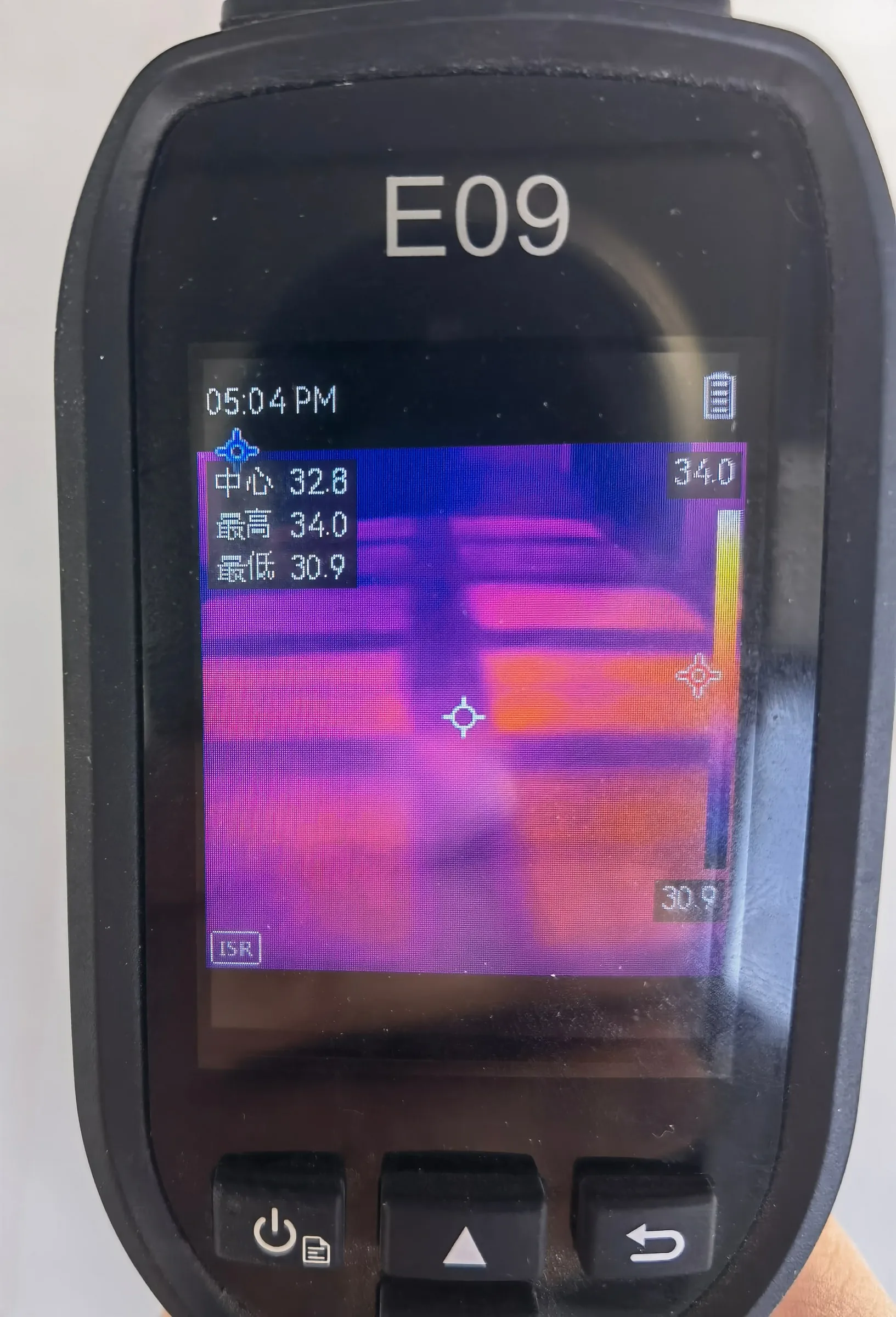
Check: Is it one strip the width of a heater, or a patch? A thermal camera shows the answer in seconds.
Likely causes: a corroded or loose connection, or an open circuit in one heater. The electrician cleans and remakes the connection, or locates the break with a multimeter and repairs or replaces that heater.
4. The thermostat shows an error
Likely causes: a faulty floor sensor, or an unstable supply voltage. Because the sensor is installed in a conduit, it can be pulled out and replaced without lifting the floor. If the supply is unstable, the electrician checks the incoming voltage.
5. The floor is warm in places and cool in others
Check: Are there rugs, mats or furniture on the heated area? Is the cool area over a gap between heaters, or near an outside wall?
Likely causes: thick rugs (anything above 0.15 m²K/W should not go over the heaters), damaged insulation under the floor, gaps between heaters that are too wide, or a tile bed that’s too thick in one area. Uniform floors vary by no more than 2 °C within a zone.
6. It takes too long to warm up
Check: Is there insulation under the heaters? Is the floor finish thick wood or carpet? Is the floor the only heat in an older, poorly insulated room?
Likely causes: heat going into an uninsulated slab, a high-resistance finish, or a floor sized below the room’s heat loss. See insulation under electric underfloor heating and how many watts per m².
7. The floor feels too hot
Check: Is the thermostat in floor mode with a high setting? Is something covering the floor, such as a mattress, a beanbag or stacked boxes?
Likely causes: settings, or heat trapped under an object. Lower the floor limit, and keep heavy insulating objects off the heated area. SafeTech EGS also has an overheat cut-out.
When to call us
If an electrician has checked the supply, RCD and thermostat and the floor still isn’t right, contact us with the installation test record and photos of the layout. SafeTech EGS carries a 10-year product warranty; claims are handled through an authorised installer. The records from testing at installation make diagnosis much faster.
Underfloor heating faults: your questions
Why is my electric underfloor heating not getting warm?
Usually settings: the thermostat mode, a low floor limit or a schedule. Then check the breaker and RCD. If those are fine, an electrician can test the circuit for a loose connection or a damaged heater.
Why does my underfloor heating trip the RCD?
Most often damaged insulation, for example from a nail or screw driven into the floor, or moisture at a connection. An electrician can locate it with an insulation resistance test.
Can electric underfloor heating be repaired?
Yes. A loose connection can be remade, a floor sensor in a conduit can be replaced without lifting the floor, and a single damaged heater can be located and repaired or replaced.
How do you find a fault in underfloor heating?
A thermal camera shows cold or hot areas immediately. Resistance and insulation tests then confirm which circuit and heater is affected.
Is it safe to keep using underfloor heating that trips the RCD?
No. Leave it switched off and have an electrician test it.