Heating film or heating mat? Carbon film vs cable underfloor heating
Electric underfloor heating film or a cable heating mat? How each heats the floor, build-up height, floor finishes, safety and running cost, with a side-by-side thermal test.
If you’re quoting for electric underfloor heating, you’ll be offered one of two things: a heating mat, which is a thin resistance cable stitched to a mesh, or a heating film, a flat sheet that heats across its whole surface. Both run off mains electricity and both sit under the floor finish. They heat the floor in very different ways, and that difference decides where each belongs.
We make full-surface carbon-fibre film, so we’re not neutral. Here’s the comparison anyway, including where a mat is the sensible choice.
How each one heats
A heating mat is a cable laid in loops at a fixed spacing. All the heat leaves through the small surface of that cable, so the cable runs hot, typically well above 60 °C. The adhesive or screed above it has to spread that heat sideways before it reaches the room.
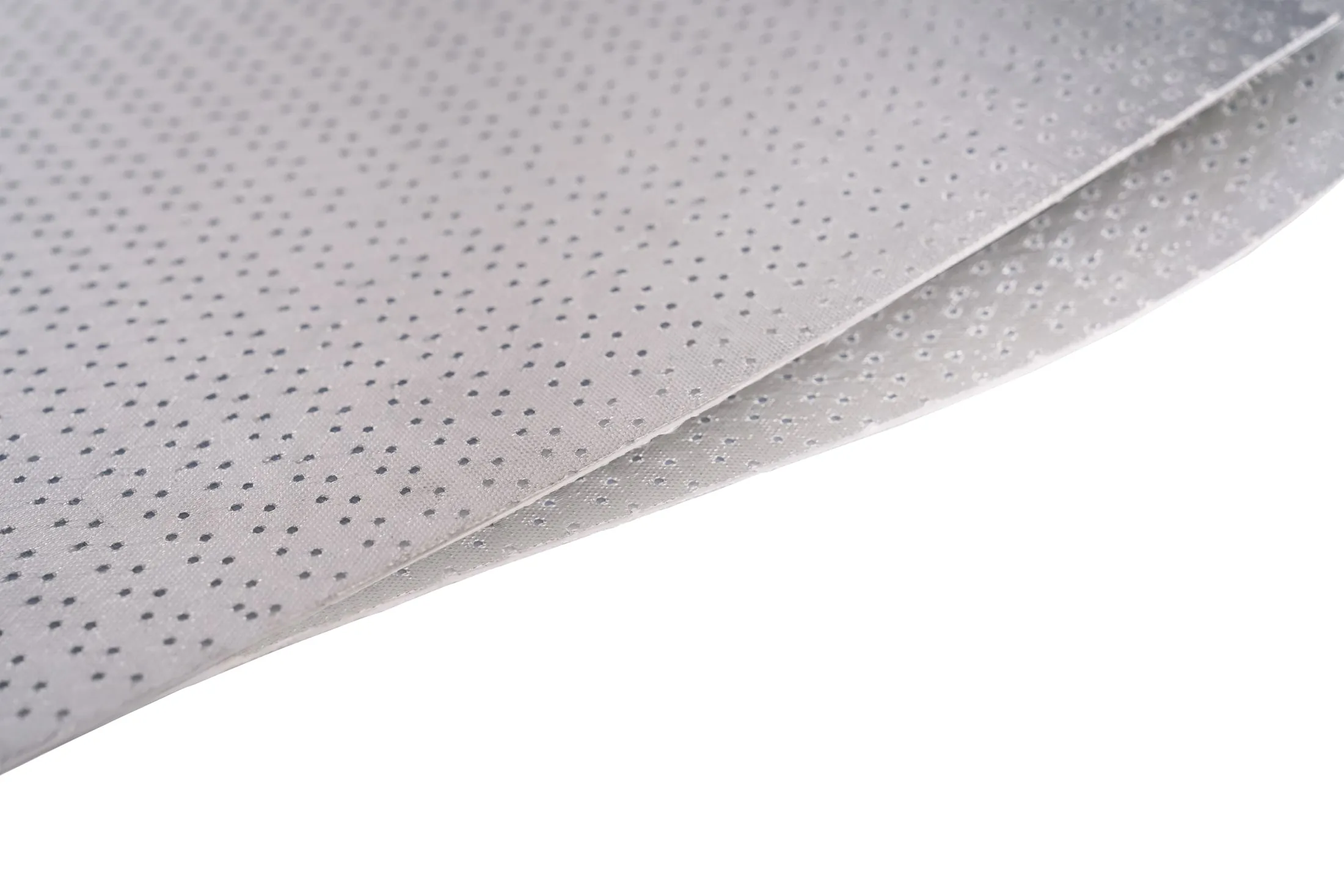
A heating film like SafeTech EGS covers almost the whole floor area. The heat starts everywhere at once, so the element can run cooler for the same output and nothing needs to smear stripes into an even surface.
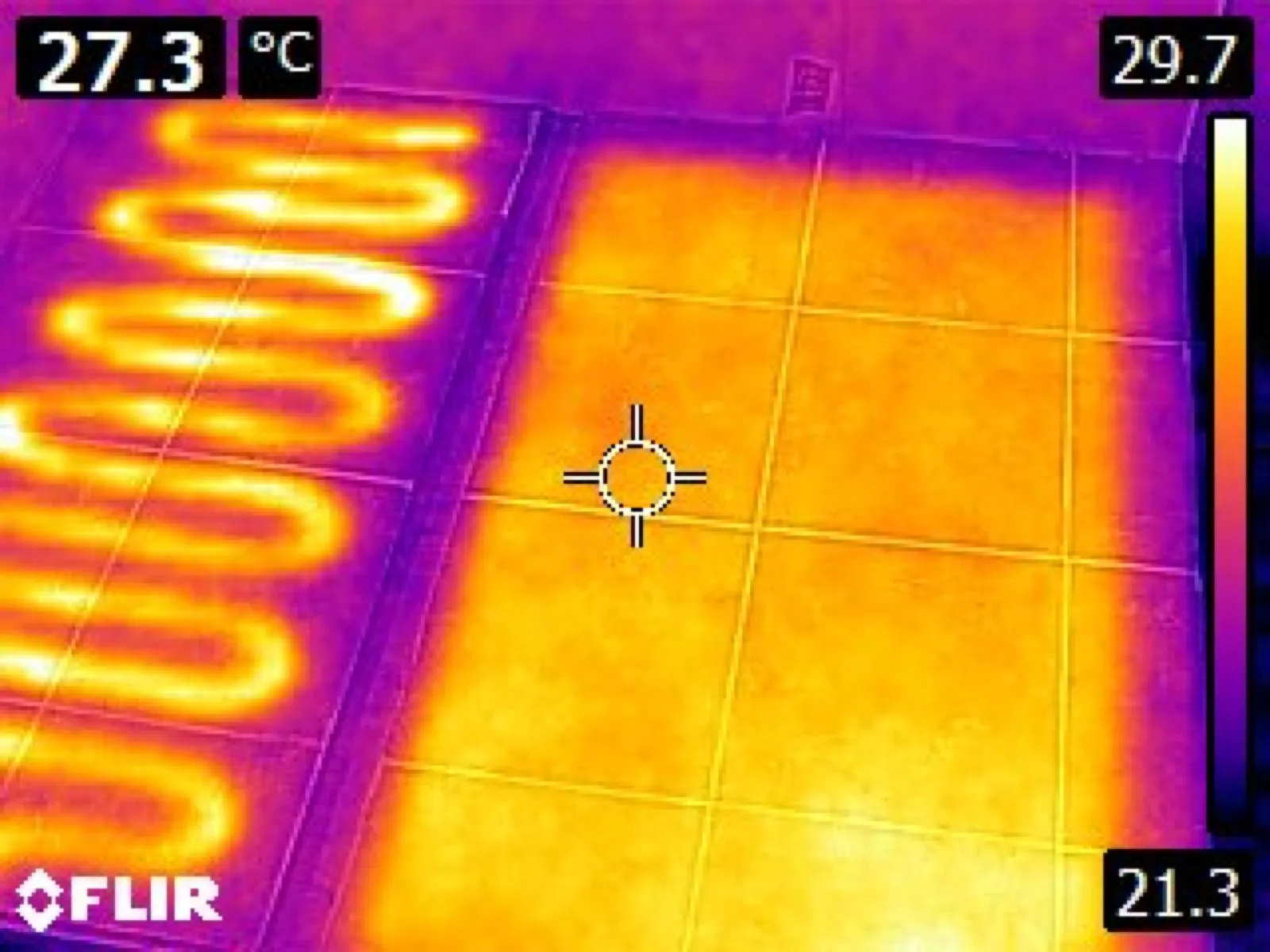
Seen through a thermal camera
We laid both under identical tiles: cable on one half, film on the other.
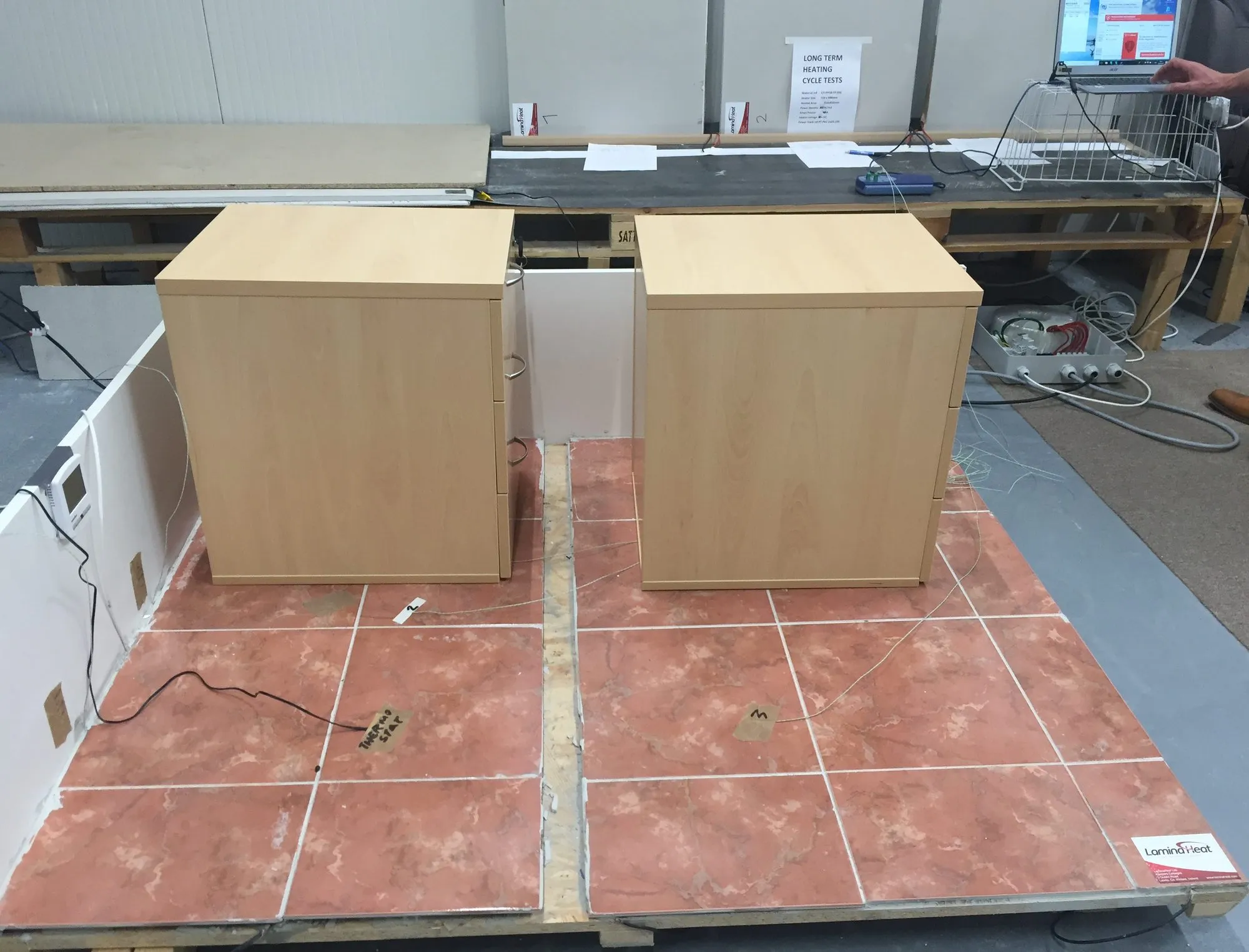
The cable warms the tiles in stripes. The film warms the whole area evenly, and in our test it held the same floor temperature with the thermostat switching on noticeably less often. The full write-up is in electric or wet underfloor heating.
Side by side
| Heating mat (cable) | Heating film (SafeTech EGS) | |
|---|---|---|
| Heat source | Lines of cable at a fixed spacing | Full-surface carbon fibre |
| Element temperature | Hot, often above 60 °C | Cooler for the same output |
| Floor surface | Warm and cool bands if the bed is thin | Even across the heater |
| Thickness | Usually 3–5 mm, set in adhesive or screed | 1.4 mm film; about 5 mm at the connection (EGS21F) |
| Floating floors | Usually not suitable, needs an embedding layer | EGS21F sits on underlayment directly under laminate, wood or vinyl |
| Tiles and stone | Yes, in adhesive or self-levelling | Yes: EGS21F in the adhesive bed, or EGS21E in the levelling layer |
| Fit to the room | Mat or loose cable shaped on site | Heaters made to length from a layout drawing |
| Earthing | Cable screen | Full-surface earth layer over the element |
| Warranty | Varies by brand | 10-year product warranty, 20-year tested life |
Where a mat makes sense
A mat is a good answer for a small tiled room with awkward shapes, where the installer wants to route cable around a toilet or a shower tray on the day. It’s widely available and most tilers know it.
Where film wins
- Floating floors. Film goes straight under laminate, engineered wood and click vinyl on a 4–6 mm underlayment. A cable needs an embedding layer, which adds height and a wet trade.
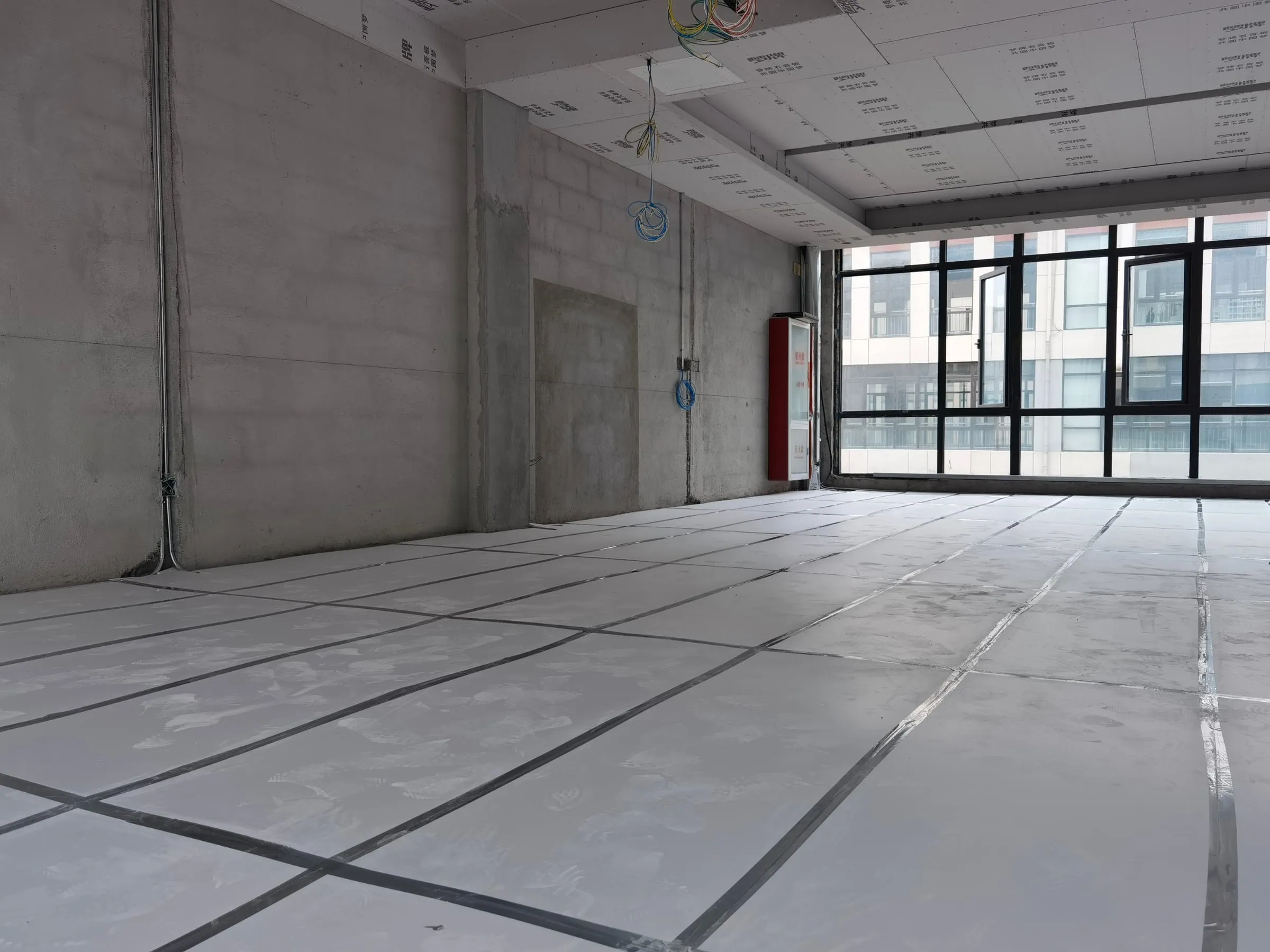
- Large and commercial floors. Pre-cabled heaters plug together and a whole floor plate goes down in a day, as in our 120 m² Laoshan office.
- Even comfort. No stripes, and a cooler element under the finish, which is kinder to wood and vinyl.
- Height. At 1.4 mm the heater is thinner than most mats. See low-profile underfloor heating.
For a deeper look at the two element types we make, see electric infrared underfloor heating: two systems.
Heating film vs heating mat: your questions
Is heating film better than a heating mat?
It depends on the floor. Film heats the whole surface evenly at a lower element temperature and suits floating floors and large areas. A cable mat suits small tiled rooms with awkward shapes that are easier to cover with cable shaped on site.
Can you put heating film under tiles?
Yes. SafeTech EGS21F can sit in the tile adhesive bed, and EGS21E is embedded in a levelling layer under tile and stone.
Can a heating mat go under laminate?
Usually not directly. A cable mat needs an embedding layer. A heating film like SafeTech EGS21F is made to sit on underlayment directly under laminate, engineered wood and click vinyl.
Which uses less electricity?
The energy needed to heat a room is the same, but a full-surface film delivers it more evenly. In our side-by-side test under identical tiles, the film held the same floor temperature with the thermostat switching on noticeably less often.
Is heating film safe?
SafeTech EGS has a full-surface earth layer, is type-tested to IEC 60335-1 and tested to UL 2683, and every heater is Hi-Pot tested before it ships. It is installed on an RCD-protected circuit by a competent electrician.
Not sure which suits your floor? Send us a floor plan and we’ll tell you what we’d fit, and why.