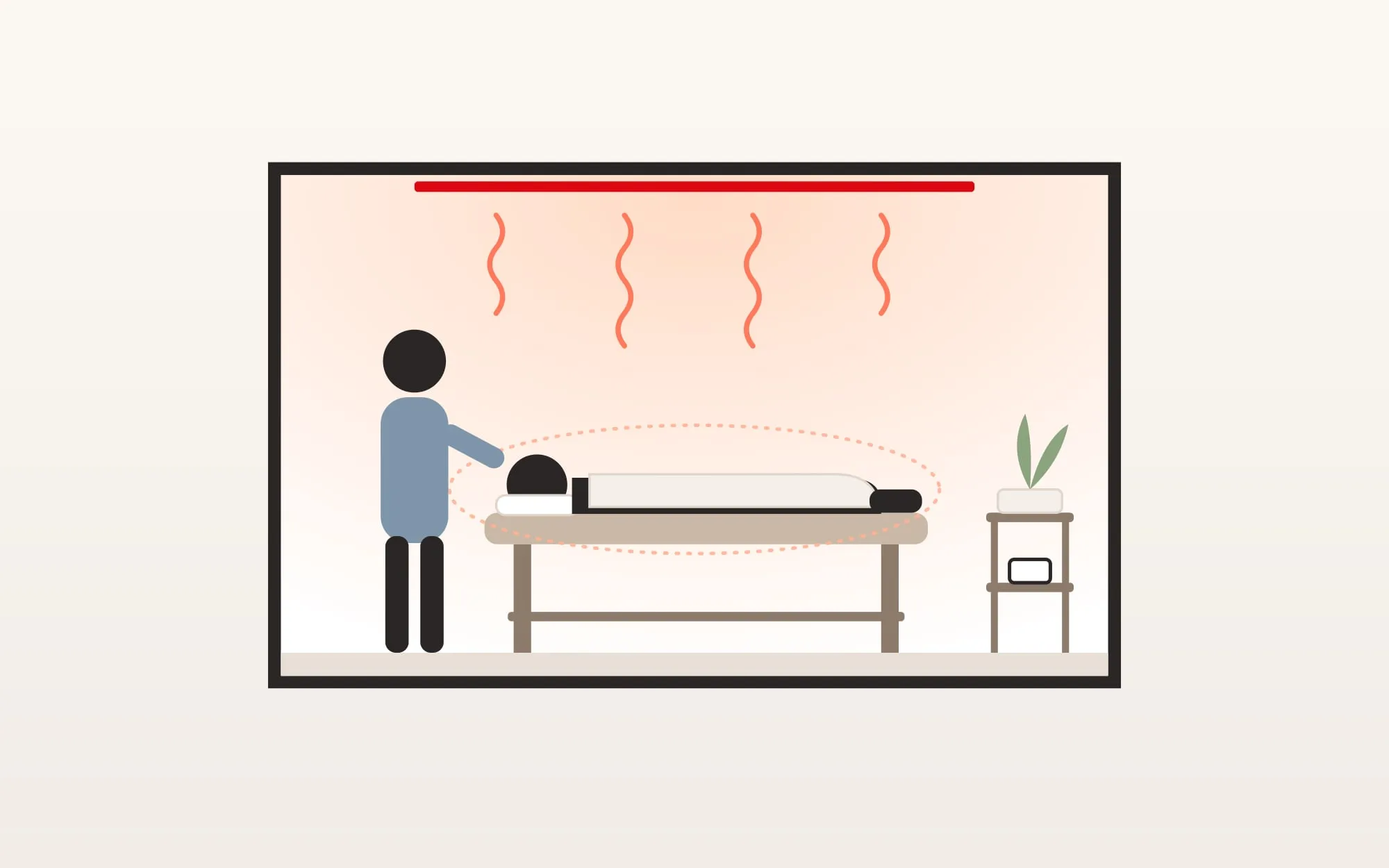
Infrared heating for schools: what estates teams and bursars should know
Infrared heating for schools and nurseries: heat each classroom only while it’s in use, safe surfaces for children, no maintenance, fitted over the summer.
Schools are an unusual building to heat. A classroom is packed for six hours a day and empty for the other eighteen, and the whole building is empty for about thirteen weeks a year. The estate is often a mix of Victorian brick, 1960s system build and a recent extension, each losing heat at a completely different rate. And a class of thirty is giving off 2 to 3 kW of heat just by sitting there.
A central wet system handles that badly. Infrared heating handles most of it well. Here’s an honest look at both sides, for estates teams, bursars and the architects working for them.
The short version: infrared heating built into ceilings, walls or floors warms a classroom in 20 to 30 minutes, so each room can be heated only while it’s in use. Every room has its own thermostat. There’s nothing hot at child height, nothing to service, and it can go in over a summer holiday. It won’t beat a well-run heat pump on a building heated all day, every day, but schools aren’t that building.
Heat the room only while it’s in use
The biggest waste in a school is heating empty rooms.
A wet system with a screed floor or heavy radiators can’t follow a timetable. It has to start hours before the first pupil arrives and keeps running long after the last one leaves, because it can’t respond any faster. So in practice it runs all day, and often through the evening.
Infrared has nothing to fill up first. The element sits a few millimetres behind the finished surface, you feel a heated ceiling within 3 to 10 minutes, and the room reaches its set temperature in 20 to 30. A classroom can come up before registration and drop back at lunch. A hall used twice a week is heated twice a week.
For a building that stands empty most of the time, that’s where the money is.
Every room at its own temperature
Schools are never uniform. South-facing classrooms overheat while north-facing ones stay cold. The science labs run warm from equipment, the sports hall wants to be cool, reception wants to feel welcoming, and a room full of thirty children needs less heat than the same room empty.
Every room gets its own thermostat and its own schedule, so each is controlled to what it actually needs. There’s no heating circuit forcing a whole wing onto one timetable, and no radiator valve for anyone to fiddle with.
Safe surfaces for children
This is the point to get right in a school, and above all in nurseries, early years and special needs settings, where children can’t always move away from something hot.
- Floors stay under 29 °C at the surface. That’s below skin temperature, so children can sit and play on them for as long as they like, which is why heated floors suit nurseries and reception classes so well.
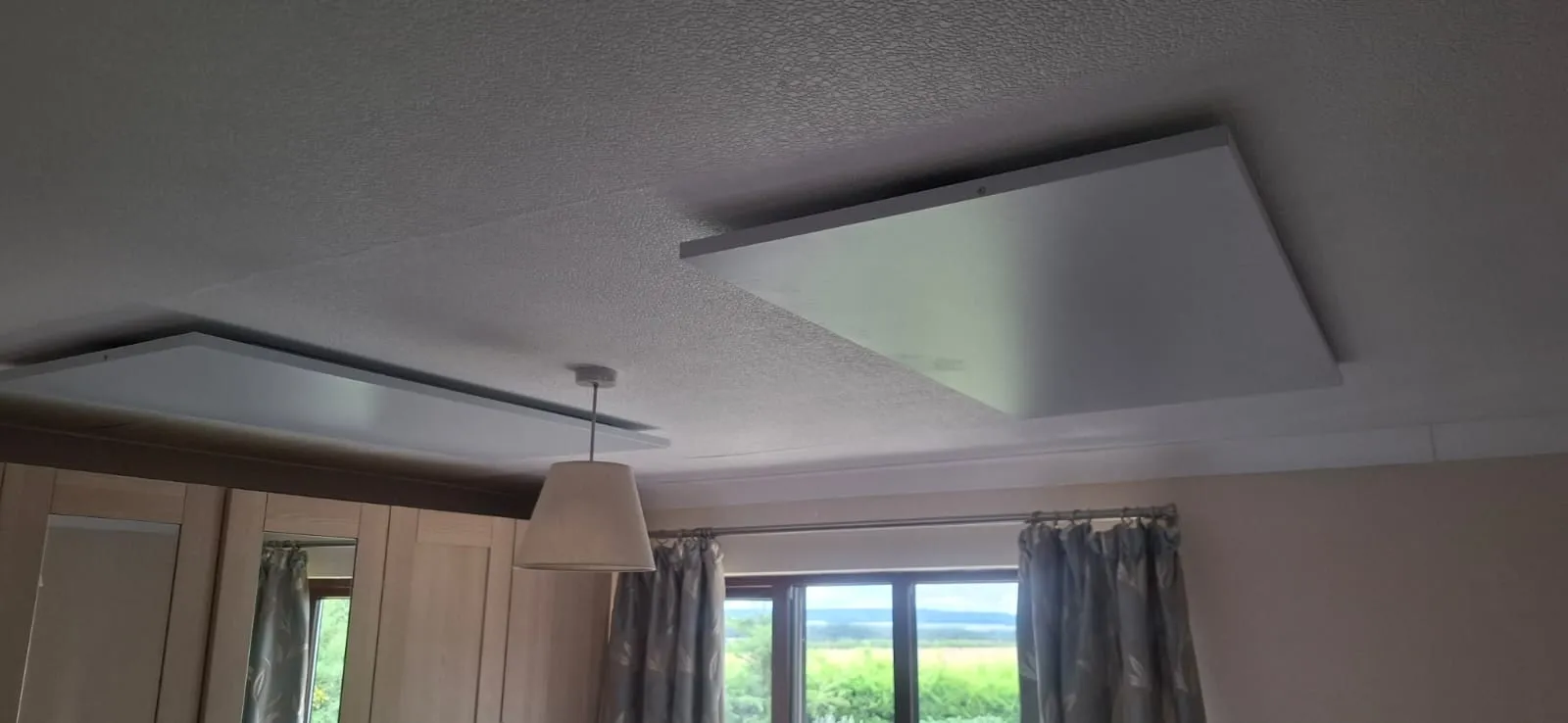
- Ceilings are out of reach. PowerBoard 250 runs at 50 to 60 °C and is skimmed flush into the ceiling. The surface-mounted PowerBoard 500 and 750 run hotter, at 80 to 105 °C, and belong high up in halls, sports halls and corridors rather than in classrooms.
- Walls with ComfortScrim normally run at 40 to 55 °C, about as warm as a radiator. In rooms for young or vulnerable children, we design them differently (see below).
Walls and the 43 °C rule
UK guidance for health and social care limits any surface that vulnerable people could be in prolonged contact with to 43 °C. It’s the same figure behind the low surface temperature radiators you see in nurseries and special schools, and many school design briefs ask for it.
We apply it wherever young or vulnerable children are:
- In nurseries, early years rooms and special needs settings, a wall within reach is designed as a low surface temperature emitter that stays at or below 43 °C, with the output and controls set for that limit rather than our usual 40 to 55 °C.
- Where a room needs more output than that allows, the heat goes into the ceiling, out of reach, or the floor, which stays under 29 °C anyway. Wall heating can also go above reach height.
- In other classrooms, offices and staff areas, walls can run at their normal temperature, unless your brief says otherwise.
We mark the rule that applies to each room on the layout, so it can be checked against your own brief and risk assessment. We explain the healthcare background in infrared heating for hospitals and care homes.
What it does for the classroom
The evidence on temperature and learning follows the same pattern as temperature and workplace performance: concentration, memory and reasoning all slip outside the comfortable range. Children can do less about it than adults, because they can’t move seats or change clothes whenever they like.
Four things make a difference in a classroom:
- No fan. Fan heaters and fan-coils move dust and allergens around a room of thirty children, several of whom will have asthma. Infrared heating has no fan and doesn’t circulate air.
- Less dry air. Heating air hard lowers relative humidity, which is behind the dry throats and headaches that build up over a winter term. Radiant heat keeps the room comfortable with the air two to three degrees cooler.
- Silence. No fans, no pumps, no pipes ticking as they warm. In a room where one voice has to carry to thirty people, background noise matters.
- Even warmth. No seat roasting next to a radiator while the one by the window stays cold. Whether a child can concentrate shouldn’t depend on where they sit.
We explain why radiant heat feels warmer at a lower air temperature in thermal comfort explained.
Nothing to damage, nothing to service
Radiators are a constant problem in schools: hot surfaces at child height, guards to fit and clean behind, valves that get broken, and wall space lost in rooms that need it for storage and display.
PowerBoard 250 is built into the ceiling and skimmed over. ComfortScrim goes behind the plaster. There’s nothing to touch, nothing to break, nothing to vandalise and nothing to clean around, and the walls come back for teaching.
Once commissioned, there’s nothing to maintain: no moving parts, no water, no filters, no boiler and no yearly service. Our elements are tested for a lifespan of more than 20 years and carry a 10-year warranty. With no water in the system, there’s nothing to add to a legionella risk assessment and no pipework to leak over an IT suite.
Fitting it in the summer holiday
School refurbishment happens in the summer holiday, and the programme is unforgiving.
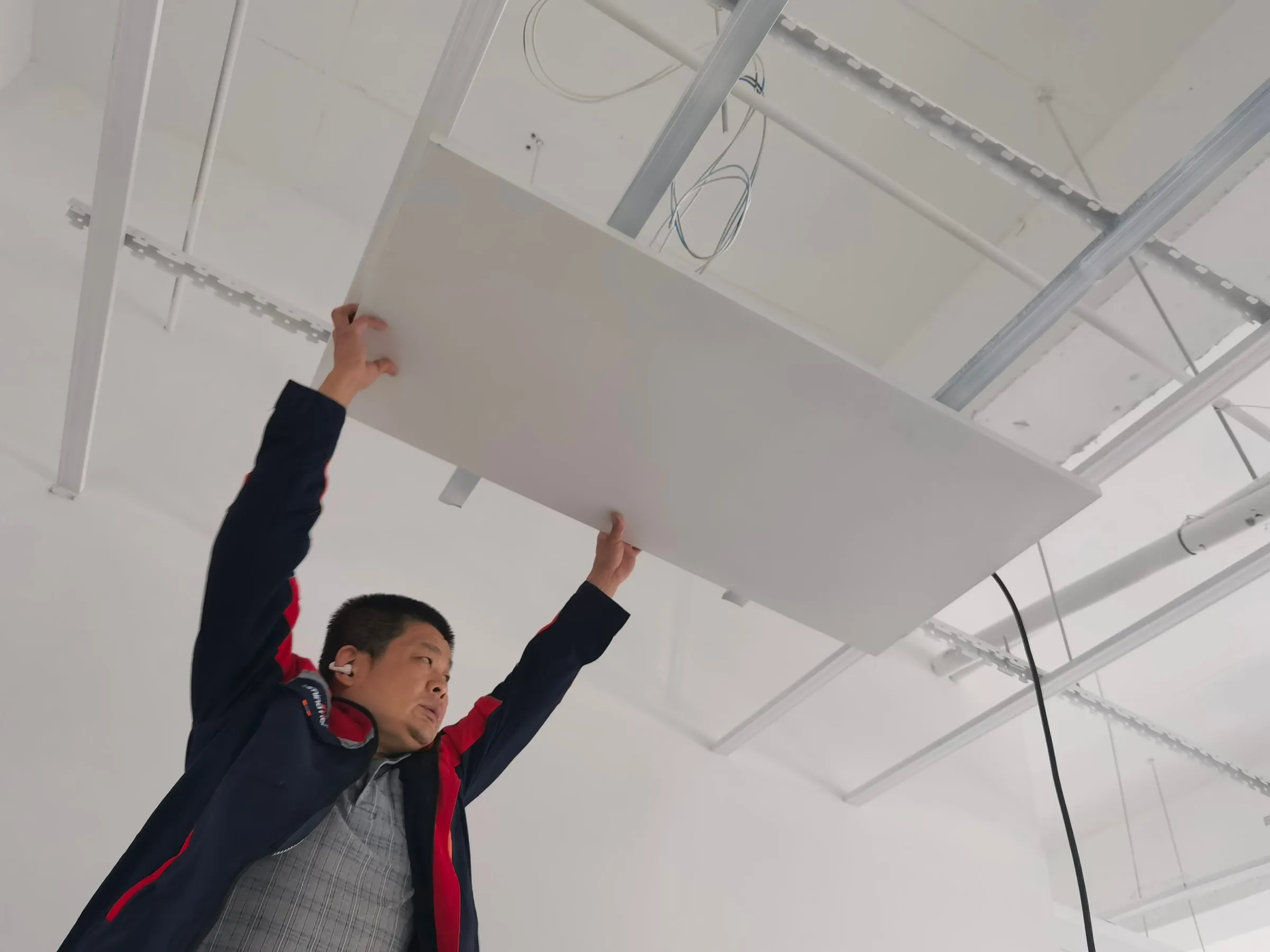
PowerBoard 250 fits into a plasterboard ceiling or ceiling grid at about 12 minutes a board. There’s no pipework, no manifold, no pressure test, no hot works and no screed to dry, so no wet trade is holding up the decorators. ComfortScrim adds just 2 to 3 mm under plaster or a floor finish. That’s often what makes a six-week programme possible at all, and it means a school can be refurbished one block at a time.
Halls and sports halls
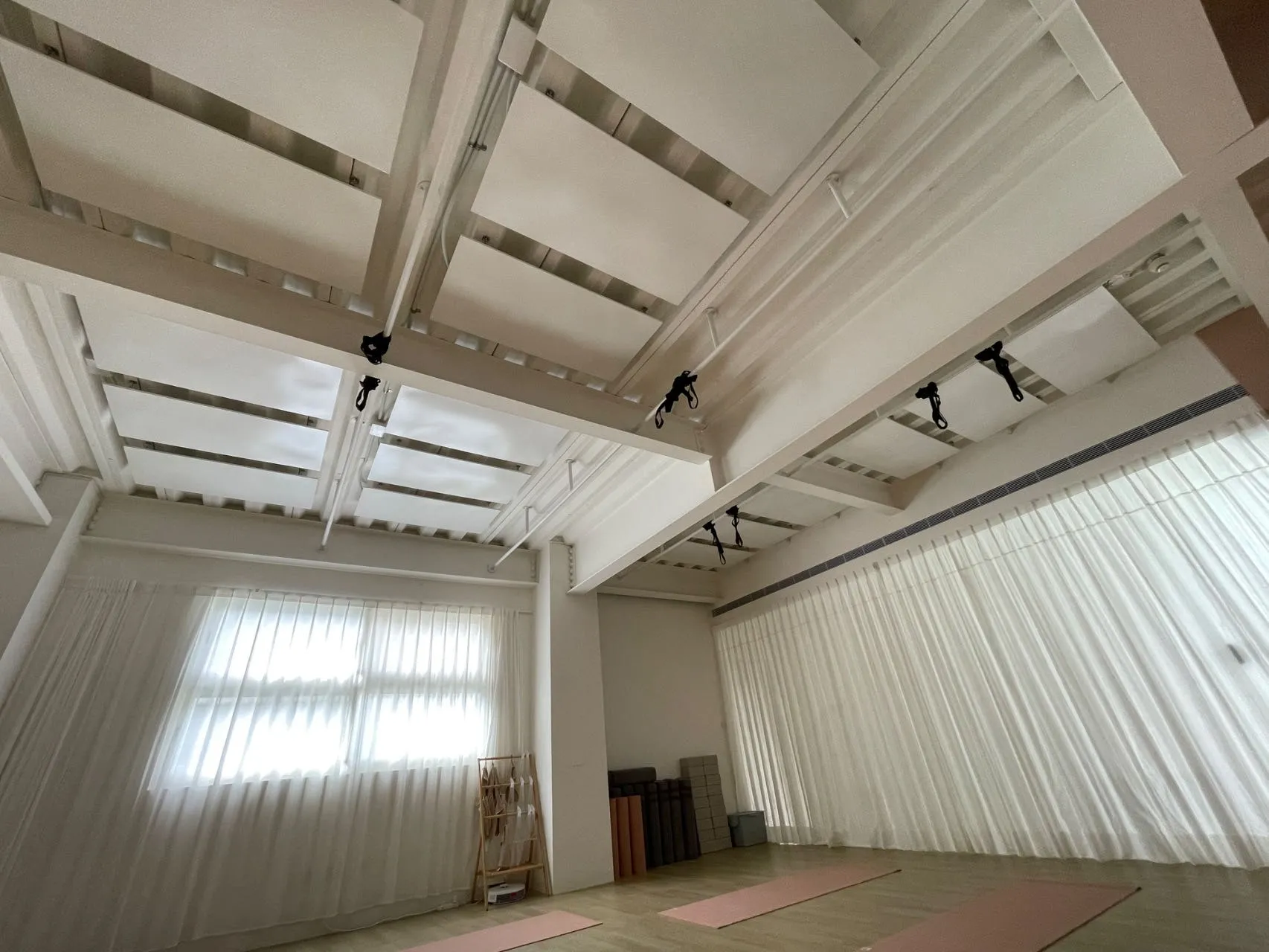
Tall spaces need a different approach. Heating from the ceiling works up to about 3 metres with ComfortScrim and about 3.5 metres with the surface-mounted PowerBoard 500 and 750. Above that, a heated floor is usually the better answer, because the floor is right where the people are, whatever the ceiling height.
A sports hall doesn’t want to be warm anyway. Radiant heat takes the chill off the people in it without heating the whole volume of air, and it can be on for a PE lesson and off again straight after.
Certifications
Estates teams and local authorities will ask, so here they are:
| System | Where it goes | Voltage | Certification |
|---|---|---|---|
| PowerBoard | ceilings | mains | IEC 60335-1 (BEAB), CE, UKCA |
| ComfortScrim | walls, ceilings, floors | 12–48 V | CE, TÜV, RoHS |
| SafeTech EGS | floors | mains | IEC 60335-1 (BEAB), UL 2683, UL listed, CE, UKCA |
ComfortScrim runs at safety extra-low voltage, 12 to 48 V from a separate power supply, so a child pushing a drawing pin into a heated wall is in no danger. More on what each test involves in are infrared heaters safe?
Running costs, honestly
You’ll see infrared sold to schools with savings of 30 or 40%. We don’t use those figures.
Every electric heater turns 100% of its electricity into heat, so that isn’t a selling point. The real saving comes from three places:
- A lower thermostat. People are comfortable with the air two to three degrees cooler, and at about 6% per degree that’s roughly 12 to 18% less heating energy.
- Heating to the timetable. Rooms are only warm while they’re in use.
- Room by room. Each space gets only the heat it needs.
In a building that’s empty most of the time, the timetable is worth more than the other two put together. How much exactly depends on your timetable and your estate, and nobody can honestly give you one percentage for it.
The other side: electricity costs more per kilowatt hour than gas in most markets, and a heat pump gets two to three units of heat from each unit of electricity at the machine. So infrared isn’t automatically the cheapest way to heat a whole school all day. Where it very often wins is in buildings without a workable wet system, in block-by-block refurbishment, in extensions and modular classrooms, and wherever the summer programme is the real constraint. The running cost estimator gives kilowatt hours for a given area and building standard, and our article on whether infrared heating is cost effective goes through the numbers.
Carbon
Grid electricity has got much cleaner and keeps getting cleaner; gas doesn’t. A school heated with electricity today gets lower-carbon every year without anyone touching it. For an estate working towards net zero, that direction of travel matters more than today’s figure. And if the school has solar panels, our low-voltage system can run straight from them: see infrared heating and solar.
Infrared heating in schools: your questions
Is infrared heating suitable for schools?
Yes, for most of a school. Classrooms are used in blocks and stand empty for long stretches, and infrared heating reaches temperature in 20 to 30 minutes, so each room can be heated only while it is in use. Every room has its own thermostat, there is nothing to service, and it can be installed during a summer holiday. For tall sports halls, a heated floor usually works better than a heated ceiling.
Is infrared heating safe for young children?
Yes, when it is designed for them. Heated floors stay under 29 °C, below skin temperature, and ceilings are out of reach. In nurseries, early years rooms and special needs settings, wall heating within reach is designed to stay at or below 43 °C, the limit used for low surface temperature radiators, or the heat goes into the ceiling or floor instead. ComfortScrim also runs at 12 to 48 V, which is safety extra-low voltage.
How hot do infrared heating surfaces get in a classroom?
Heated floors stay under 29 °C. PowerBoard 250 ceiling panels run at 50 to 60 °C, out of reach. ComfortScrim walls normally run at 40 to 55 °C, about as warm as a radiator, but in rooms for young or vulnerable children walls within reach are held at or below 43 °C. Surface-mounted PowerBoard 500 and 750 panels run at 80 to 105 °C and belong high up in halls and corridors, not classrooms.
Is infrared heating cheaper to run than gas in a school?
It can be, because a school is empty most of the time and infrared can follow the timetable room by room, while a wet system usually runs all day. Electricity still costs more per kilowatt hour than gas, so the answer depends on the building, the tariff and how closely the heating follows the timetable. It most often wins in buildings without a workable wet system, in phased refurbishments and in extensions.
Can infrared heating be installed during the summer holiday?
Yes. PowerBoard 250 fits into a plasterboard ceiling or ceiling grid at about 12 minutes a board, with no pipework, pressure testing, hot works or screed to dry. ComfortScrim adds just 2 to 3 mm under plaster or a floor finish. A block of classrooms fits comfortably inside a six-week holiday.
Does infrared heating need maintenance?
No planned maintenance. There are no moving parts, no water, no filters and no burner, so there is no yearly service. Our elements are tested for a lifespan of more than 20 years and carry a 10-year warranty.
How do you heat a school sports hall with infrared?
Heat the people, not the air. Ceiling heating works up to about 3.5 metres; above that, a heated floor is usually the better answer because it sits right where people are, whatever the ceiling height. Surface-mounted PowerBoard panels can also be mounted high up. The hall can be heated for a lesson and switched off straight after.